Protecting Data Centers with Advanced ACDB Panels

In today’s digital world, data centers are the backbone of business operations, supporting critical IT infrastructure, cloud services, and enterprise applications. Ensuring uninterrupted power distribution while maintaining high levels of safety and efficiency is paramount. ACDB Panels for Data Centers play a crucial role in managing alternating current (AC) power, protecting sensitive equipment, and optimizing operational reliability.

Synchro Electricals, manufacturer of ACDB panels, designs advanced ACDB panels engineered specifically for the demands of modern data centers. Their panels combine safety, monitoring, and scalability to ensure seamless power distribution and enhanced protection for mission-critical operations.

What Are ACDB Panels and Why They Matter in Data Centers

An ACDB (Alternating Current Distribution Board) panel serves as a central hub for distributing AC power across a data center. Unlike conventional panels, advanced ACDBs integrate protective devices, monitoring systems, and automation features tailored for high-density IT environments.

Key functions include:

  • Centralizing AC power distribution to efficiently route electricity to server racks, cooling systems, and other critical infrastructure.
  • Providing surge, overcurrent, and short-circuit protection to safeguard expensive IT equipment.
  • Supporting real-time monitoring of voltage, current, and power quality for proactive maintenance.
  • Enabling modular expansion to accommodate growing data center demands.

By deploying ACDB panels for data centers, operators can ensure consistent power delivery, minimize downtime, and maintain optimal equipment performance.

Why Data Centers Rely on Advanced ACDB Panels

With the increasing demand for uptime, energy efficiency, and secure operations, traditional distribution methods are no longer sufficient. Advanced ACDB panels offer:

  • Enhanced Protection: Integrated breakers, fuses, and surge protection devices prevent damage to servers and networking equipment.
  • Operational Efficiency: Centralized monitoring and modular design simplify maintenance and upgrades, reducing operational costs.
  • Energy Optimization: Real-time power monitoring enables load balancing and efficient energy usage.
  • Scalability: Panels can be expanded or reconfigured easily to support additional servers, racks, or infrastructure upgrades.

For IT managers and data center operators, these benefits translate into improved reliability, lower energy costs, and protection against costly downtime.

Advanced Features of Synchro Electricals’ ACDB Panels

Synchro Electricals’ ACDB panels are designed with the unique demands of data centers in mind, combining durability, safety, and smart monitoring. Key features include:

  • High-Performance Circuit Breakers: UL/IEC-certified breakers protect sensitive IT equipment from electrical faults.
  • Real-Time Monitoring: Track voltage, current, and load distribution to identify potential issues before they impact operations.
  • Surge and Overcurrent Protection: Prevents downtime due to unexpected surges, short circuits, or overloads.
  • Modular and Scalable Design: Enables easy addition of new circuits or integration with existing infrastructure.
  • Remote Management Capability: Operators can monitor and control panels from centralized control rooms or remote locations.

Each panel is built to meet stringent international safety standards, ensuring reliable, continuous power for critical data center operations.

Applications of ACDB Panels in Data Centers

ACDB panels are deployed across various aspects of data center infrastructure, including:

  • Server Racks and IT Equipment: Ensuring precise and reliable AC power distribution.
  • Cooling and HVAC Systems: Protecting and controlling power for temperature-sensitive environments.
  • Power Redundancy Systems: Supporting UPS and backup generators for continuous uptime.
  • High-Density Data Halls: Managing complex power requirements with centralized, modular panels.

By integrating ACDB panels, data centers can achieve maximum protection, efficiency, and operational visibility.

Why Choose Synchro Electricals for Data Center ACDB Panels

Synchro Electricals stands out as a trusted partner for ACDB panels by combining engineering excellence, energy efficiency, and reliable support. Leading IT companies and data center operators trust Synchro Electricals panels for:

  • Customizable Configurations: Panels tailored to specific data center layouts and electrical requirements.
  • Proven Reliability: Components rigorously tested for high-load and critical environments.
  • Ease of Maintenance: Modular design allows quick circuit replacement and system upgrades.
  • Comprehensive Support: Assistance from design and supply to installation and ongoing monitoring.

Investing in ACDB panels for data centers ensures operational continuity, equipment protection, and energy-efficient power management.

Conclusion

ACDB panels for data centers are more than just power distribution units—they are central to operational safety, efficiency, and scalability. By integrating advanced protection, real-time monitoring, and modular design, these panels enable data centers to maintain uninterrupted performance, optimize energy usage, and safeguard critical IT infrastructure. Synchro Electricals continues to empower IT operators with high-quality, performance-driven ACDB panels that enhance reliability and control across modern data centers.

FAQs

What is an ACDB panel for data centers?

It is a specialized distribution board that manages AC power, providing protection and monitoring for servers, networking equipment, and other critical infrastructure.

How do ACDB panels protect data center equipment?

They include surge, overcurrent, and short-circuit protection devices to prevent electrical faults from damaging sensitive IT systems.

Can ACDB panels be monitored remotely?

Yes. Synchro Electricals’ ACDB panels offer remote monitoring and control, enabling proactive management from anywhere.

Are ACDB panels scalable for growing data centers?

Absolutely. Modular design allows for easy expansion as data center infrastructure grows.

What is the ROI of installing advanced ACDB panels?

Benefits include reduced downtime, protection of high-value equipment, energy optimization, and lower operational costs, resulting in a strong return on investment.

Solar Type Tested Panels for Large-Scale Renewable Energy Projects

The renewable energy sector is rapidly expanding, with industrial-scale solar plants becoming the cornerstone of sustainable power generation. As capacities grow and system voltages rise, ensuring safety, performance, and compliance becomes increasingly critical. For developers and EPC contractors, using Solar Panels for Industrial Projects that meet international type testing standards is no longer optional—it’s a necessity.

Synchro Electricals, a trusted name in electrical distribution and protection systems, designs and manufactures 800VAC Solar Type Tested Panels built specifically for large-scale renewable energy installations. Engineered to deliver reliability under high-voltage, high-capacity conditions, these panels ensure that solar power flows safely, efficiently, and continuously.

The Importance of Type-Tested Panels in Renewable Projects

In large solar farms and industrial renewable energy facilities, electrical panels operate under demanding conditions—handling high fault levels, harsh environments, and continuous load variations. Type-tested panels, verified as per IEC and IS standards, guarantee performance consistency and safety across all critical parameters.

They ensure compliance in areas such as:

  • Short-Circuit Withstand Strength 
  • Temperature Rise and Dielectric Properties 
  • Ingress Protection (IP) Ratings 
  • Operational Safety under Load Conditions

For industrial-scale solar projects, type-tested panels are the assurance that every part of the power distribution system performs exactly as designed—reliably, safely, and efficiently.

Challenges in Large-Scale Solar Installations

Utility and industrial solar installations present unique electrical challenges:

  • High Voltage & Current Levels: As solar plants expand, higher AC bus voltages (up to 800V) are used to reduce losses, demanding stronger insulation and protection standards. 
  • Environmental Exposure: Outdoor panels face temperature extremes, dust, and moisture, which can degrade performance without proper sealing and material integrity. 
  • Grid Compliance: Renewable plants must meet grid codes requiring stable power delivery and protection coordination. 
  • Operational Continuity: Even minor faults or switchgear malfunctions can lead to downtime and energy generation losses.

A type-tested solar panel system ensures these challenges are addressed at the design level—before the system ever goes live.

How 800V AC Type-Tested Panels Optimize Industrial Solar Systems

The shift to 800V AC systems allows higher efficiency in solar power distribution, reducing transmission losses and lowering overall cabling and infrastructure costs. Synchro Electricals’ type-tested panels are designed to handle these voltages safely and efficiently, offering:

  • Reduced Energy Losses: Optimized busbar layouts and conductor sizing minimize heat and resistance losses. 
  • Compact Design: Smaller footprint panels suitable for dense solar inverter rooms and control centers. 
  • Improved Thermal Performance: Type-tested for controlled temperature rise even under maximum load conditions. 
  • Enhanced Safety & Protection: Equipped with high-grade switchgear, circuit breakers, and protective relays compliant with IEC 61439 standards. 
  • Seamless Integration: Fully compatible with central and string inverter configurations.

By combining precision engineering with rigorous testing, Synchro’s 800V AC panels ensure that every kilowatt generated reaches the grid safely and efficiently.

Key Features of Synchro Electricals’ Solar Type Tested Panels

  • Type-Tested as per IEC 61439-1 & 2: Certified for mechanical strength, temperature rise, dielectric strength, and short-circuit performance. 
  • High Fault Level Endurance: Withstands up to 65kA short-circuit currents, ensuring maximum safety. 
  • 800V AC System Compatibility: Ideal for modern solar power plants adopting higher AC bus voltages. 
  • Corrosion-Resistant Construction: Powder-coated enclosures and stainless hardware ensure durability in outdoor installations. 
  • Flexible Design: Supports top/bottom cable entry and various protection devices. 
  • SCADA Integration: Facilitates data monitoring and control for remote operation.

Each panel undergoes stringent testing and inspection, guaranteeing field performance that meets international benchmarks.

Applications in Industrial and Utility-Scale Projects

Synchro Electricals’ Solar Type Tested Panels are designed for a wide range of renewable and hybrid power applications:

  • Industrial Rooftop Projects: Ensuring reliable power distribution across manufacturing or corporate facilities. 
  • Utility-Scale Solar Farms: Managing high-voltage connections between inverters and transformers. 
  • Hybrid Renewable Plants: Supporting integrated solar-wind-battery storage systems. 
  • Solar Parks & Microgrids: Providing scalable distribution solutions with full protection coordination.

By using type-tested 800V AC solar panels, project developers can guarantee safety, grid compliance, and long-term performance reliability.

Benefits for EPC Contractors and Project Developers

Adopting type-tested solar panels for industrial projects delivers measurable advantages:

  • Regulatory Compliance: Meets statutory and international safety standards, simplifying project approvals. 
  • Reduced Downtime: Enhanced reliability minimizes outages and maintenance frequency. 
  • Optimized Efficiency: Designed to deliver consistent performance under full load. 
  • Extended Equipment Life: Improved insulation and heat management protect internal components. 
  • Lower Lifecycle Costs: Fewer faults, less downtime, and longer maintenance intervals translate into substantial cost savings.

These benefits make type-tested panels a smart investment for large-scale solar infrastructure aiming for long-term sustainability and reliability.

Why Choose Synchro Electricals

Synchro Electricals has a proven track record in delivering advanced, type-tested power distribution panels for renewable and industrial sectors. Every product reflects decades of electrical engineering expertise, precision manufacturing, and a commitment to safety.

Why EPC contractors trust Synchro:

  • Panels designed and manufactured in compliance with IEC/IS type-test standards. 
  • Custom-built solutions for 800V AC and beyond. 
  • Dedicated engineering support from concept to commissioning. 
  • Reliable performance backed by rigorous testing and quality assurance.

With Synchro Electricals, large-scale renewable projects gain the reliability, safety, and technical excellence required for continuous, efficient power delivery.

Conclusion

In the fast-growing renewable energy sector, where performance and compliance define success, type-tested solar panels for industrial projects have become the cornerstone of safe and reliable power distribution.

Synchro Electricals’ 800V AC Solar Type Tested Panels are engineered to meet the exacting standards of large-scale renewable energy facilities — providing dependable operation, superior protection, and long-term performance assurance. For developers and EPCs striving to build smarter, safer, and more efficient solar power systems, Synchro Electricals stands as a trusted partner in powering the clean energy future.

FAQs

What does “type-tested” mean in solar panels?

Type-tested panels are verified through standardized tests (IEC/IS) to ensure safety, performance, and durability under real-world operating conditions.

Why are 800V AC panels used in industrial solar systems?

Higher voltage systems reduce transmission losses and improve efficiency, making them ideal for large-scale renewable energy installations.

How do type-tested panels improve reliability?

They are tested for short-circuit endurance, insulation strength, and temperature rise, ensuring consistent performance even under full-load stress.

Can Synchro Electricals’ panels integrate with SCADA systems?

Yes. All panels support data acquisition and remote monitoring for real-time performance visibility.

Are these panels suitable for hybrid renewable projects?

Absolutely. They can be integrated into hybrid systems combining solar, wind, and storage technologies.

Centralizing Solar Power: How String Combiner Boxes Simplify Large-Scale Utility Solar Farms

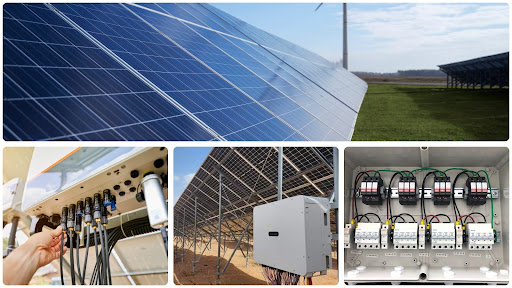
In large-scale solar farms, efficient DC power collection and safe distribution are critical to maintaining performance, reliability, and safety. A string combiner box for utility-scale solar farms serves as the backbone of this process, consolidating the output of multiple solar panel strings into a single, manageable DC output. By centralizing the solar array’s wiring and protection systems, these boxes play a pivotal role in optimizing power generation and simplifying operations.

Synchro Electricals, a trusted name in solar electrical infrastructure, designs high-quality, weatherproof string combiner boxes engineered to handle the demands of high-capacity photovoltaic (PV) systems. Their SCBs combine innovation with durability to ensure that large solar installations operate efficiently under all conditions.

What Is a String Combiner Box and Why It Matters in Utility Solar Farms

A string combiner box (SCB) acts as an intermediary between the solar panels and the inverter. It aggregates DC power from multiple panel strings and channels it to the inverter for conversion into AC power. In utility-scale solar plants, where hundreds of solar panels operate simultaneously, the SCB simplifies wiring, improves safety, and ensures efficient system monitoring.

Key functions include:

  • Centralizing DC inputs to reduce cable complexity. 
  • Providing surge and overcurrent protection using fuses and SPD devices. 
  • Enabling isolation for maintenance and fault detection. 
  • Supporting real-time monitoring of voltage and current through integrated sensors.

In essence, a string combiner box for utility-scale solar farms ensures seamless DC power management, minimizing downtime and improving energy yield.

Why Utility-Scale Solar Farms Depend on String Combiner Boxes

As solar projects expand into hundreds of megawatts, the need for structured power collection becomes more pressing. Without proper DC distribution management, power losses, cable clutter, and safety risks increase significantly.

A high-performance SCB ensures:

  • Optimized Energy Flow: By grouping strings efficiently, the SCB minimizes voltage drop and power loss. 
  • Enhanced Protection: Built-in surge protection and circuit breakers safeguard against overcurrent, lightning, and insulation faults. 
  • Operational Efficiency: Simplified wiring and centralized fault detection reduce maintenance time and cost. 
  • Scalability: Easily integrates with existing PV infrastructure for system expansion.

For utility-scale solar farms, these features translate directly into higher performance, reduced downtime, and lower operational costs.

Advanced Features of Synchro Electricals’ String Combiner Boxes

Synchro Electricals offers advanced, customizable string combiner boxes engineered to meet the specific needs of large solar farms. Designed for long-term durability and safety, these SCBs feature:

  • IP65/IP67 Weatherproof Enclosures: Ensures reliable performance under harsh environmental conditions. 
  • High-Conductivity Copper Busbars: Reduces heat generation and ensures efficient current flow. 
  • Fuse & Surge Protection: Equipped with UL/IEC-certified fuses and SPD devices for maximum safety. 
  • DC Disconnect Switch: Allows isolation during service or maintenance without interrupting the entire array. 
  • Optional SCADA Integration: Enables real-time performance monitoring and fault detection from a central control system.

Each SCB is designed to meet international safety standards, ensuring the best balance of efficiency, protection, and reliability for large-scale operations.

The Role of SCADA in Utility-Scale Solar Power Management

In today’s utility solar farms, SCADA (Supervisory Control and Data Acquisition) systems play a crucial role in maintaining plant performance. When integrated with SCBs, they allow operators to:

  • Monitor individual string parameters such as current, voltage, and temperature. 
  • Identify underperforming strings or faults in real time. 
  • Optimize energy yield through predictive maintenance and performance analytics.

By pairing SCADA-enabled string combiner boxes with intelligent monitoring platforms, solar farm operators gain better control over energy production, asset health, and power distribution.

Applications of String Combiner Boxes in Utility-Scale Solar Farms

String combiner boxes are used extensively across different stages of utility solar power systems, including:

  • Solar PV Arrays: Collecting DC power from multiple panel strings. 
  • DC Collection Systems: Transferring consolidated DC output to central or string inverters. 
  • Hybrid Energy Plants: Integrating with battery storage systems for a continuous energy supply. 
  • Remote Monitoring Networks: Supporting SCADA-based control for performance optimization.

Their integration ensures that every kilowatt generated from solar panels is efficiently routed, protected, and monitored.

Why Choose Synchro Electricals for Utility-Scale SCBs

Synchro Electricals stands out among string combiner box manufacturers by combining engineering precision with deep industry expertise.

Here’s why leading EPC contractors and solar developers trust their SCBs:

  • Custom-Built for Utility Solar: Configurable string inputs (8-in/1-out to 24-in/1-out) for flexible plant layouts. 
  • Proven Reliability: Components tested under extreme thermal and electrical conditions. 
  • Ease of Maintenance: Modular design allows quick fuse replacement and inspection. 
  • Comprehensive Support: Assistance from design and supply to installation and operation.

When it comes to utility-scale solar power, choosing the right string combiner box can make the difference between consistent energy output and costly downtime — and Synchro Electricals delivers that reliability.

Conclusion

A string combiner box for utility-scale solar farms is more than just a power collection component — it’s the heart of efficient, safe, and centralized solar energy management. With the rapid growth of renewable energy infrastructure, choosing a high-quality, SCADA-enabled SCB ensures long-term reliability and peak energy yield.

Synchro Electricals continues to empower large solar developers and EPC companies with durable, performance-driven string combiner boxes that enhance power stability, protection, and monitoring efficiency across vast solar installations.

FAQs

What does a string combiner box do in a utility-scale solar farm?

It collects DC power from multiple solar strings and combines it into a single output for the inverter, ensuring efficient power transfer and system protection.

How does a string combiner box improve solar plant safety?

It provides surge and overcurrent protection using fuses, breakers, and SPD devices, preventing damage to equipment from electrical faults or lightning.

Can string combiner boxes be integrated with SCADA systems?

Yes. SCBs from Synchro Electricals can integrate with SCADA systems for real-time monitoring, fault detection, and performance analysis.

What makes Synchro Electricals’ SCBs ideal for utility-scale projects?

They offer customizable designs, IP-rated enclosures, high-quality copper busbars, and optional monitoring capabilities for large solar installations.

Are these SCBs suitable for hybrid or energy storage systems?

Absolutely. Synchro Electricals’ SCBs are compatible with hybrid setups that include battery energy storage, ensuring seamless power distribution and safety.

APFC and LT Panels for Heavy Engineering Industries: Enhancing Power Stability

Heavy engineering industries depend on consistent and high-quality power to operate massive machinery, furnaces, compressors, and motors. Any fluctuation or reactive power loss can lead to inefficiencies, equipment stress, and higher operational costs. To address these challenges, APFC (Automatic Power Factor Correction) Panels and LT (Low Tension) Panels play a critical role in ensuring stable, efficient, and reliable power distribution.

Synchro Electricals, a trusted APFC panel manufacturer in India, designs and delivers advanced APFC and LT panels tailored for heavy engineering applications — optimizing power utilization, reducing wastage, and maintaining plant-wide electrical stability.

Understanding APFC and LT Panels

APFC Panels (Automatic Power Factor Correction Panels) are designed to automatically improve the power factor of electrical systems. Power factor is a key indicator of how efficiently electrical power is being used. In heavy industries where inductive loads dominate, a low power factor can lead to penalties from utility companies and higher energy consumption.

An APFC panel detects reactive power in real-time and automatically switches capacitor banks using a microprocessor-based APFC relay, ensuring the system maintains an ideal power factor close to unity.

On the other hand, LT Panels (Low Tension Panels) are responsible for distributing electricity from transformers to various plant sections. They manage load distribution, power control, and protection at the low-voltage end — essential for ensuring operational safety and balanced energy delivery.

Together, APFC and LT panels form the backbone of a power management system in any heavy engineering facility.

Why Power Factor Correction Matters in Heavy Engineering

Power factor correction is more than a technical requirement — it directly impacts operational cost and equipment performance. In industries where large motors, welding machines, and induction furnaces operate simultaneously, lagging power factors are common.

By integrating APFC panels for heavy industry, companies can achieve:

  • Reduced Electricity Bills: Utilities often penalize low power factors; automatic correction eliminates these extra costs.

  • Enhanced Equipment Life: Reduced reactive power prevents overheating and electrical stress.

  • Improved Load Management: Maintains voltage stability and reduces power losses.

  • Sustainable Operations: Optimized power use contributes to energy efficiency and carbon reduction goals.

Key Features of Modern APFC Panels

Synchro Electricals’ APFC panels are engineered for precision and reliability, integrating both performance and protection features essential for demanding industrial environments:

  • Intelligent APFC Relay: Monitors and adjusts capacitor stages automatically for optimal power factor correction.

  • Modular Capacitor Banks: Enables flexible expansion based on load requirements — from 10 kVAR to 400 kVAR systems.

  • Microprocessor-Based Control: Ensures real-time monitoring, fast response, and reduced manual intervention.

  • Heavy-Duty Switchgear: Uses top-quality components from ABB, Schneider, or L&T for durability and safety.

  • Comprehensive Protection: Overload, short-circuit, and surge protection built into each panel.

These panels come in both indoor and outdoor configurations, designed according to IEC standards, ensuring long-term performance under varying load conditions.

Role of LT Panels in Power Distribution

In heavy engineering plants, LT panels manage distribution from main incomers to multiple sub-sections such as motor control centers (MCCs), lighting systems, and auxiliary loads. They are custom-built to handle high current ratings and ensure safe and efficient power flow throughout the facility.

Modern LT panels integrate intelligent features like:

  • Digital meters and control circuits for accurate load monitoring.

  • Automatic load sharing and switching to prevent overloads.

  • Compatibility with APFC systems, ensuring balanced reactive power compensation across all connected equipment.

By using both APFC panels and LT distribution panels, plants can achieve seamless energy management from transformer output to the equipment end.

Selecting the Right APFC Panel for Heavy Industries

When choosing an APFC electrical panel, engineers must consider voltage ratings, total connected load, capacitor size, and harmonic levels in the system. For example:

  • Small to mid-scale plants may use 100 kVAR to 200 kVAR APFC panels,

  • While large heavy engineering facilities might require 300 kVAR to 400 kVAR APFC systems for efficient correction.

Top-quality manufacturers like Synchro Electricals offer complete solutions — from design and manufacturing to APFC panel installation, ensuring precise configuration and seamless integration with LT systems.

Benefits of Using Synchro Electricals’ APFC & LT Panels

Synchro Electricals, a leading APFC and LT panel manufacturer in India, serves multiple industrial sectors with high-performance electrical solutions. For heavy engineering industries, their panels offer:

  • Uninterrupted Power Stability: Constant voltage and balanced load prevent production halts.

  • Energy Cost Optimization: Automatic correction reduces wastage and utility penalties.

  • High Reliability: Built with premium components and tested for high load endurance.

  • Ease of Maintenance: Modular design allows quick replacement of capacitor stages and switchgear.

  • Custom Design Capability: Panels are designed to match plant-specific load and space conditions.

With years of expertise and a focus on innovation, Synchro Electricals ensures every panel enhances efficiency, safety, and sustainability in industrial operations.

Conclusion

Heavy engineering industries operate in power-intensive environments where maintaining stability and efficiency is crucial. Integrating APFC panels for heavy industry with LT distribution panels ensures optimal power factor, reduced energy losses, and reliable operation of high-capacity machines.

By partnering with Synchro Electricals, industries gain access to expertly engineered automatic power factor correction panels that align with modern power management standards. Their APFC and LT panels not only stabilize energy systems but also help companies achieve long-term cost savings and operational excellence.

FAQs

What is an APFC panel, and how does it work in heavy engineering industries?

An APFC (Automatic Power Factor Correction) panel automatically adjusts capacitor banks to maintain optimal power factor. In heavy engineering, it ensures energy efficiency, reduces penalties, and stabilizes voltage for large machinery.

What is the difference between APFC and LT panels?

APFC panels improve power factor by compensating reactive power, while LT panels distribute power safely within industrial setups. Together, they maintain power quality and operational stability in heavy industries.

How do I select the right APFC panel for my heavy industry setup?

Choose an APFC panel based on total load, voltage, and harmonic conditions. For larger plants, higher-rated panels like 200 kVAR or 400 kVAR ensure reliable correction and efficiency.

What are the benefits of using APFC panels in heavy industries?

They reduce energy wastage, prevent power factor penalties, and improve equipment lifespan. This leads to smoother operations and lower electricity bills across large industrial systems.

How do APFC and LT panels enhance power reliability in heavy engineering units?

Together, APFC and LT panels ensure balanced power supply, reduced load fluctuations, and safe distribution — critical for maintaining uninterrupted power in high-demand environments.

Welcome to Synchro Electricals

We provide trusted, high-performance electrical solutions tailored for every industry.

Apply For Job