Commercial & Industrial (C&I) Solar Growth in India: The Importance of Advanced ACDB/DCDB Panels

India is experiencing a renewable energy revolution, and at the forefront of this transformation is the Commercial & Industrial (C&I) solar sector. As businesses aim to reduce electricity costs and meet sustainability goals, solar energy adoption among commercial and industrial units has witnessed a remarkable surge.

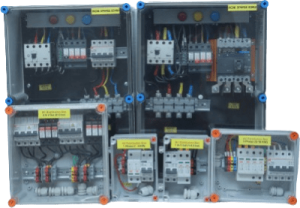
However, the success and safety of these solar systems rely on more than just photovoltaic (PV) panels and inverters. One critical, yet often overlooked, component is the ACDB (Alternating Current Distribution Board) and DCDB (Direct Current Distribution Board). These panels play a crucial role in power distribution, system protection, and efficient monitoring.

Let’s explore the growth of the C&I solar segment in India and why advanced ACDB/DCDB panels are pivotal to the long-term reliability and performance of solar systems.

The Rise of C&I Solar in India

1. Policy Push and Cost Competitiveness

India’s energy demand is expected to double by 2040. In response, the Indian government has laid a strong foundation for solar adoption through supportive policies like:

  • Accelerated depreciation benefits
  • GST relief on solar components
  • Open access solar policies
  • Green energy corridors
  • Renewable purchase obligations (RPOs)

Alongside this, the cost of solar installation has dropped significantly in the last decade, making it a cost-competitive option for industries and businesses compared to grid electricity.

2. High Commercial Tariffs Drive Solar Adoption

Many Indian states have high electricity tariffs for commercial and industrial users, ranging from ₹7 to ₹12 per unit. In contrast, solar energy offers power at ₹2.5 to ₹4 per unit, generating 30-60% savings on electricity bills. This economic benefit has led major industries, manufacturing units, corporate parks, and warehouses to invest in rooftop and open-access solar systems.

3. Net Metering and Grid Integration

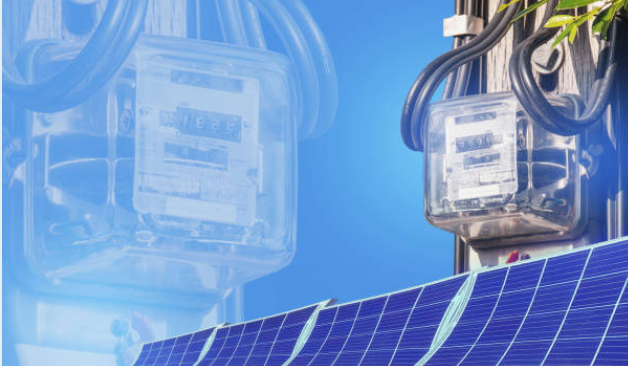
With policies allowing net metering, businesses can sell excess power back to the grid, further improving ROI. As more C&I units opt for grid-tied solar systems, the importance of system safety, power quality, and effective energy monitoring increases.

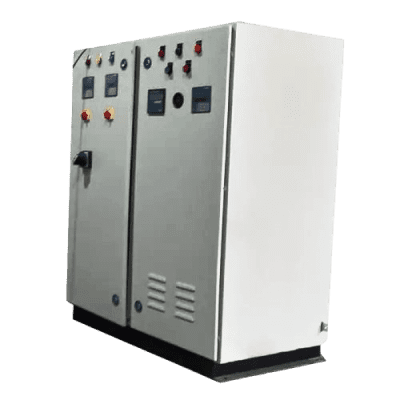
Understanding ACDB & DCDB Panels in Solar Systems

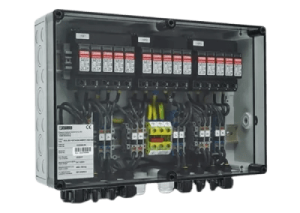
What is a DCDB (Direct Current Distribution Board)?

The DCDB panel receives DC power from solar panels and routes it to the inverter. It helps in:

  • String-level protection using fuses or MCBs
  • Monitoring of individual string currents
  • SPD (Surge Protection Device) for overvoltage protection

   Isolation of strings during maintenance

What is an ACDB (Alternating Current Distribution Board)?

  The ACDB panel is installed after the inverter. It manages the distribution of AC power to the grid or local loads and provides:

  • Overcurrent and short-circuit protection
  • Energy metering and load balancing
  • SPD and isolators to ensure safe grid injection

  Seamless integration with net meters

Both these boards act as protective backbones, ensuring that power flows safely, equipment remains unharmed, and operators are protected from faults or overloads.

Why Advanced ACDB/DCDB Panels Matter in the C&I Segment

C&I solar systems are typically large—ranging from 50 kW to multiple MWs. With scale comes complexity. Here’s why advanced, high-quality ACDB/DCDB panels are non-negotiable:

1. Enhanced System Safety

Industrial environments are susceptible to power surges, short circuits, and high-load fluctuations. Poor-quality panels can:

  • Fail under high temperatures or current loads
  • Cause fire hazards
  • Lead to inverter and module damage

Advanced panels use high-grade copper bus bars, certified breakers, flame-retardant enclosures, and branded surge protection devices to ensure maximum safety.

2. Real-Time Monitoring and Diagnostics

Modern ACDB/DCDB units integrate IoT-enabled monitoring systems, allowing:

  • String-level performance tracking
  • Energy data logging
  • Remote fault detection
  • Preventive maintenance scheduling

This intelligent monitoring helps O&M teams quickly detect performance issues and ensure 99%+ uptime, critical for ROI in large C&I systems.

3. Customization as per Project Needs

No two C&I projects are alike. Factors like:

  • Rooftop or ground-mounted layout
  • Inverter capacity
  • Number of strings
  • Export-import metering requirements

All demand custom-designed ACDB/DCDB panels tailored for specific site conditions. Advanced manufacturers offer modular, scalable designs for seamless integration.

4. Ease of Commissioning and Maintenance

Professionally manufactured panels come pre-wired, pre-tested, and tagged for faster on-site commissioning. Labels, testing ports, and breaker layouts are optimized for easy access, ensuring quick troubleshooting and safety compliance.

5. Compliance with International Standards

Modern C&I projects demand bankability and compliance. Investors, EPCs, and DISCOMs prefer panels that follow:

  • IEC/IS standards
  • BIS certifications
  • IP65/IP67 protection levels
  • Type-tested assemblies

Using advanced ACDB/DCDB panels ensures that the overall project passes audits, safety checks, and performance guarantees with ease.

Synchro Electricals: Powering C&I Solar with Smart Panels

As India transitions into a green economy, panel manufacturers like Synchro Electricals Pvt. Ltd., based in Rajkot, Gujarat, are leading the charge in offering premium-quality ACDB/DCDB panels for solar EPCs and industries.

Founded in 2018, Synchro Electricals specializes in:

  • Custom ACDB/DCDB solutions for rooftop and ground-mounted projects
  • Panels tested to international safety and performance standards
  • Dedicated support for project commissioning and documentation

Whether you’re an EPC contractor, solar consultant, or industrial consumer, partnering with a reliable panel manufacturer ensures system longevity, safety, and higher yield.

 Contact Synchro Electricals
+91 96019 65426
Plot No. 35 to 40, Ravaki Rev. Sur. No. 670, Pushti Parishar Industrial Area, Near Maa Khodal Ind-1, Ravki, Taluka Lodhika, Rajkot, Gujarat, India – 360004

Closing Insights

The C&I solar boom in India is not just about clean power—it’s about smart, safe, and scalable solutions. As system sizes and complexity grow, advanced ACDB and DCDB panels are no longer optional—they are essential.

From ensuring safety and performance to enabling smart monitoring, these panels are the backbone of a reliable solar installation. Investing in quality from the start saves costs, minimizes risks, and maximizes returns.

For industries eyeing a sustainable future with solar, the choice is clear: Prioritize panel quality, partner with experts, and power your growth with confidence.

FAQ

Q1: Can we use a standard electrical panel instead of an ACDB/DCDB in solar systems?

No. ACDB/DCDB panels are specifically designed for solar applications with surge protection, DC isolation, and monitoring features not found in standard panels.

Q2: What certifications should an ACDB/DCDB panel have?

Panels should comply with IEC/IS standards, offer IP65/IP67 ingress protection, and undergo type testing to ensure reliability in industrial settings.

Q3: How often should ACDB/DCDB panels be maintained?

Regular maintenance every 6 months is recommended, including thermal scans, cleaning, and checking for loose connections or component degradation.

Q4: Are ACDB/DCDB panels useful in off-grid solar setups?

Yes. They manage battery and inverter connections, protect components, and ensure the system works efficiently even without grid support.

Q5: How do I choose the right ACDB/DCDB panel for my C&I project?
Work with expert manufacturers like Synchro Electricals, who analyze your inverter ratings, string configuration, and site conditions to offer the most optimized solution.


Why ACDB/DCDB Panels Matter for Net Metering & Grid-Tied Solar

Solar power has shifted from being a niche green option to a mainstream energy solution for homes and businesses across the globe. Among the most popular configurations is the grid-tied solar system paired with net metering, which allows solar users not only to generate their own electricity but also to export surplus energy back to the grid, earning credits in return. But behind the scenes of this smart energy exchange lies an often overlooked yet critical component: the ACDB (Alternating Current Distribution Board) and DCDB (Direct Current Distribution Board) panels.

At Synchro Electrical, we specialize in manufacturing high-quality ACDB/DCDB panels designed to maximize safety, reliability, and efficiency for solar power systems. This post will explore why these panels matter so much for net metering and grid-tied solar setups, and why partnering with a trusted manufacturer like Synchro Electrical can make all the difference in your solar journey.

What Are ACDB and DCDB Panels?

To understand their importance, it’s key to grasp what ACDB and DCDB panels actually do.

  • DCDB (Direct Current Distribution Board): This panel manages the direct current electricity generated by your solar panels before it reaches the inverter. It consolidates multiple strings of solar panels, providing overcurrent protection through fuses or circuit breakers, and includes isolator switches to safely disconnect sections during maintenance or fault conditions.
  • ACDB (Alternating Current Distribution Board): Once the inverter converts DC to AC electricity, the ACDB distributes this current to your home’s electrical system and the utility grid. It houses circuit breakers and switches to protect the system from overloads, short circuits, and provides a point of isolation for maintenance.In essence, these distribution boards act as the nerve centers of your solar power system, controlling the flow of electricity and ensuring safety for both your property and the grid.

 Why ACDB/DCDB Panels Are Crucial for Net Metering & Grid-Tied Solar

Grid-tied solar systems with net metering rely on safe, efficient, and reliable power exchange between your solar panels, home, and the grid.    Here’s why ACDB/DCDB panels are so essential in this setup:

 1. Safety First

 Solar power systems handle high voltages and currents, especially on the DC side before inversion. DC electricity behaves differently from AC and can be more challenging to interrupt safely. The DCDB panel is specially designed to handle these unique electrical characteristics, preventing dangerous arcs and electrical faults.

On the AC side, the ACDB ensures the power fed into your home and the grid is protected from short circuits, overloads, and other anomalies. Both boards are equipped with isolators and protective devices to shut down parts of the system swiftly during emergencies, preventing fires and equipment damage.

2. Compliance with Standards and Regulations

Utility companies and local electrical codes have stringent requirements for grid-tied solar installations, especially when net metering is involved. Properly designed ACDB and DCDB panels are often mandatory for certification and approval.

Synchro Electrical’s panels are engineered to meet and exceed these regulatory requirements, ensuring your system is compliant and eligible for net metering benefits without delays or hassles.

 3. Efficient Power Management

Having dedicated distribution boards for DC and AC enables better organization of your solar system’s electrical infrastructure. The DCDB  consolidates multiple solar panel strings, balancing load and simplifying wiring. The ACDB manages power distribution to your home circuits and the grid, enhancing system efficiency.

 This separation also makes it easier to monitor performance, detect faults, and optimize energy flow, contributing to maximizing your solar  investment.

 4. Simplified Maintenance and Troubleshooting

 Solar systems need occasional maintenance and sometimes troubleshooting. ACDB and DCDB panels provide clear points of isolation and protection, allowing technicians to safely work on specific sections without shutting down the entire system.

 This minimizes downtime and lowers the risk to maintenance personnel, ultimately saving you time and money.

 5. Longevity and Reliability

 A well-designed distribution board protects sensitive equipment like inverters from electrical surges and faults. By using robust panels like  those from Synchro Electrical, you extend the lifespan of your solar system components and ensure stable, uninterrupted solar power  generation.

Why Choose Synchro Electrical for Your ACDB/DCDB Panels?

 At Synchro Electrical, we bring decades of experience crafting distribution boards tailored  specifically for solar power applications. Here’s  what sets us apart:

  • Customized Solutions: We understand that every solar installation is unique. Our panels can be customized to match your system’s size, specifications, and local code requirements.
  • Quality Craftsmanship: We use premium materials and rigorous quality control to ensure our panels deliver superior performance and safety.
  • Expert Support: Our team offers technical guidance from design through installation and maintenance, ensuring your project runs smoothly.
  • Compliance Assurance: We stay up to date on evolving regulations and standards, so you don’t have to worry about compliance issues.

 Partnering with Synchro Electrical means you get distribution boards that aren’t just boxes of wires and breakers they’re engineered  components that make your solar system safer, smarter, and more reliable.

 Real-World Applications of ACDB/DCDB Panels in Grid-Tied Projects

  1. Residential Rooftop Solar in Gujarat
    A 5 kW net-metered system used Synchro’s DCDB with SPD and MC4 connectors to ensure smooth inverter performance and grid export.
  2. Industrial Solar Plant in Maharashtra (100 kW)
    Customized ACDB panels with built-in energy metering and auto-reconnect features allowed for seamless load balancing and monitoring.
  3. Institutional Net-Metering System in Rajasthan High-reliability ACDBs helped sync a 50 kW system with the DISCOM grid, meeting all state  compliance norms.

  Closing Insights 

 In the complex dance of solar energy, where your home and the grid exchange power, ACDB and DCDB panels act as the choreographers, managing flow, safety, and balance. Choosing the right distribution boards  like those from Synchro Electrical  is one of the smartest moves you can make on your solar journey.

 Ready to upgrade or install your solar distribution boards? Reach out to Synchro Electrical today and power your future with confidence.

   Contact Synchro Electricals
   +91 96019 65426
    Plot No. 35 to 40, Ravaki Rev. Sur. No. 670, Pushti Parishar Industrial Area,
    Near Maa Khodal  Ind-1, Ravki, Taluka Lodhika, Rajkot,Gujarat,India 360004
    https://synchroelectricals.com/

 FAQ

Q1: Can I install a grid-tied solar system without ACDB/DCDB panels?

Technically, some small systems might operate without dedicated ACDB or DCDB panels, but it’s strongly discouraged. These panels ensure safety, compliance, and system efficiency. Skipping them may void warranties, fail inspections, or cause serious hazards.

Q2: What’s the difference between ACDB and DCDB?

DCDB handles direct current from solar panels before it reaches the inverter. ACDB manages alternating current after the inverter, distributing power to your home and grid. Both have protection and isolation features but operate on different electrical currents.

Q3: How do these panels affect net metering?

Net metering requires your system to safely export surplus power back to the grid. ACDB and DCDB panels provide the necessary safety and control points, ensuring your system meets utility and regulatory standards to qualify for net metering programs.

Q4: Are Synchro Electrical panels compatible with all inverter brands?

Yes. Our panels are designed with universal compatibility in mind. We work closely with system integrators and installers to ensure seamless integration regardless of inverter brand

Q5: How do I know if my existing solar setup needs ACDB/DCDB upgrades?

If your system lacks proper distribution boards or you’re experiencing frequent electrical

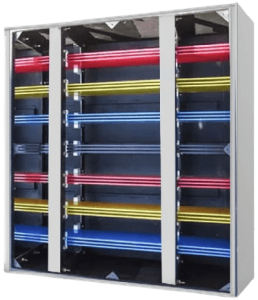
Why Indian Industries Are Switching to L.T. Bus Duct (Sandwich Bus Duct): The Future of Electrical Power Distribution

In today’s fast-paced industrial landscape, electrical infrastructure is the backbone of efficient operations. From manufacturing plants to commercial establishments, reliable and safe power distribution is non-negotiable. That’s why a revolutionary shift is taking place across India — industries are increasingly switching from traditional cable systems to L.T. Bus Ducts, especially Sandwich Bus Ducts.

But what’s driving this transition? Why are more and more Indian businesses investing in this technology? Let’s dive into the future of electrical power distribution and uncover the factors behind this smart shift.

What is a Low Tension (L.T.) Bus Duct?

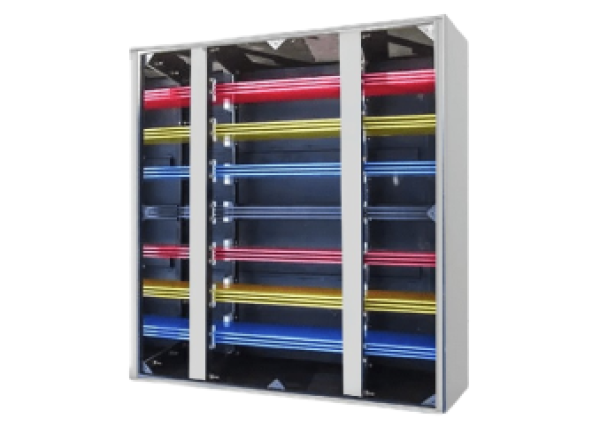
A Low Tension (L.T.) Bus Duct, or busway, is an enclosed system that uses conductive copper or aluminum busbars to distribute electricity from one point to another. Unlike traditional cable systems, bus ducts are compact, modular, and easy to maintain. L.T. Sandwich Bus Ducts, a modern variant, are particularly popular due to their compact, enclosed design. Here, conductors are “sandwiched” between layers of insulation and covered with a metallic enclosure, which enhances safety, thermal management, and space efficiency.

Why Indian Industries Are Making the Switch

1. Space Optimization in Crowded Industrial Environments

Real estate prices in industrial zones across India are soaring. Efficient space utilization is now more crucial than ever. Traditional cabling systems require significant space due to tray arrangements, clearance, and segregation.

Sandwich Bus Ducts, on the other hand, are sleek, compact, and can be routed through confined spaces or vertically in buildings. This space-saving feature is a game-changer for industries in metro cities like Mumbai, Bangalore, or Delhi NCR, where every square foot matters.

2. Superior Heat Dissipation and Electrical Performance

One of the key advantages of L.T. Bus Ducts are their ability to manage heat more efficiently than conventional cables. The sandwich design ensures uniform heat dissipation, reducing the risk of hot spots or overheating.

This thermal efficiency leads to lower energy losses (I²R losses) and improved performance of the electrical system, helping industries meet their energy-saving targets and sustainability goals.

3. Enhanced Safety and Fire Resistance

India has seen multiple fire accidents in industries caused by cable faults, overloads, or insulation failure. Sandwich Bus Ducts offer a much higher level of safety due to:

  • Metal-clad, flame-retardant enclosures
  • Insulation that resists moisture and dust
  • Short-circuit and overload protection

Moreover, the risk of human contact with live parts is minimized, ensuring better protection for workers and equipment.

4. Lower Installation and Maintenance Costs

Installing traditional cable trays is labor-intensive and often error-prone. With bus ducts, installation is modular and faster. They’re pre-fabricated and tested in factories, which means:

  • Reduced site work and downtime
  • Minimal errors and rework
  • Quick commissioning

Additionally, once installed, bus ducts require very little maintenance. This lowers the total cost of ownership (TCO), making them a smart investment in the long term.

5. Scalability for Future Expansion

Industries in India are growing, expanding, and scaling faster than ever. The flexibility of bus duct systems allows for:

  • Easy extension or modification
  • Addition of new loads or connections
  • Upgrades without major rewiring

This adaptability supports dynamic industrial environments where production lines or layouts frequently change.

6. Compliance with Modern Electrical Standards

As India moves towards smart manufacturing and industry 4.0, compliance with modern electrical standards (like IEC, IS) is a must. L.T. Sandwich Bus Ducts are manufactured with advanced materials and engineering precision that meet — and often exceed — global standards.

Government regulations and audits are also pushing industries to upgrade their electrical infrastructure to meet safety and energy efficiency norms. Bus ducts are often the ideal choice in such scenarios.

Industry Applications of L.T. Bus Ducts

The use of L.T. Sandwich Bus Ducts is rapidly expanding across:

  • Automobile Plants
  • Textile and Garment Industries
  • Pharmaceutical Units
  • Data Centers
  • Commercial Buildings and Malls
  • Steel and Cement Plants
  • IT Parks and SEZs

Their versatility, efficiency, and safety make them suitable for both low-rise factories and multi-floor high-rise installations.

Why Partner with Synchro Electricals Pvt. Ltd.

When it comes to implementing L.T. Bus Duct systems, choosing the right manufacturing and commissioning partner is crucial. That’s where Synchro Electricals Pvt. Ltd. stands out.

Who We Are

Established in 2018 and headquartered in Rajkot, Gujarat, Synchro Electricals Pvt. Ltd. has rapidly emerged as a leading manufacturer in the field of electrical distribution panels. We specialize in:

  • Custom-designed electrical panels
  • Turnkey bus duct solutions
  • Factory testing and on-site commissioning
  • Post-installation support and servicing

What Sets Us Apart

  • Engineering Excellence: Our bus ducts are designed using high-quality materials, ensuring longevity, performance, and compliance with international safety norms.
  • End-to-End Solutions: From design to testing and final installation, we provide a seamless experience that reduces the burden on your in-house teams.
  • Customer-Centric Approach: Every project is handled with precision, keeping your needs and future expansion in mind.
  • Innovation & Quality Assurance: All our products go through rigorous quality testing to ensure safety, durability, and reliability.

With dozens of successful installations across India, Synchro Electricals is a name industries trust for performance and peace of mind.

The Green Energy Angle

Another major reason behind the bus duct revolution is the push for green energy and sustainability. Many Indian industries are:

  • Installing solar power plants
  • Upgrading to energy-efficient systems
  • Committing to ESG goals

Bus ducts complement these efforts perfectly with lower energy losses, reduced copper usage (compared to cables), and better thermal efficiency. Their design also helps minimize the carbon footprint during manufacturing and operation.

Future-Proofing Industrial Infrastructure

India’s industrial landscape is evolving rapidly, with greater emphasis on digitalization, automation, and energy conservation. By switching to  L.T. Sandwich Bus Ducts ,industries are not just making a tactical upgrade — they’re making a strategic move toward future-proofing their infrastructure.

This shift reflects a deeper understanding among industrial leaders: that safety, efficiency, and sustainability are no longer optional — they’re essential for long-term growth and global competitiveness.

Closing Insights

The move towards L.T. Sandwich Bus Ducts is not a trend — it’s a transformation. For industries in India looking to modernize, reduce costs, and ensure operational excellence, bus ducts offer a practical, scalable, and future-ready solution.

And with trusted partners like Synchro Electricals Pvt. Ltd., implementing these systems becomes easy, efficient, and economically rewarding.

If you’re planning to upgrade your electrical distribution system, now is the time to switch to smarter power solutions.

FAQs:

Q1. What is the life expectancy of a Sandwich Bus Duct system?

With proper installation and minimal maintenance, it can last 30+ years, outperforming traditional cable systems.

Q2. Can L.T. Bus Ducts be customized for our facility layout?

Absolutely! At Synchro Electricals, we offer tailor-made solutions that perfectly fit your facility’s design and requirements.

Q3. Are bus ducts more expensive than cables?

While the initial cost may be slightly higher, bus ducts save money in the long run through lower maintenance, faster installation, and reduced energy losses.

Q4. Are L.T. Bus Ducts suitable for outdoor use?

Yes. They are designed with protective enclosures and weatherproofing features for outdoor or harsh industrial environments.

Q5. How can I get a quote from Synchro Electricals?

You can contact us via our website or email to schedule a site visit or consultation. We provide customized quotes based on your project size and technical requirements.

Why Top Contractors Choose Us for Electrical Panel Manufacturing & Testing

In the ever-evolving landscape of industrial and infrastructure development, contractors face rising challenges—tight project deadlines, increasing demand for energy efficiency, evolving safety regulations, and the need for customized electrical solutions. Choosing the right partner for specializing in the design, testing, and commissioning of electrical distribution panels. isn’t just a technical decision—it’s a strategic business move.

At Synchro Electricals Pvt. Ltd , established in 2018 and based in Rajkot, Gujarat, is a leading manufacturer specializing in the design, testing, and commissioning of electrical distribution panels.
we’ve positioned ourselves as the trusted manufacturing and testing partner for top contractors across industries. With years of expertise, a relentless commitment to quality, and future-ready infrastructure, we don’t just deliver electrical panels—we deliver peace of mind.

Let’s dive into the key reasons why top contractors consistently choose Synchro Electricals as their preferred electrical panel partner.

1. Tailor-Made Electrical Panel Solutions, Not Templates

At Synchro Electricals, we understand that no two projects are the same. Whether it’s a greenfield infrastructure project, a large-scale factory expansion, or an energy optimization retrofit, each site presents unique challenges and load requirements.
That’s why we focus on customized electrical panel manufacturing that aligns with the exact needs of contractors and end users. We specialize in:

There is much more in Manufacturing,Designing,and Testing Commissioning of Electrical Distribution panels

What sets Synchro Electricals apart is our engineering-first approach. From initial design consultation to the final commissioning phase, our team of experienced electrical engineers and system designers work closely with contractors to:

2. Expert Engineering and Technical Guidance

  • Analyze system load requirements
  • Ensure regulatory and safety compliance
  • Anticipate future scalability
  • Recommend layout optimizations and component selection
  • Provide proactive technical insights

Contractors count on us not just for execution but for technical partnership. Our engineering support helps them deliver smarter, safer, and more sustainable electrical systems to their clients.

3. ISO-Certified Manufacturing and Cutting-Edge Infrastructure

Our state-of-the-art facility is built for high-precision, high-volume production. With ISO-certified processes and modern machinery, Synchro Electricals maintains the highest standards in fabrication, wiring, assembly, and finishing.

What contractors value most about our manufacturing capability:

  • Automated cutting, bending & punching machines for perfect panel structures
  • Standardized wiring practices with high-quality cables and terminals
  • Use of branded components like Schneider, Siemens, ABB, and L&T
  • Panel enclosures that meet IP and fire safety ratings
  • Climate-controlled environment for dust-free assembly
  • With consistent quality and robust production planning, we ensure on-time delivery without compromising on durability or design.

4. Comprehensive Testing & Quality Assurance

At Synchro Electricals, testing isn’t just a step—it’s our promise. Every panel goes through multiple quality assurance checkpoints, ensuring that what leaves our facility is field-ready and fault-proof.

Our rigorous testing includes:

  • High Voltage Breakdown Test (Hi-pot)
  • Insulation Resistance Test (IR)
  • Functional Load Testing
  • Thermal Imaging Analysis
  • Earthing and Continuity Testing
  • Factory Acceptance Tests (FAT) with client witnessing
  • Site Commissioning Support

This focus on reliability reduces post-installation failures and gives contractors confidence that the systems will perform under real-world conditions.

5. Compliance with Indian and International Standards

We understand the regulatory pressures contractors face. That’s why Synchro Electricals is committed to full compliance with global and national standards, including:

  • IEC 61439 (Low-voltage switchgear and control gear assemblies)
  • IS 8623 and other relevant IS codes
  • CE and RoHS compliance for exported panels
  • Custom compliance solutions for Oil & Gas, Pharma, and Mission-Critical Infrastructure

When contractors choose Synchro Electricals, they ensure that their projects are inspection-ready and audit-proof, saving valuable time and resources.

6. Transparent Project Management & Client Communication

One of the top reasons contractors choose us repeatedly is our professional and transparent project handling. From inquiry to delivery, we offer:

  • Dedicated project coordinators
  • Detailed Gantt charts and milestone tracking
  • Weekly progress reports with real-time updates
  • Collaborative document sharing for approvals and revisions
  • Prompt customer support and issue resolution

This level of communication builds trust, minimizes delays, and ensures all stakeholders are aligned throughout the project lifecycle.

7. Sustainable & Future-Ready Panels

As sustainability becomes a top priority, contractors are seeking eco-conscious solutions. Synchro Electricals is ahead of the curve with:

  • Panels designed for low energy losses
  • Power factor correction and harmonic filtering
  • Support for IoT integration and remote monitoring
  • Eco-friendly raw materials and processes

Whether it’s green buildings or renewable power plants, our panels are built for the future, meeting energy efficiency goals and smart grid compatibility.

8. Client Portfolio That Inspires Confidence

We’ve delivered thousands of successful panel solutions to leading contractors, EPC firms, OEMs, and system integrators across diverse sectors:

  • Industrial automation and process control
  • Renewable energy (solar, wind, hybrid)
  • Real estate and commercial buildings
  • Smart infrastructure and utilities
  • Oil & Gas, Pharmaceuticals, and FMCG manufacturing

Our repeat business rate is over 85%, reflecting the satisfaction and trust our clients place in Synchro Electricals.

9. After-Sales Support That Keeps Systems Running Smoothly

We believe in long-term relationships, not just transactions. Our post-installation support ensures that your panels continue to perform optimally with:

  • Remote troubleshooting and diagnostics
  • On-site support and upgrades
  • Component replacement and service kits
  • AMC (Annual Maintenance Contract) plans
  • Training for maintenance personnel

Overall Reflection: Partner with Synchro Electricals—Where Precision Meets Performance

Top contractors can’t afford to risk delays, safety failures, or unreliable systems. That’s why they choose Synchro Electricals. With our engineering expertise, smart manufacturing, robust testing, and commitment to client success, we’ve become a trusted ally in delivering powerful, efficient, and future-proof electrical solutions.
Whether you’re building a factory, powering a smart city, or scaling up your energy infrastructure—Synchro Electricals has the solution built for your project. Let’s power progress—together.

FAQ

1. What types of electrical panels does Synchro Electricals manufacture?

We manufacture a wide range of panels, including MCC (Motor Control Center), PCC (Power Control Center), ATS (Automatic Transfer Switch), AMF (Auto Mains Failure), APFC (Automatic Power Factor Correction), VFD panels, LT panels, and customized solutions based on specific industry requirements.

2. Are your panels compliant with Indian and international safety standards?

Yes. All our panels are designed and tested as per IEC 61439, IS standards, and other relevant compliance protocols. We also offer CE and RoHS-compliant panels for global projects.

3. Do you provide support during installation and commissioning?

Absolutely. We offer complete commissioning support including factory acceptance tests (FAT), site testing, and on-site integration help. Our engineers can guide your team to ensure smooth handover and startup.

4. Can Synchro Electricals customize panels for specific industrial applications?

Yes. Customization is one of our strengths. We work closely with contractors and consultants to design panels that align with the exact specifications, environment, and load demands of your project.

5. How do you ensure quality in manufacturing and testing?

Quality is embedded in our process. Our facility follows ISO standards and uses advanced equipment for fabrication and wiring. We perform multiple levels of testing including IR testing, HV testing, thermal imaging, and full functional load testing before dispatch.

Maximizing Efficiency with VCB Panels

In today’s fast-paced industrial and commercial environments, power reliability, safety, and efficiency are more critical than ever. One of the key technologies enabling modern electrical infrastructure to meet these demands is the Vacuum Circuit Breaker (VCB) panel. Designed for medium-voltage applications, VCB panels are pivotal in protecting and optimizing electrical distribution systems.

In this blog, we’ll explore how VCB panels contribute to operational efficiency, their key advantages, applications, and best practices for maximizing their benefits.

What is a VCB Panel?

A Vacuum Circuit Breaker (VCB) is a type of circuit breaker where arc quenching takes place in a vacuum environment. A VCB panel is an assembly that houses the VCB and associated protective, control, and metering equipment. These panels are used in medium voltage systems, typically ranging from 3.3kV to 36kV.

Unlike traditional air or oil circuit breakers, VCBs operate in a vacuum, which offers significantly better dielectric strength and arc interruption capability.

Importance of VCB Panels

VCB panels are crucial in various applications, including industrial plants, commercial buildings, and utility substations. They provide reliable protection against short circuits, overloads, and other electrical faults, minimizing downtime and ensuring the safety of both equipment and personnel.

How VCB Panels Improve Efficiency

1. High-Speed Operation and Minimal Downtime

VCBs are designed to operate rapidly and reliably during fault conditions. This fast response time helps to:

  • Minimize equipment damage
  • Limit the spread of faults
  • Restore power quickly
  • Reduce downtime, especially in process-driven industries

This responsiveness translates directly into increased system uptime and efficiency.

2. Longer Life and Reduced Maintenance

Thanks to the vacuum interrupter, VCB panels suffer minimal contact erosion compared to oil or air breakers. The arc is extinguished quickly and cleanly, which leads to:

  • Extended lifespan (20+ years with proper maintenance)
  • Fewer scheduled maintenance intervals
  • Lower operational cost over the system’s lifecycle

The result? Lower total cost of ownership and higher operational continuity.

3. Enhanced Safety Features

Safety directly correlates with efficiency — fewer accidents mean fewer interruptions. VCB panels often come with built-in features like:

  • Arc-proof enclosures
  • Interlocking systems to prevent unsafe operations
  • Automatic fault detection and isolation

These ensure safe operation for both personnel and equipment, creating a more secure and efficient working environment.

4. Compact Design for Space Optimization

In commercial and industrial setups, space is premium. Modern VCB panels are designed to be compact and modular, which allows:

  • More panels in a limited space
  • Easy expansion and scalability
  • Better layout efficiency in power rooms

Efficient space utilization translates to lower building costs and higher operational density.

Applications Where VCB Panels Shine

1. Power Plants and Substations

In power generation and transmission systems, reliability is non-negotiable. VCB panels offer the ability to handle frequent switching operations and high fault levels with ease.

2. Industrial Manufacturing

Heavy machinery and production lines rely on stable power. A VCB panel ensures quick fault isolation and minimal production disruptions, which is critical in sectors like automotive, steel, and chemicals.

3. Commercial Buildings and Campuses

Office parks, hospitals, universities, and malls require stable power across multiple zones. VCB panels support this with their intelligent monitoring systems and zone-based protection.

4. Renewable Energy Installations

Solar farms and wind power stations benefit from VCBs’ low maintenance needs and robust fault management, essential for remote or unattended locations.

Technical Advantages That Drive Efficiency

● Superior Arc Quenching

VCBs use vacuum interrupters that extinguish arcs within milliseconds, even under high current conditions. This reduces the thermal and mechanical stress on connected systems.

● High Insulation Strength

The vacuum offers a dielectric strength that is 8-10 times higher than air, allowing for closer contact spacing and more compact designs without compromising safety.

Environmentally Friendly

Unlike SF₆ circuit breakers, which use potent greenhouse gases, VCBs have no emissions or environmental hazards. This makes them ideal for eco-conscious operations aiming to reduce their carbon footprint.

● Ease of Automation

Modern VCB panels support remote control, SCADA integration, and predictive maintenance analytics, which help teams monitor and optimize power usage with minimal manual intervention.

Future of VCB Panels

As industries move toward automation, AI-based maintenance, and green energy, VCB panels are also evolving. Expect features like:

  • Self-diagnosing systems
  • Integration with energy management platforms
  • Even more compact, modular designs

VCB panels will continue to play a central role in smart, efficient, and sustainable energy systems.

Best VCB Panels Provider –Synchro Electrical Pvt.Ltd.

When it comes to selecting a VCB panel provider, Synchro Electrical stands out as a reliable and trusted choice. With years of experience in the industry, Synchro Electricals Pvt. Ltd., established in 2018 and based in Rajkot, Gujarat, is a leading manufacturer specializing in the design, testing, and commissioning of electrical distribution panels.

Why Choose Synchro Electrical for VCB Panels?

Proven Track Record

Synchro Electrical has a proven track record of delivering top-notch VCB panels that meet the highest standards of quality and performance. Its panels are known for their reliability, durability, and advanced features, making it a preferred choice for various applications.

Comprehensive Product Range

Synchro Electrical offers a comprehensive range of VCB panels to cater to different voltage levels, current ratings, and application requirements. Whether you need a panel for industrial, commercial, or utility applications, they have the right solution for you.

Customization Options

Understanding that every project has unique needs, Synchro Electrical provides customization options to tailor VCB panels to specific requirements. Its team of experts works closely with clients to design and manufacture panels that meet exact specifications.

Excellent Customer Support

Synchro Electrical is committed to providing excellent customer support throughout the entire lifecycle of its products. From initial consultation and installation to maintenance and technical assistance, its dedicated support team ensures a seamless experience for its customers.

Final thoughts 

Vacuum Circuit Breaker panels are not just safety devices — they are efficiency enablers. From minimizing downtime to reducing maintenance and energy losses, VCB panels provide the reliability and performance modern electrical systems demand.

Whether you’re building a new facility or retrofitting an aging power distribution system, investing in a high-quality VCB panel setup is a smart move for long-term efficiency, safety, and sustainability.

FAQs

1. What is the lifespan of a VCB panel?

A well-maintained VCB panel can last 20–30 years, depending on operating conditions and frequency of fault interruptions. Regular inspections will help extend its usable life.

2. Can VCB panels be used outdoors?

Typically, VCB panels are designed for indoor use. However, outdoor variants with weatherproof enclosures are available and widely used in substations and rural installations.

3. Are VCBs better than SF6 breakers?

For medium-voltage applications, VCBs are generally preferred due to their eco-friendly nature and low maintenance needs. SF6 breakers are more common in high-voltage applications but have environmental concerns due to gas emissions.

4. How often should VCBs be serviced?

Routine visual checks can be done annually, while detailed inspections and testing should be conducted every 3–5 years or after a fault event. Manufacturer guidelines provide service intervals specific to each model.

5. Can VCB panels be integrated with automation systems?

Yes, modern VCB panels are SCADA-compatible and can be integrated with PLC, HMI, or building management systems (BMS) for centralized control and monitoring.

Accelerating Business Growth Through Smart Lighting Distribution Panels

In today’s fast-paced business environment, energy efficiency and operational optimization are not just buzzwords—they are essential for growth and long-term sustainability. One of the most underappreciated yet powerful tools that businesses can leverage to accelerate growth is the lighting distribution panel.

While traditionally seen as a basic electrical component, the modern lighting distribution panel has evolved into a sophisticated system that plays a key role in energy management, cost control, facility automation, and even compliance. In this blog post, we’ll explore how upgrading or strategically deploying lighting distribution panels can significantly contribute to business growth.

Understanding Lighting Distribution Panels

A lighting distribution panel, sometimes called a lighting control panel or lighting panel board, is the hub from which power is distributed to various lighting circuits throughout a building. These panels serve to:

  • Distribute electrical power safely and efficiently.
  • Protect lighting circuits through fuses or breakers.
  • Enable localized control over lighting zones.
  • Integrate with automation and smart control systems.

Modern lighting distribution panels go far beyond the functionality of their older counterparts. They are now integrated with smart technologies, IoT-enabled systems, and energy monitoring features, which makes them a key player in sustainable infrastructure.

How Lighting Distribution Panels Accelerate Business Growth

Let’s explore specific ways in which lighting distribution panels contribute directly to a company’s success.

1. Reducing Operational Costs

Electricity is a major operating expense, especially in industries that require extended lighting hours like retail, warehousing, healthcare, and manufacturing. Smart lighting distribution panels enable granular control over lighting zones, allowing companies to:

  • Schedule lighting based on operational hours.
  • Dim or switch off lights in unoccupied areas.
  • Detect and respond to occupancy using sensors.

This precision in energy usage reduces electricity consumption by up to 30%, leading to substantial cost savings that can be reinvested into other growth initiatives.

2. Enhancing Employee Productivity

Lighting significantly affects the comfort and productivity of employees. Poor lighting can lead to eye strain, fatigue, and decreased focus. A smart lighting panel allows you to tailor lighting to specific tasks, zones, and employee preferences. For instance:

  • Offices can be outfitted with daylight-simulating LEDs that boost alertness.
  • Warehouses can use motion-activated lighting for increased safety.
  • Retail environments can leverage accent lighting to highlight key products.

When employees work in well-lit, comfortable environments, productivity increases, error rates drop, and job satisfaction rises—all of which contribute to better business performance.

3. Supporting Scalability and Expansion

As businesses grow, their electrical and lighting needs become more complex. A flexible, modular lighting distribution panel supports future scalability. Whether expanding a facility or opening new locations, modern panels allow for:

  • Easy addition of new circuits and lighting zones.
  • Integration with centralized or cloud-based management systems.
  • Minimal downtime during reconfiguration.

Businesses can scale their operations without undergoing a complete overhaul of their electrical infrastructure, thus accelerating expansion with minimal disruption.

4. Improving Sustainability and ESG Compliance

Environmental, Social, and Governance (ESG) metrics are becoming critical to investors, customers, and regulatory bodies. Lighting panels equipped with energy monitoring and automation features help companies:

  • Track carbon footprints from lighting systems.
  • Achieve green building certifications (LEED, BREEAM).
  • Meet governmental energy efficiency mandates.

Investing in energy-efficient lighting control not only reduces utility bills but also enhances a company’s reputation and appeal to eco-conscious consumers and investors.

5. Enabling Smart Building Integration

Modern lighting distribution panels can integrate with building management systems (BMS), enabling centralized control and automation. Through IoT and cloud-based platforms, businesses can:

  • Monitor energy usage in real-time.
  • Automate lighting scenes for events or changes in occupancy.
  • Predict maintenance needs and prevent equipment failures.

This level of smart control improves the operational efficiency of the entire building, leading to long-term cost reductions and improved uptime, both of which are critical for sustaining growth.

6. Enhancing Customer Experience

In customer-facing environments such as retail stores, restaurants, and showrooms, lighting plays a major role in shaping the customer experience. Smart lighting distribution panels allow businesses to:

  • Create customized lighting scenarios for different times of the day.
  • Highlight featured products with focused lighting.
  • Change lighting to match branding or promotional events.

An improved customer experience leads to higher satisfaction, increased dwell time, and ultimately, greater revenue per visitor.

Case Study: Retail Chain Expansion Powered by Lighting Optimization

A mid-sized fashion retail chain in the U.S. recently revamped its electrical systems by installing smart lighting distribution panels across all 50 locations. Before the upgrade, energy bills were inconsistent, maintenance was reactive, and store managers had little control over lighting conditions.

Post-upgrade, they experienced:

  • A 28% reduction in lighting-related energy costs.
  • Improved lighting aesthetics, increasing average shopping time by 15%.
  • Centralized lighting control, allowing corporate headquarters to push updates to all stores.

These improvements translated into an overall 12% increase in profit margins across locations, showcasing the ROI of investing in smart lighting infrastructure.

Considerations When Choosing a Lighting Distribution Panel

To ensure the lighting distribution panel truly supports business growth, it’s essential to select the right system. Here are key considerations:

  1. Load Capacity – Ensure the panel can handle current and anticipated future loads.
  2. Modularity – Choose systems that allow easy expansion or changes.
  3. Integration – Look for compatibility with BMS, sensors, and IoT platforms.
  4. Compliance – Verify adherence to local and international electrical codes.
  5. Vendor Support – Choose providers that offer long-term support and maintenance.

Investing in panels that meet these criteria will yield longer service life, fewer outages, and greater operational flexibility.

The ROI of Smart Lighting Distribution Panels

The upfront cost of upgrading to a modern lighting distribution panel might seem high, but the return on investment (ROI) is often realized within 2–3 years through:

  • Lower utility bills
  • Reduced maintenance costs
  • Improved workforce productivity
  • Greater customer satisfaction

Moreover, the data insights provided by smart panels can uncover additional savings and efficiency opportunities across the business.

Final Thoughts

In an era where operational efficiency, sustainability, and adaptability are key to competitive advantage, lighting distribution panels are no longer just components in an electrical system. They are strategic assets that can power business growth.

Forward-thinking businesses that recognize the potential of lighting control systems can unlock a host of benefits, from cost savings to productivity enhancements and improved scalability. If you’re planning your next phase of growth, consider whether your lighting infrastructure is ready to support that vision.

After all, in business, sometimes a brighter path forward begins with simply turning on the right light.

Frequently Asked Questions (FAQ)

1. What are Smart Lighting Distribution Panels?

Smart lighting distribution panels are advanced electrical panels equipped with sensors, connectivity, and automation features that allow businesses to monitor, control, and optimize their lighting systems in real time.

2. Are smart panels only useful for large businesses?

No. Businesses of all sizes can benefit. For small businesses, they help control utility bills. For larger enterprises, they offer scalability and advanced analytics for multiple locations.

3. Are smart lighting systems secure?

Yes, most modern systems come with strong cybersecurity protocols. It’s essential to work with reputable providers who offer encrypted communication and regular firmware updates.

4.How do smart panels impact employee productivity?

Consistent, well-controlled lighting reduces eye strain, boosts morale, and improves concentration, directly contributing to a more productive work environment.

5. What industries benefit the most from smart lighting distribution panels?

Industries like retail, manufacturing, hospitality, healthcare, and commercial real estate see significant advantages due to energy usage patterns and the need for consistent, safe lighting.

Leveraging AI for Predictive Maintenance in Electrical Panels

Introduction: The Smart Revolution in Electrical Infrastructure

Electrical panels are the nerve centers of any facility—be it a bustling manufacturing plant, a high-rise office tower, or a state-of-the-art hospital. These panels manage and distribute electricity, keep operations running smoothly, and protect against overloads and short circuits. However, like any mechanical system, electrical panels age, degrade, and sometimes fail—often with costly consequences.

In the past, we dealt with such issues reactively or, at best, followed a preventive maintenance schedule. But the times have changed. With the help of Artificial Intelligence (AI), predictive maintenance is transforming how we care for our electrical systems. And at the heart of this evolution is Synchro Electricals, a brand dedicated to bringing intelligent, data-driven solutions to the forefront of industrial and commercial electrical maintenance.

Let’s dive into how AI is rewriting the rulebook and why integrating it with predictive maintenance is no longer optional—it’s essential.

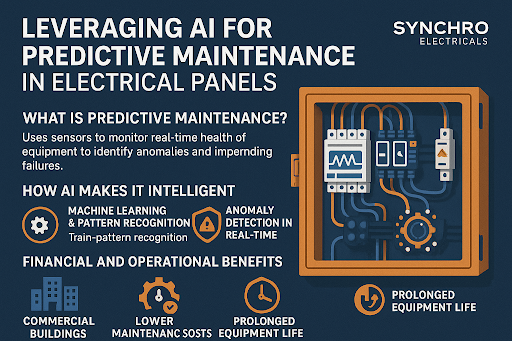
What Is Predictive Maintenance?

Predictive maintenance is not just a buzzword—it’s a data-centric approach to preventing equipment failure. Unlike traditional maintenance, which either waits for things to break (reactive) or adheres to a strict timeline (preventive), predictive maintenance monitors the real-time health of your systems and pinpoints issues before they become actual problems.

Here’s how it works: Sensors collect continuous data on equipment parameters like temperature, vibration, voltage, and current. This data is then analyzed to detect abnormalities or signs of wear and tear. Think of it like a smart doctor constantly monitoring your health and warning you before you get sick.

When applied to electrical panels, this approach is revolutionary. Panels often fail silently, showing no visible signs until a sudden trip, blackout, or fire. Predictive maintenance makes these hidden problems visible, actionable, and, most importantly, preventable.

Why Electrical Panels Need Smarter Maintenance

Electrical panels are under constant stress. They’re subject to load fluctuations, temperature spikes, environmental contaminants, and mechanical wear. Over time, even minor issues like a loose terminal or an unbalanced load can spiral into serious faults.

Consider this: one tripped breaker in a main distribution panel can halt operations for hours, or even days, in large facilities. The result? Production losses, reputational damage, and expensive emergency repairs.

By leveraging AI-driven predictive maintenance, businesses can gain:

  • Real-time visibility into panel performance. 
  • Early detection of anomalies and risks. 
  • Data-backed decision-making for replacements and upgrades. 

At Synchro Electricals, we specialize in integrating smart AI sensors into panels, enabling real-time monitoring and instant notifications about unusual activity, long before it becomes a crisis.

How AI Makes Predictive Maintenance Truly Intelligent

AI elevates predictive maintenance by adding layers of analysis, learning, and automation. Here’s how:

1. Machine Learning & Pattern Recognition

AI systems don’t just monitor—they learn. By analyzing historical performance data, AI identifies usage patterns and typical fault conditions. Over time, it becomes better at predicting potential failures, even those with no visible symptoms.

For example, AI might detect a pattern where a slight rise in temperature and minor current deviation usually precede a circuit breaker fault. It can then alert technicians days or even weeks in advance.

2. Anomaly Detection in Real-Time

One of AI’s most powerful features is its ability to detect anomalies as they occur. While a human might overlook a 2-degree temperature increase or a 3% voltage dip, AI sees these as potential red flags, especially when they deviate from learned patterns.

3. Self-Learning and Adaptation

AI systems used by Synchro Electricals improve over time. As more data is collected, the system continuously refines its predictions, becoming increasingly accurate and efficient. It’s like hiring a maintenance expert who never stops studying.

Components of an AI-Enabled Predictive Maintenance System

To implement a robust AI-based predictive maintenance system, you need more than just sensors. Here’s a quick breakdown:

1. IoT Sensors

These tiny devices are installed within and around electrical panels to capture live data on:

  • Temperature 
  • Voltage 
  • Current 
  • Humidity 
  • Vibration 

2. AI Analytics Engine

This is the brain of the system. It processes the incoming data, compares it with historical data, and identifies patterns, risks, and actionable insights.

3. Cloud Infrastructure

All data is securely stored and processed in the cloud, making it accessible from any device. Synchro Electricals provides centralized dashboards so managers can monitor multiple facilities from a single interface.

4. User Interface & Alerts

Custom dashboards, alerts via SMS or email, and maintenance scheduling tools make it easy for teams to act on insights without confusion or delay.

Financial and Operational Benefits of AI-Powered Maintenance

1. Reduced Operational Downtime

Time is money, and unplanned outages are expensive. With AI predicting faults in advance, you can schedule maintenance during off-hours, avoiding production halts and improving uptime.

2. Lower Maintenance Costs

Stop replacing parts “just in case.” With AI, you only intervene when there’s a proven need. This eliminates unnecessary costs and improves efficiency.

3. Prolonged Equipment Life

By addressing wear and tear early, you extend the usable life of electrical panels and their components. That’s a win for both your budget and your sustainability goals.

4. Improved Safety

AI systems reduce the risk of fires, shocks, and other electrical hazards by flagging dangerous conditions like overheating, insulation breakdown, or current leakage.

Challenges and How to Overcome Them

1. Initial Investment

AI systems aren’t free. But with ROI often realized within 6–12 months, the long-term gains far outweigh the costs. Synchro Electricals also offers phased deployments to reduce the upfront burden.

2. Compatibility with Legacy Infrastructure

Not all old panels are AI-ready. Our engineers evaluate your existing setup and suggest cost-effective retrofitting strategies to bring legacy panels up to speed.

3. Training and Adoption

Change can be intimidating. That’s why we provide hands-on training to your staff, helping them understand the new tools and become confident in using AI insights.

Looking Ahead: The Future of Maintenance is Autonomous

The next frontier in AI-driven maintenance is self-healing systems—panels that not only predict issues but also act on them. Imagine a breaker rerouting power autonomously, or a panel adjusting cooling based on temperature sensors—all without human intervention.

At Synchro Electricals, we are actively developing these capabilities. The goal? Zero downtime, maximum safety, and systems that take care of themselves.

Conclusion: Smarter Maintenance Begins Today

Electrical panel maintenance doesn’t have to be a guessing game anymore. With AI, you gain foresight, control, and confidence. And with Synchro Electricals, you get a trusted partner committed to helping your systems perform at their best, day in, day out.

The question isn’t if you should adopt AI for predictive maintenance. It’s when. And the best time to start was yesterday. The next best time? Today.

FAQs

What happens if the AI detects a potential failure?

You receive alerts via SMS, email, or app dashboards with detailed diagnostics and recommended actions.

Is AI-based predictive maintenance expensive?

Not when compared to the cost of unplanned outages and emergency repairs. Most of our clients see a full return on investment within 6–12 months.

How secure is my operational data?

We use advanced encryption, secure cloud hosting, and strict access controls to protect your data.


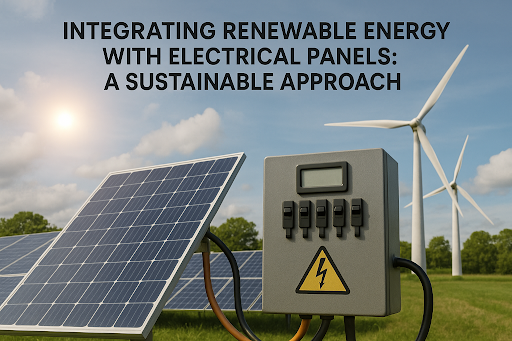
Integrating Renewable Energy with Electrical Panels: A Sustainable Approach

Introduction

In today’s rapidly evolving energy landscape, the integration of renewable energy sources into existing electrical panels and infrastructures is not just a trend—it’s a necessity. As the world grapples with climate change and the depletion of fossil fuels, the shift towards sustainable energy solutions becomes imperative. At the heart of this transition lies the seamless integration of renewable energy systems with electrical panels, ensuring efficient energy distribution and management.

Synchro Electricals, a pioneer in the field of electrical panel manufacturing, stands at the forefront of this green revolution. With a commitment to innovation and sustainability, Synchro Electricals offers a comprehensive range of panels designed to facilitate the integration of renewable energy sources, ensuring optimal performance and reliability.

The Role of Electrical Panels in Renewable Energy Integration

Electrical panels serve as the nerve center of any power distribution system. In the context of renewable energy, these panels play a crucial role in:

  • Energy Distribution: Managing the flow of electricity from renewable sources to various loads.
  • Protection: Safeguarding the system against faults and overloads.
  • Monitoring: Providing real-time data on energy production and consumption.

By integrating renewable energy sources like solar and wind into these panels, we can ensure a stable and efficient power supply, reducing reliance on conventional energy sources and minimizing environmental impact.

Synchro Electricals: Leading the Way

Established in 2018, Synchro Electricals Pvt. Ltd. has rapidly emerged as a leader in designing, testing, and commissioning electrical panels. With a diverse product portfolio and a team of over 25 experts, Synchro Electricals is dedicated to providing top-notch solutions tailored to the unique needs of renewable energy integration.

Key Panels Facilitating Renewable Energy Integration

1. Solar ACDB/DCDB Boxes

 Solar ACDB/DCDB Boxes

Solar ACDB (Alternating Current Distribution Box) and DCDB (Direct Current Distribution Box) are essential components in solar power systems. They:

  • ACDB: Manages the AC power from the inverter to the grid or load.
  • DCDB: Handles the DC power from solar panels to the inverter.

These boxes ensure safe and efficient energy flow, equipped with protective devices like MCBs, surge protection devices, and fuses.

2. 800Vac Solar Type Tested Panel

800Vac Solar Type Tested Panel

Designed to handle high-voltage solar applications, the 800Vac Solar Type Tested Panel ensures:

  • Safety: Adherence to international standards.
  • Efficiency: Optimal performance under varying load conditions.
  • Reliability: Robust construction for long-term use.

3. PCC (Power Control Centre) Panel

PCC Panel

The PCC Panel is integral for:

  • Power Distribution: Managing the distribution of electrical power.
  • Monitoring: Real-time tracking of system parameters.
  • Protection: Safeguarding against faults and overloads.

4. MCC (Motor Control Centre) Panel

MCC Panel (Motor Control Centre)

For systems involving motors, the MCC Panel offers:

  • Control: Efficient motor operation management.
  • Protection: Overload and fault protection.
  • Monitoring: Real-time status updates.

5. APFC (Automatic Power Factor Correction) Panel

APFC_panel

The APFC Panel enhances energy efficiency by:

  • Power Factor Correction: Reducing reactive power consumption.
  • Energy Savings: Lower electricity bills.
  • System Stability: Improved voltage regulation.

6. VFD (Variable Frequency Drive) Panel

VFD_panel

The VFD Panel is crucial for:

  • Speed Control: Adjusting motor speeds as per requirements.
  • Energy Efficiency: Reduced power consumption.
  • Extended Equipment Life: Minimizing mechanical stress.

7. Meter Panel

Meter_panel

The Meter Panel provides:

  • Energy Monitoring: Tracking consumption and generation.
  • Data Logging: Historical data for analysis.
  • Billing Accuracy: Precise energy usage records.

8. Solar Power Panel

Soalr_Power_Panel

Synchro Electricals’ Solar Power Panels are:

  • Efficient: High energy conversion rates.
  • Durable: Built to withstand environmental challenges.
  • Versatile: Suitable for various applications.

9. L.T. Bus Duct/Sandwich Bus Duct

LT_bus_duct

These components ensure:

  • Efficient Power Distribution: Minimal energy losses.
  • Space Saving: Compact design.
  • Safety: Reduced risk of electrical faults.

10. 1500VDC Solar DCDB Panel

1500VDC

For high-voltage solar systems, this panel offers:

  • Enhanced Safety: Designed for high DC voltages.
  • Reliability: Robust construction.
  • Compliance: Meets international standards.

11. Type Tested Panel

type_tested_panel

Type Tested Panels guarantee:

  • Standardization: Adherence to global norms.
  • Safety: Verified performance under test conditions.
  • Quality Assurance: Consistent and reliable operation.

Turnkey Projects (SITC): A Comprehensive Solution

Turnkey Projects (SITC)

Synchro Electricals offers Turnkey Projects encompassing:

  • Supply: Provision of all necessary components.
  • Installation: Expert setup of systems.
  • Testing: Ensuring optimal performance.
  • Commissioning: Final system integration and activation.

This holistic approach ensures seamless renewable energy integration, tailored to specific client needs.

Challenges in Renewable Energy Integration

While the benefits are numerous, challenges include:

  • Intermittency: Solar and wind energy are weather-dependent.
  • Infrastructure Compatibility: Existing systems may require upgrades
  • Regulatory Hurdles: Navigating policies and standards.

Addressing these challenges requires innovative solutions and expert guidance.

The Future of Renewable Energy Integration

The path forward involves:

  • Smart Grids: Enhanced communication between energy sources and consumers.
  • Energy Storage: Efficient storage solutions like batteries.
  • IoT Integration: Real-time monitoring and control.

Synchro Electricals is committed to staying at the forefront of these advancements, ensuring clients benefit from the latest technologies.

Conclusion

Integrating renewable energy with electrical panels is a pivotal step towards a sustainable future. With a comprehensive range of products and services, Synchro Electricals is poised to lead this transformation, offering solutions that are efficient, reliable, and tailored to modern energy needs.

FAQs

Why is integrating renewable energy with electrical panels important?

Integrating renewable energy ensures efficient energy distribution, reduces reliance on fossil fuels, and promotes environmental sustainability.

What makes Synchro Electricals' panels suitable for renewable energy integration?

Synchro Electricals' panels are designed to handle the unique demands of renewable energy sources, ensuring safety, efficiency, and compliance with international standards.

How does the APFC Panel improve energy efficiency?

The APFC Panel corrects the power factor, reducing reactive power consumption, leading to lower electricity bills and improved system stability.

What is the significance of Type Tested Panels?

Type Tested Panels have undergone rigorous testing to ensure they meet specific performance and safety standards, guaranteeing reliability.

How does Synchro Electricals support clients in renewable energy projects?

Through Turnkey Projects (SITC), Synchro Electricals offers comprehensive solutions, from supply and installation to testing and commissioning, ensuring seamless integration.

Welcome to Synchro Electricals

We provide trusted, high-performance electrical solutions tailored for every industry.

Apply For Job