SCADA Communication Protocols in Modern Synchronizing Panels (Modbus / IEC-61850)

In today’s smart power plants and utility-scale power generation systems, synchronizing panels are no longer standalone control units. They are integrated into plant-wide SCADA (Supervisory Control and Data Acquisition) systems that enable centralized monitoring, automation, and real-time control of generators, switchgear, and power distribution infrastructure.

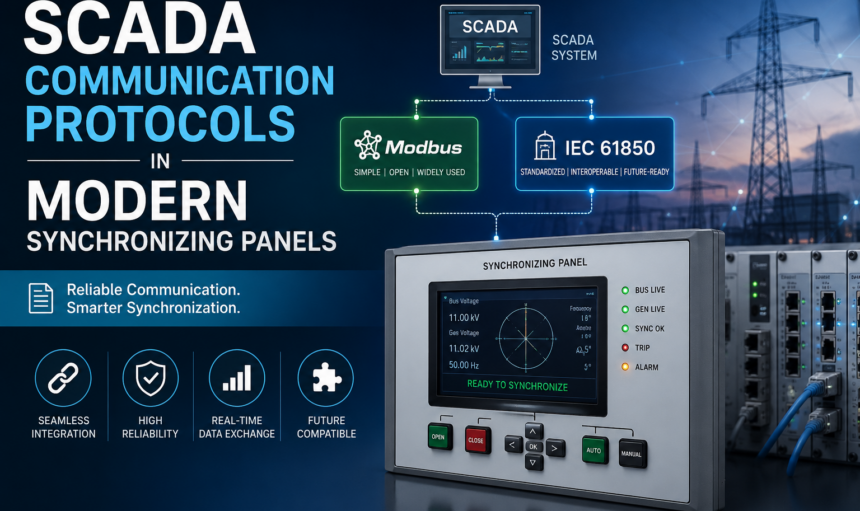
Modern SCADA synchronizing panels rely on industrial communication protocols to exchange operational data between generator controllers, PLCs, protection relays, and supervisory control systems. Among the most widely implemented protocols in synchronizing panels are Modbus communication protocols and IEC-61850 substation communication standards.

For power plants operating multiple generators and complex electrical networks, the implementation of reliable SCADA communication protocols in synchronizing panels ensures seamless generator coordination, faster fault diagnostics, and improved operational efficiency.

The Digital Layer of Generator Synchronization Systems

Traditional synchronizing panels primarily performed generator synchronization functions such as voltage matching, frequency matching, and phase alignment before connecting generators to the busbar.

However, modern power plants demand far greater operational visibility. Operators must continuously monitor generator parameters such as:

  • Real power output (kW)
  • Reactive power (kVAR)
  • Voltage and frequency stability
  • Load sharing between generators
  • Breaker status and synchronization events

To achieve this level of control, synchronizing panels in smart power plants integrate with SCADA platforms through industrial communication networks.

These SCADA-enabled synchronizing panels transmit operational data to control rooms, enabling centralized supervision of generator systems across large industrial facilities and utility networks.

Communication Architecture in SCADA Synchronizing Panels

In modern power generation facilities, synchronizing panels form a critical node within the SCADA communication architecture. Multiple intelligent devices inside the panel communicate with each other through industrial protocols.

Typical devices connected within a SCADA synchronizing panel network include:

  • Generator controllers
  • PLC-based synchronizing systems
  • protection relays
  • energy meters
  • circuit breaker monitoring modules
  • SCADA gateways

These devices continuously exchange operational data with the central SCADA server, enabling real-time visualization of generator performance and electrical system status.

Industrial communication protocols such as Modbus RTU, Modbus TCP/IP, and IEC-61850 enable this seamless integration between synchronizing panels and SCADA systems.

Modbus Communication Protocol in Synchronizing Panels

One of the most widely used industrial protocols in SCADA synchronizing panels is Modbus. Originally developed for industrial automation systems, Modbus remains a reliable communication standard for exchanging data between electrical devices.

In synchronizing panels, Modbus communication protocols allow generator controllers and protection relays to transmit operational data to SCADA systems.

Two common variants of Modbus are used in power generation applications:

Modbus RTU

Modbus RTU operates over serial communication networks such as RS-485. It is widely used in industrial environments due to its simplicity, reliability, and ability to connect multiple devices on a single communication bus.

In generator synchronizing panels, Modbus RTU is often used for communication between PLC controllers, protection relays, and digital meters.

Modbus TCP/IP

Modbus TCP/IP operates over Ethernet networks, enabling faster communication and integration with modern SCADA platforms.

In large power plants and smart utility infrastructures, Modbus TCP allows synchronizing panels to communicate directly with SCADA servers, data historians, and remote monitoring systems.

The simplicity and interoperability of Modbus communication protocols make them highly suitable for synchronizing panel applications.

IEC-61850: Advanced Communication for Smart Substations

While Modbus remains widely used, many modern smart power plants and utility substations are adopting IEC-61850 communication protocols for advanced automation.

IEC-61850 is an international standard specifically developed for substation automation systems and smart grid communication.

Unlike traditional communication protocols, IEC-61850 uses object-oriented data models and high-speed Ethernet communication, enabling faster and more structured data exchange between intelligent electronic devices (IEDs).

In synchronizing panels integrated with smart grid systems, IEC-61850 enables several advanced capabilities:

  • high-speed peer-to-peer communication between protection devices
  • event-driven messaging through GOOSE communication
  • standardized device data models for interoperability
  • improved scalability for complex electrical networks

Because of these features, IEC-61850 is increasingly used in modern SCADA synchronizing panels deployed in large utility power plants.

Data Visibility and Remote Control in Smart Power Plants

Integrating SCADA communication protocols with synchronizing panels significantly enhances operational visibility across power generation facilities.

Operators can remotely monitor generator parameters such as:

  • generator loading and load sharing status
  • synchronization events and breaker operation
  • alarm conditions and protection trips
  • power quality parameters

Through SCADA interfaces, engineers can also perform remote commands such as generator start/stop operations, load adjustments, and breaker control.

This level of automation is essential for smart power plants and distributed energy systems, where centralized monitoring improves both reliability and operational efficiency.

Reliability and Cybersecurity Considerations

Because SCADA synchronizing panels operate within critical power infrastructure, communication reliability and cybersecurity are essential design considerations.

Communication networks must ensure:

  • low latency data transmission
  • redundancy for communication links
  • secure network access control
  • protection against cyber threats

Modern IEC-61850-based power automation systems often incorporate secure Ethernet networks and network segmentation to protect critical control systems.

Ensuring secure and reliable SCADA communication in synchronizing panels is therefore essential for maintaining the stability of power generation systems.

Synchro Electricals: Synchronizing Panels for Smart Power Systems

Synchro Electricals designs advanced synchronizing panels engineered for modern power generation facilities and smart utility infrastructure. These panels are built to support seamless integration with SCADA communication systems using industrial protocols such as Modbus and IEC-61850.

Each synchronizing panel from Synchro Electricals is designed to support reliable generator synchronization, intelligent load sharing, and real-time communication with supervisory control systems.

With strong expertise in industrial electrical panel manufacturing and power system automation, Synchro Electricals provides robust solutions for smart power plants, distributed generation facilities, and utility-scale power networks.

Intelligent Communication as the Foundation of Modern Power Control

As power generation systems become more complex and interconnected, communication between electrical devices becomes increasingly important.

By integrating SCADA communication protocols such as Modbus and IEC-61850, modern synchronizing panels enable centralized monitoring, advanced automation, and improved generator coordination.

For smart power plants and utility infrastructures, deploying SCADA-enabled synchronizing panels with robust communication protocols ensures greater reliability, faster fault response, and efficient management of power generation assets.

FAQs

  1. 1. What is a SCADA synchronizing panel?

    A SCADA synchronizing panel is a generator control panel integrated with a SCADA system to monitor and control generator synchronization, load sharing, and breaker operations remotely.

  2. 2. Why are communication protocols used in synchronizing panels?

    Communication protocols allow synchronizing panels to exchange real-time data with SCADA systems, enabling centralized monitoring and control of generator operations.

  3. 3. What is the difference between Modbus and IEC-61850?

    Modbus is a simple industrial communication protocol widely used for device communication, while IEC-61850 is an advanced standard designed specifically for smart substations and power system automation.

  4. 4. Which protocol is commonly used in synchronizing panels?

    Modbus RTU and Modbus TCP/IP are commonly used in synchronizing panels, while IEC-61850 is increasingly adopted in modern smart grid and utility applications.

  5. 5. How does SCADA integration improve generator synchronization systems?

    SCADA integration allows operators to monitor generator performance, control synchronization operations remotely, and quickly detect faults in power generation systems.

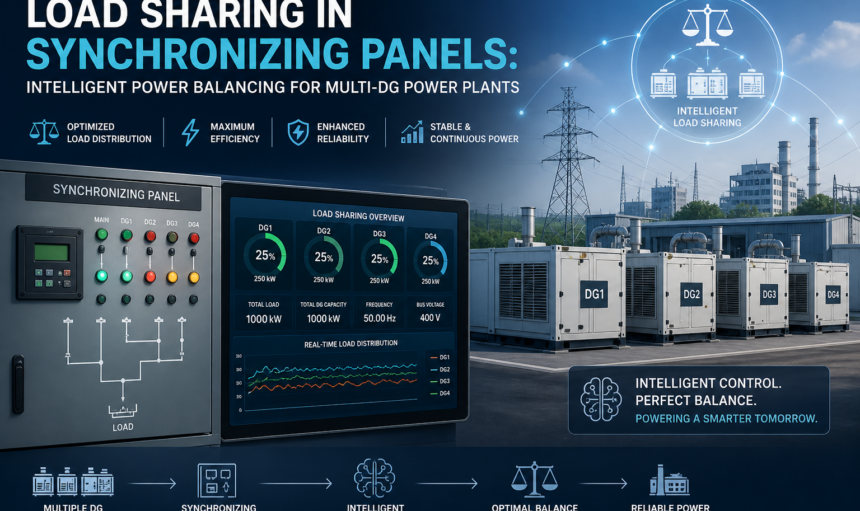
Load Sharing in Synchronizing Panels: Intelligent Power Balancing for Multi-DG Power Plants

Industrial facilities that rely on multi-DG power plants face a critical operational challenge – how to distribute electrical load efficiently across multiple generators. When several diesel generators operate together without proper coordination, the result can be unstable frequency, inefficient fuel usage, and uneven mechanical stress.

This is where automatic synchronizing panels play a vital role. Modern synchronizing panels integrate intelligent load sharing algorithms that automatically balance electrical demand among generators operating on the same busbar.

In large-scale power generation systems, proper load sharing in synchronizing panels ensures that each DG set contributes proportionally to the total power demand, improving efficiency and protecting expensive generator equipment.

Understanding the Load Sharing Challenge in Multi-DG Power Plants

Running a single diesel generator is relatively simple. However, when multiple generators operate simultaneously in industrial power plants, maintaining equilibrium becomes significantly more complex.

Each generator must match system parameters such as frequency, voltage, and phase angle before connecting to the power bus. Once connected, the generators must continuously adjust their output so that the electrical load is evenly distributed.

Without an effective load sharing mechanism in synchronizing panels, several operational problems can arise:

  • One DG set may become overloaded
  • Other generators may run underutilized
  • Fuel efficiency may drop significantly
  • Generator engines may experience premature wear

Advanced synchronizing panels used in power generation plants prevent these issues by implementing intelligent load distribution logic.

How Automatic Synchronizing Panels Manage Generator Coordination

A synchronizing panel acts as the control center of a multi-generator power system. It monitors electrical parameters from each generator and ensures that generators connect to the system safely.

Once synchronization is achieved, the panel’s control system manages generator output using specialized load sharing algorithms.

The panel continuously monitors parameters such as:

  • Generator real power output (kW)
  • System frequency and voltage
  • Generator engine speed
  • Power factor

Based on these readings, the automatic synchronizing panel dynamically adjusts generator performance to maintain balanced load distribution across all running DG sets.

Key Load Sharing Strategies Used in Modern Synchronizing Panels

Modern industrial synchronizing panels rely on several control methods to maintain stable generator operation. Each method is designed to ensure reliable load sharing in multi-DG power plants.

1. Droop-Based Load Sharing

The droop method is one of the most widely implemented techniques in automatic synchronizing panels. In this system, a generator’s frequency slightly decreases as its load increases.

Because every generator follows this behavior, the load naturally distributes across all DG sets connected to the bus. This method is commonly used in industrial power plants and manufacturing facilities due to its simplicity and reliability.

2. Isochronous Control for Precision Power Distribution

In facilities that demand extremely stable power – such as data centers or healthcare infrastructure – more precise control is required.

Isochronous control allows one generator to maintain system frequency while other generators share load proportionally. This approach ensures tight load regulation while maintaining stable electrical parameters across the entire system.

3. Digital Load Sharing Controllers

Modern synchronizing panels for power generation plants increasingly use microprocessor-based controllers that perform real-time load management.

These controllers communicate between generators and continuously adjust fuel injection and engine speed, ensuring optimal load balancing. Digital control systems improve both efficiency and system stability in large multi-generator installations.

Operational Advantages of Intelligent Load Sharing

Well-designed load sharing systems in synchronizing panels significantly improve generator plant performance. For industrial power facilities, these benefits directly translate into lower operating costs and improved system reliability.

Key operational advantages include:

Balanced Generator Utilization
All DG sets share electrical demand evenly, preventing overload conditions.

Improved Fuel Efficiency
Generators running at optimal load levels consume less fuel per unit of power generated.

Enhanced System Stability
Stable voltage and frequency are maintained even during sudden load changes.

Reduced Equipment Wear
Balanced load distribution minimizes mechanical stress on generator engines and alternators.

These advantages make automatic synchronizing panels with advanced load sharing algorithms essential for modern power generation systems.

Engineering Considerations for Synchronizing Panel Design

Designing synchronizing panels for multi-DG power plants requires advanced electrical engineering expertise. Panel design must ensure accurate measurement, reliable control, and strong protection mechanisms.

Critical components of a high-performance industrial synchronizing panel include:

  • Precision voltage and frequency sensors
  • Intelligent load sharing controllers
  • Programmable logic controllers (PLC)
  • Protection relays for reverse power and overload conditions
  • High-quality busbar systems

Together, these components enable reliable load sharing in synchronizing panels, ensuring smooth generator coordination in demanding industrial environments.

Synchro Electricals: Advanced Synchronizing Panel Solutions

Synchro Electricals is a trusted manufacturer of industrial synchronizing panels and generator control systems designed for reliable multi-DG power plant operations.

The company’s automatic synchronizing panels incorporate advanced control technologies and intelligent load sharing algorithms, ensuring stable generator coordination and efficient power distribution.

With deep expertise in industrial electrical panel manufacturing, Synchro Electricals delivers solutions that support power plants, infrastructure projects, manufacturing facilities, and critical power installations.

By combining engineering precision with robust panel design, Synchro Electricals helps industries maintain reliable and efficient generator synchronization and load management systems.

Final Thoughts

Operating multiple generators efficiently requires more than just connecting them to the same power bus. Proper coordination through synchronizing panels with advanced load sharing algorithms is essential for maintaining system stability and optimizing generator performance.

From droop-based control to digital load sharing systems, modern automatic synchronizing panels provide the intelligence needed to manage complex multi-DG power plants.

For industrial facilities that rely on dependable power generation, investing in high-quality synchronizing panels engineered for efficient load sharing ensures long-term operational reliability and energy efficiency.

FAQs

  1. 1. What is load – sharing in synchronizing panels?

    Load sharing in synchronizing panels ensures that multiple generators in a multi-DG power plant distribute electrical load evenly, preventing overload and improving overall power system efficiency.

  2. 2. Why are synchronizing panels important for multi-DG power plants?

    Synchronizing panels match voltage, frequency, and phase before connecting generators to the busbar, ensuring safe generator operation and stable power distribution.

  3. 3. Which load sharing method is commonly used in synchronizing panels?

    The droop control method is widely used in industrial synchronizing panels because it allows generators to naturally balance load without complex communication systems.

  4. 4. What industries use automatic synchronizing panels?

    Automatic synchronizing panels are commonly used in manufacturing plants, hospitals, data centers, power plants, and large infrastructure facilities where multiple generators operate together.

  5. 5. How do load-sharing algorithms improve generator performance?

    Advanced load-sharing algorithms optimize generator utilization, reduce fuel consumption, and maintain stable voltage and frequency in multi-generator power systems.

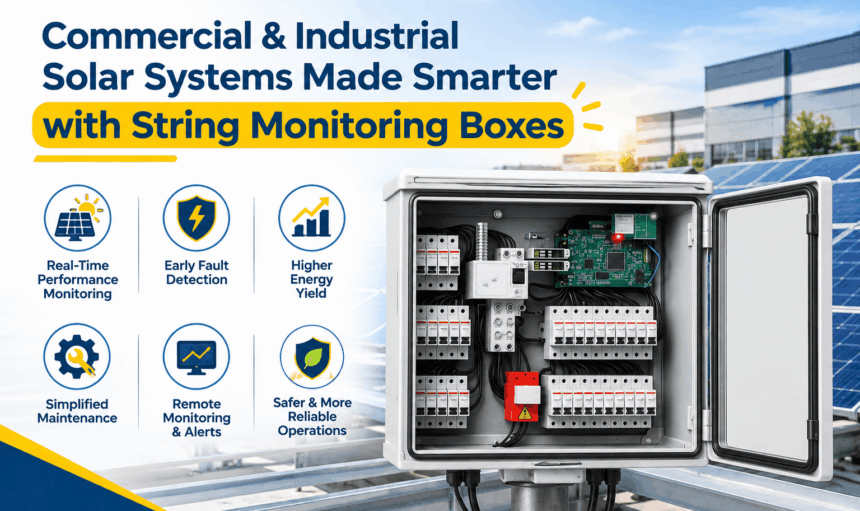
Commercial & Industrial Solar Systems Made Smarter with String Monitoring Boxes

In the commercial and industrial (C&I) solar segment, energy efficiency and reliability are not just performance goals—they are operational imperatives. As organizations increasingly depend on solar energy to power large facilities, one element stands out as essential for optimizing performance and reducing downtime: String Monitoring Boxes.

These advanced monitoring units enable continuous oversight of every solar string, ensuring that issues are detected early, energy yield is maximized, and maintenance is data-driven rather than reactive. For C&I rooftop systems, where hundreds of strings often feed into multiple inverters, the role of precise string-level monitoring becomes indispensable.

What is a String Monitoring Box?

A String Monitoring Box (SMB), also referred to as a DC Combiner Box with Monitoring, is an intelligent electrical device designed to collect, monitor, and protect the DC inputs from multiple PV strings before they are fed into an inverter.

In commercial-scale solar plants, an SMB does more than aggregate current—it captures real-time performance data such as voltage, current, and insulation status for each string. Through integrated communication protocols, this information is relayed to the central SCADA or monitoring system, empowering operators to make informed decisions about maintenance and performance optimization.

Why Monitoring Matters in Commercial & Industrial Solar Systems

For commercial and industrial installations, system uptime directly translates into energy savings and ROI. Even a small undetected fault in one string can lead to significant generation losses across the system.

A string monitoring box for commercial solar systems ensures:

  • Early Fault Detection: Identifies underperforming strings due to shading, soiling, or connection issues before they escalate.

  • Enhanced Maintenance Planning: Reduces manual inspection frequency through remote monitoring.

  • Improved System Safety: Offers surge and overcurrent protection, minimizing the risk of DC faults.

  • Optimized Energy Yield: Enables operators to compare string outputs and balance performance across the plant.

By turning raw DC data into actionable insights, SMBs become the foundation for intelligent O&M in solar plants.

Maximizing Energy Output and System Reliability

In commercial and industrial solar projects, the goal is clear—maximize output with minimal downtime. The integration of string monitoring boxes transforms how these systems are managed:

  • Real-Time Visibility: Operators can monitor performance metrics across every string in real time through centralized dashboards.

  • Predictive Maintenance: Historical data trends help identify potential degradation patterns, allowing timely interventions.

  • Reduced Operational Costs: By limiting the need for manual testing, overall maintenance expenditure drops significantly.

  • Faster Fault Localization: Faulty strings can be pinpointed instantly, accelerating repairs and minimizing production losses.

These benefits become even more valuable when scaled across multiple rooftop or ground-mounted commercial installations.

Key Features of Synchro Electricals’ String Monitoring Boxes

At Synchro Electricals, every string monitoring box is engineered for reliability, accuracy, and seamless integration. The design philosophy focuses on safety, long-term durability, and compatibility with diverse inverter technologies.

Core features include:

  • Precision current and voltage measurement with high-accuracy sensors

  • Advanced surge protection and fuse arrangements

  • Integrated communication via RS-485 / Modbus protocols

  • Compact, weatherproof enclosures suitable for harsh industrial environments

  • Optional data logging and wireless communication modules

  • Custom configurations to suit project scale and inverter compatibility

Each unit is tested to ensure consistent performance in demanding C&I environments where uptime is critical.

Real-World Applications and Benefits

Commercial buildings, manufacturing facilities, and industrial parks are increasingly adopting rooftop solar systems as part of sustainability initiatives. However, these systems often span thousands of square meters and involve complex wiring networks.

By incorporating string monitoring boxes, operators can achieve:

  • Streamlined energy audits for multiple rooftops or units

  • Efficient fault tracking during power fluctuations

  • Simplified preventive maintenance scheduling

  • Detailed performance benchmarking for system expansion or upgrades

Whether for a logistics center, an office complex, or an industrial processing plant, these systems ensure that every kilowatt generated is accounted for and optimized.

Why Choose Synchro Electricals

With decades of expertise in solar power distribution and protection systems, Synchro Electricals provides robust and scalable monitoring solutions for every solar application. Our string monitoring boxes are built to integrate seamlessly into both new and existing installations, ensuring minimal setup complexity and maximum performance transparency.

By partnering with Synchro, C&I solar developers gain access to:

  • Proven electrical design excellence

  • Industry-compliant safety and performance standards

  • Customized engineering support for system optimization

Every product is designed with a single goal—enabling smarter, safer, and more efficient solar energy systems for the modern commercial landscape.

Conclusion

As commercial and industrial facilities increasingly turn to renewable energy, reliable performance monitoring becomes essential to realizing the full value of solar investments. A string monitoring box for commercial solar systems acts as the eyes and ears of the PV network—detecting inefficiencies, preventing energy loss, and enabling smart, data-driven operations.

With Synchro Electricals advanced monitoring solutions, businesses can ensure their solar assets deliver consistent performance, day after day, year after year.

FAQs

What does a string monitoring box do in a solar system?

It monitors voltage and current from each string, detects faults, and ensures safe, efficient power flow to the inverter.

Why is string monitoring critical for commercial and industrial solar systems?

It enables early detection of string faults and enhances energy yield while reducing maintenance time and costs.

Can Synchro Electricals SMBs be customized for specific inverter models?

Yes, each SMB can be tailored to suit various inverter configurations and capacity requirements.

How does monitoring improve the ROI of solar projects?

By reducing energy losses and unplanned downtime, monitoring enhances total energy yield and system lifespan.

Are Synchro’s SMBs suitable for outdoor installation?

Absolutely. The enclosures are IP-rated and built to withstand harsh weather and industrial conditions.

Power Control Centers (PCC) for Automotive Manufacturing: Ensuring Stable Production Lines

In the automotive industry, precision, consistency, and efficiency are non-negotiable. Every robotic arm, conveyor belt, and testing station in a production line depends on a reliable electrical backbone to maintain continuous operation. Even a brief power interruption can bring the entire assembly process to a halt — leading to costly downtime, production losses, and missed delivery schedules.

That’s why PCC Panels for the Automotive Industry play such a vital role. Acting as the central nerve of electrical distribution within the plant, these panels ensure stable power flow, safe load management, and seamless control across all sections of production.

Synchro Electricals, a trusted manufacturer of industrial-grade control and distribution systems, designs Power Control Centers (PCC Panels) engineered to deliver reliability, precision, and protection in demanding automotive environments.

Why Power Stability is Critical in Automotive Manufacturing

Automotive plants operate as interconnected ecosystems of high-power machinery — paint shops, robotic welding cells, assembly conveyors, stamping presses, and precision testing equipment. The electrical load across such diverse systems fluctuates continuously.

Without effective control, this variability can cause:

  • Voltage instability affecting sensitive equipment performance

  • Overloading and circuit tripping during peak demand

  • Unscheduled downtime due to electrical faults

  • Higher maintenance costs and energy losses

A well-designed PCC panel mitigates these risks by providing centralized control, intelligent load management, and integrated protection. It ensures that power is always distributed efficiently and safely — keeping production steady and predictable.

What is a Power Control Center (PCC) Panel?

A Power Control Center is the main distribution hub for power supply in industrial environments. It houses circuit breakers, relays, contactors, metering units, and control logic components that manage the flow of electricity to various plant sections.

For automotive facilities, PCC panels:

  • Distribute power from transformers or generators to production equipment

  • Monitor electrical parameters like voltage, current, and frequency in real time

  • Protect systems against overload, short circuits, and phase imbalance

  • Ensure safe startup and shutdown of heavy machinery

In essence, PCC panels form the foundation of a plant’s electrical infrastructure — enabling seamless coordination between production lines and power sources.

The Role of PCC Panels in Automotive Production Lines

Automotive manufacturing involves a complex series of synchronized operations, from metal stamping and welding to painting, assembly, and inspection. Each stage requires high reliability and precision. PCC panels ensure:

  • Stable Power Supply: Maintains consistent voltage levels, preventing machine downtime.

  • Load Optimization: Automatically distributes load between feeders to avoid overloading.

  • Process Reliability: Protects automation equipment from fluctuations and faults.

  • Operational Safety: Integrates circuit protection and isolation mechanisms to prevent accidents.

  • Centralized Control: Simplifies management of multiple power circuits across large plants.

For automotive plants running 24/7 operations, this stability ensures that production targets are met without compromising safety or energy efficiency.

Challenges in Automotive Power Distribution

The automotive industry faces unique power management challenges due to high levels of automation and simultaneous operation of multiple high-load systems. Common issues include:

  • Variable Load Demand: Welding machines and robotic systems cause frequent load changes.

  • Harmonic Distortion: Non-linear loads introduce electrical noise that affects sensitive equipment.

  • Power Factor Degradation: Heavy machinery can reduce power factor, increasing energy bills.

  • Limited Downtime Windows: Maintenance opportunities are minimal, demanding reliable equipment.

PCC panels address these issues by providing intelligent protection, real-time monitoring, and smooth load control, creating a stable and resilient electrical network.

Key Features of Synchro Electricals’ PCC Panels

Synchro Electricals designs its PCC Panels for the Automotive Industry with precision engineering and advanced safety features, ensuring long-term performance under tough industrial conditions.

Key Features Include:

  • Modular Construction: Allows flexible expansion and easy maintenance.

  • High-Quality Switchgear: Equipped with ACBs, MCCBs, and contactors rated for industrial-grade loads.

  • Microprocessor-Based Monitoring: Real-time display of electrical parameters for accurate diagnostics.

  • Overload & Short-Circuit Protection: Safeguards critical systems from electrical faults.

  • SCADA / PLC Integration: Enables remote monitoring and control for smart manufacturing environments.

  • High Fault Withstand Capacity: Panels designed to handle fault levels up to 65kA or more.

  • Compliant with IEC & IS Standards: Ensures operational safety and reliability in global manufacturing facilities.

Each panel undergoes rigorous testing to meet the exacting standards required for continuous automotive production environments.

Applications of PCC Panels in Automotive Manufacturing

Synchro Electricals’ PCC Panels are deployed across various stages of automotive production, including:

  • Welding and Body Shops: Supplying stable power to high-load robotic welding machines.

  • Paint Shops: Maintaining balanced voltage for pumps, blowers, and curing ovens.

  • Assembly Lines: Powering conveyors, fastening tools, and inspection systems.

  • Testing Facilities: Providing precise control for sensitive measurement instruments.

  • Utility Sections: Managing HVAC, lighting, and air compression systems.

These applications highlight how PCC panels ensure reliable power management throughout the entire production ecosystem.

Benefits of Using PCC Panels in Automotive Facilities

Implementing Synchro Electricals’ PCC panels brings tangible advantages for both operational and financial performance:

  • Reduced Downtime: Intelligent load control and protection minimize unplanned stoppages.

  • Enhanced Productivity: Reliable power ensures maximum machine uptime.

  • Energy Efficiency: Optimized distribution lowers energy wastage and operating costs.

  • Improved Safety: Integrated protection mechanisms safeguard personnel and equipment.

  • Future-Ready Infrastructure: Modular design supports plant expansion and automation upgrades.

In an industry where every second of production counts, PCC panels are an investment in stability, safety, and efficiency.

Why Choose Synchro Electricals

With decades of experience in electrical power distribution and control systems, Synchro Electricals has established itself as a trusted partner for leading automotive manufacturers.

What sets Synchro apart:

  • Proven expertise in industrial-grade power management solutions.

  • Panels engineered to meet automotive manufacturing standards.

  • Custom-built configurations for plant-specific load requirements.

  • Comprehensive after-sales support and maintenance assistance.

By choosing Synchro Electricals, automotive manufacturers secure more than a product—they gain a dependable energy partner committed to ensuring uninterrupted production.

Conclusion

In the fast-paced world of automotive manufacturing, power reliability defines production efficiency. PCC Panels for the Automotive Industry ensure that complex assembly lines and automated systems operate seamlessly, with safety and precision at every stage.

With Synchro Electricals’ Power Control Centers, manufacturers can achieve stable power distribution, minimize downtime, and maintain continuous production—empowering the industry to drive performance, reliability, and innovation forward.

FAQs

What is a PCC Panel used for in automotive manufacturing?

A PCC Panel distributes and controls electrical power across production equipment, ensuring safe and efficient operation of machinery and automation systems.

Why are PCC Panels important for automotive plants?

They maintain voltage stability, prevent overloads, and safeguard production lines against electrical faults.

Can PCC Panels integrate with automation systems?

Yes, Synchro Electricals’ PCC Panels are SCADA/PLC compatible, allowing seamless integration into automated plant networks.

Are Synchro Electricals’ PCC Panels customizable?

Absolutely. Panels can be designed based on plant layout, load requirements, and capacity needs.

How do PCC Panels improve energy efficiency?

By optimizing load distribution and monitoring power quality, they reduce wastage and improve overall plant efficiency.

APFC and LT Panels for Heavy Engineering Industries: Enhancing Power Stability

Heavy engineering industries depend on consistent and high-quality power to operate massive machinery, furnaces, compressors, and motors. Any fluctuation or reactive power loss can lead to inefficiencies, equipment stress, and higher operational costs. To address these challenges, APFC (Automatic Power Factor Correction) Panels and LT (Low Tension) Panels play a critical role in ensuring stable, efficient, and reliable power distribution.

Synchro Electricals, a trusted APFC panel manufacturer in India, designs and delivers advanced APFC and LT panels tailored for heavy engineering applications — optimizing power utilization, reducing wastage, and maintaining plant-wide electrical stability.

Understanding APFC and LT Panels

APFC Panels (Automatic Power Factor Correction Panels) are designed to automatically improve the power factor of electrical systems. Power factor is a key indicator of how efficiently electrical power is being used. In heavy industries where inductive loads dominate, a low power factor can lead to penalties from utility companies and higher energy consumption.

An APFC panel detects reactive power in real-time and automatically switches capacitor banks using a microprocessor-based APFC relay, ensuring the system maintains an ideal power factor close to unity.

On the other hand, LT Panels (Low Tension Panels) are responsible for distributing electricity from transformers to various plant sections. They manage load distribution, power control, and protection at the low-voltage end — essential for ensuring operational safety and balanced energy delivery.

Together, APFC and LT panels form the backbone of a power management system in any heavy engineering facility.

Why Power Factor Correction Matters in Heavy Engineering

Power factor correction is more than a technical requirement — it directly impacts operational cost and equipment performance. In industries where large motors, welding machines, and induction furnaces operate simultaneously, lagging power factors are common.

By integrating APFC panels for heavy industry, companies can achieve:

  • Reduced Electricity Bills: Utilities often penalize low power factors; automatic correction eliminates these extra costs.

  • Enhanced Equipment Life: Reduced reactive power prevents overheating and electrical stress.

  • Improved Load Management: Maintains voltage stability and reduces power losses.

  • Sustainable Operations: Optimized power use contributes to energy efficiency and carbon reduction goals.

Key Features of Modern APFC Panels

Synchro Electricals’ APFC panels are engineered for precision and reliability, integrating both performance and protection features essential for demanding industrial environments:

  • Intelligent APFC Relay: Monitors and adjusts capacitor stages automatically for optimal power factor correction.

  • Modular Capacitor Banks: Enables flexible expansion based on load requirements — from 10 kVAR to 400 kVAR systems.

  • Microprocessor-Based Control: Ensures real-time monitoring, fast response, and reduced manual intervention.

  • Heavy-Duty Switchgear: Uses top-quality components from ABB, Schneider, or L&T for durability and safety.

  • Comprehensive Protection: Overload, short-circuit, and surge protection built into each panel.

These panels come in both indoor and outdoor configurations, designed according to IEC standards, ensuring long-term performance under varying load conditions.

Role of LT Panels in Power Distribution

In heavy engineering plants, LT panels manage distribution from main incomers to multiple sub-sections such as motor control centers (MCCs), lighting systems, and auxiliary loads. They are custom-built to handle high current ratings and ensure safe and efficient power flow throughout the facility.

Modern LT panels integrate intelligent features like:

  • Digital meters and control circuits for accurate load monitoring.

  • Automatic load sharing and switching to prevent overloads.

  • Compatibility with APFC systems, ensuring balanced reactive power compensation across all connected equipment.

By using both APFC panels and LT distribution panels, plants can achieve seamless energy management from transformer output to the equipment end.

Selecting the Right APFC Panel for Heavy Industries

When choosing an APFC electrical panel, engineers must consider voltage ratings, total connected load, capacitor size, and harmonic levels in the system. For example:

  • Small to mid-scale plants may use 100 kVAR to 200 kVAR APFC panels,

  • While large heavy engineering facilities might require 300 kVAR to 400 kVAR APFC systems for efficient correction.

Top-quality manufacturers like Synchro Electricals offer complete solutions — from design and manufacturing to APFC panel installation, ensuring precise configuration and seamless integration with LT systems.

Benefits of Using Synchro Electricals’ APFC & LT Panels

Synchro Electricals, a leading APFC and LT panel manufacturer in India, serves multiple industrial sectors with high-performance electrical solutions. For heavy engineering industries, their panels offer:

  • Uninterrupted Power Stability: Constant voltage and balanced load prevent production halts.

  • Energy Cost Optimization: Automatic correction reduces wastage and utility penalties.

  • High Reliability: Built with premium components and tested for high load endurance.

  • Ease of Maintenance: Modular design allows quick replacement of capacitor stages and switchgear.

  • Custom Design Capability: Panels are designed to match plant-specific load and space conditions.

With years of expertise and a focus on innovation, Synchro Electricals ensures every panel enhances efficiency, safety, and sustainability in industrial operations.

Conclusion

Heavy engineering industries operate in power-intensive environments where maintaining stability and efficiency is crucial. Integrating APFC panels for heavy industry with LT distribution panels ensures optimal power factor, reduced energy losses, and reliable operation of high-capacity machines.

By partnering with Synchro Electricals, industries gain access to expertly engineered automatic power factor correction panels that align with modern power management standards. Their APFC and LT panels not only stabilize energy systems but also help companies achieve long-term cost savings and operational excellence.

FAQs

What is an APFC panel, and how does it work in heavy engineering industries?

An APFC (Automatic Power Factor Correction) panel automatically adjusts capacitor banks to maintain optimal power factor. In heavy engineering, it ensures energy efficiency, reduces penalties, and stabilizes voltage for large machinery.

What is the difference between APFC and LT panels?

APFC panels improve power factor by compensating reactive power, while LT panels distribute power safely within industrial setups. Together, they maintain power quality and operational stability in heavy industries.

How do I select the right APFC panel for my heavy industry setup?

Choose an APFC panel based on total load, voltage, and harmonic conditions. For larger plants, higher-rated panels like 200 kVAR or 400 kVAR ensure reliable correction and efficiency.

What are the benefits of using APFC panels in heavy industries?

They reduce energy wastage, prevent power factor penalties, and improve equipment lifespan. This leads to smoother operations and lower electricity bills across large industrial systems.

How do APFC and LT panels enhance power reliability in heavy engineering units?

Together, APFC and LT panels ensure balanced power supply, reduced load fluctuations, and safe distribution — critical for maintaining uninterrupted power in high-demand environments.

Energy Efficiency and Lighting Distribution Panels: A Game Changer for Commercial Real Estate

In the fast-evolving world of commercial real estate, energy efficiency is not just desirable—it’s essential for both economic performance and environmental responsibility. As buildings strive for greener operations, the humble lighting distribution panel has become a cornerstone of sustainable facility management. Modern business complexes, office buildings, and coworking hubs all depend on high-quality lighting panels to deliver reliable, efficient power to their ever-expanding lighting systems.

Why Lighting Distribution Panels Matter for Commercial Offices

A lighting distribution panel—whether 3-phase for multi-floor buildings or single-phase for boutique offices—regulates and distributes electrical power to all the lighting circuits in a facility. In bustling corporate environments, smart lighting controls help balance the demands of energy savings and occupant comfort. Choosing the right panel isn’t just about reliability; it’s an investment in lower operating costs, premium safety, and future-ready scalability.

For commercial property managers and electrical contractors, there is an ever-increasing demand to:

  • Buy lighting distribution panels compatible with energy-efficient lighting (especially LED).
  • Order electrical lighting panels in bulk for new construction or renovations.
  • Find UL listed lighting distribution boards and IP-rated lighting control panels that meet stringent compliance codes for workplace safety and performance.
  • Secure wholesale lighting distribution panel deals with the best lighting panel prices, particularly for multi-unit commercial builds.

Features Making a Difference in Commercial Buildings

  • Energy Efficiency and Controls:
    Commercial buildings see significant gains from energy-efficient lighting panels that work seamlessly with timers, occupancy sensors, and daylight harvesting controls. Integration with LED lighting distribution box suppliers enables continuous savings and longer lamp life.
  • Custom Solutions for Diverse Spaces:
    Modern high-rises and business parks often require both 100a 3 phase panels for main distribution and custom lighting distribution panel manufacturers for unique, space-constrained layouts. Such flexibility makes it easy to scale up lighting systems as tenancies change or expand.
  • Safety and Compliance Built-In:
    For commercial buildings, building codes demand UL listed lighting distribution boards and IP-rated lighting control panels to guarantee safe operation under intensive daily use. In climates with high humidity or dust, these features are critical.
  • Professional Service:
    Many in the sector now seek out end-to-end solutions: from selecting the best panel to arranging lighting panel installation services and post-installation support for seamless building management.

How Lighting Distribution Panels Drive Results

  • Reduced Energy Bills:
    Smart distribution panels paired with LED lighting generate immediate, measurable savings across open-plan offices and shared spaces.
  • Increased Property Value:
    Efficient, compliant systems raise green building ratings—attractive to eco-conscious tenants and investors.
  • Operational Peace of Mind:
    With the ability to rapidly source and purchase lighting control boards, property managers stay ahead on upgrades, repairs, and code changes.

Lighting Distribution Panels: Not Just for Office Buildings

While this blog focuses on commercial real estate due to the sector’s huge demand and complex requirements, it’s important to acknowledge that these panels are the backbone of multiple industries:

  • Manufacturing & Warehousing:
    High-voltage, 220-440 Volt lighting distribution panels and ruggedized, IP-rated models keep lights running safely on busy shop floors and logistics hubs.
  • Healthcare Facilities:
    Hospitals demand high-reliability, UL-listed lighting panels for critical lighting, heavy-duty circuits, and compliance with medical safety codes.
  • Retail & Hospitality:
    Chain stores, shopping centers, and hotels order panels in bulk (wholesale lighting distribution panels) to standardize systems across locations and ensure consistent guest experiences.
  • Education & Public Infrastructure:
    Schools and transportation terminals benefit from energy-efficient lighting panels and lighting panel installation services that minimize downtime and optimize learning or commuting environments.

Making the Right Choice for Your Commercial Property

When planning a new build or retrofitting an existing office, remember to:

  • Analyze actual load requirements and future scalability.
  • Partner with reputable LED lighting distribution box suppliers for compatibility with energy-saving bulbs.
  • Compare features like 3-phase vs single-phase, amperage (such as 100a 3 phase panels), and protection ratings.
  • Seek custom lighting distribution panel manufacturers for non-standard projects.
  • Balance cost-effectiveness with long-term performance by reviewing the best lighting panel prices from certified distributors.

Conclusion

For commercial real estate professionals, investing in state-of-the-art lighting distribution panels isn’t just about lights—it’s about maximizing sustainability, safety, and building value. Properly selected panels slash energy bills, support green certifications, and future-proof your property investment. Partnering with a trusted supplier like Synchro Electricals, known for manufacturing high-quality, UL-listed, and energy-efficient lighting distribution panels, can set your building apart as a leader in efficient, modern operations. Whether you need panels for sale, installation, or bulk wholesale, Synchro Electricals offers customized solutions backed by expert support to make your property smarter, safer, and more sustainable.

Ready to step into the future? Explore your energy-efficient lighting panel options with Synchro Electricals today.

FAQS

1. Why should commercial buildings invest in energy-efficient lighting distribution panels?

These panels optimize LED lighting and smart controls, significantly reducing energy costs while improving occupant comfort and extending lamp life for sustainable operations.

2. What safety certifications and protection ratings must lighting distribution panels have?

Look for UL listed panels with IP42 to IP55 ratings to ensure safe operation, dust and moisture protection, and compliance with commercial building codes.

3. What materials and components ensure the durability of lighting distribution panels?

Panels are commonly made from powder-coated CRCA steel with magnetic-thermal MCB circuit breakers rated up to 9 kA for effective fault protection and long-term reliability.

4. How do lighting distribution panels support scalability in commercial properties?

Modern panels come in 3-phase configurations—often rated 100A or more—allowing easy expansion or customization as building lighting needs evolve or tenants change.

5. Can lighting distribution panels integrate with smart lighting controls?

Yes, they are designed to work with occupancy sensors, timers, and daylight harvesting systems, enabling automatic energy savings and operational efficiency in office environments.

How Regular Electrical Safety Audits Can Prevent unexpected system interruption

In today’s fast-paced industrial and commercial landscape, uninterrupted operations are not just a convenience—they are a critical necessity. Every minute of downtime translates to lost productivity, financial setbacks, and potential reputational damage. While many factors can contribute to system interruptions, a significant and often overlooked culprit is electrical system failure. This is precisely where the power of regular electrical safety audits comes into play.

At Synchro Electricals Pvt. Ltd., established in 2018 and proudly based in Rajkot, Gujarat, we understand this criticality firsthand. As a leading manufacturer of Electrical Distribution panels, specializing in the design, testing, we recognize that the panels we build are only as reliable as the systems they integrate into. Our expertise extends beyond manufacturing; it encompasses a deep understanding of electrical safety and operational continuity.

The Hidden Costs of Unexpected Interruptions

Imagine a manufacturing plant grinding to a halt due to a tripped breaker that couldn’t handle an overloaded circuit, or a data center experiencing a power surge that damages critical equipment. These aren’t just minor inconveniences. They represent:

  • Financial Losses: Lost production, missed deadlines, spoiled materials, and emergency repair costs.
  • Operational Delays: Backlogs, supply chain disruptions, and difficulty in resuming normal operations.
  • Safety Risks: Faulty electrical systems can lead to fires, electrocution, and other severe hazards for personnel.
  • Reputational Damage: Unreliable systems can erode client trust and impact business relationships.

The Role of Regular Electrical Safety Audits

An electrical safety audit is a comprehensive, systematic inspection and evaluation of an electrical system. It goes far beyond a simple visual check. Conducted by qualified professionals, these audits meticulously examine:

  • Wiring and Connections: Identifying loose connections, frayed wires, and improper installations that can lead to shorts or overheating.
  • Circuit Breakers and Fuses: Ensuring they are appropriately sized for their loads and functioning correctly to prevent overcurrents.
  • Grounding and Bonding: Verifying that grounding systems are intact and effective in preventing shock hazards and equipment damage.
  • Panel Boards and Distribution Systems: Checking for signs of wear, corrosion, overheating, and proper labeling, much like the precision we apply in every electrical distribution panel we design, test, and commission.
  • Compliance with Standards: Ensuring the entire electrical system adheres to relevant national and international safety standards and codes.
  • Load Balancing and Capacity: Assessing if the existing electrical infrastructure can safely handle current and projected power demands, preventing unexpected overloads.

How Synchro Electricals Pvt. Ltd. Champions Reliability

While Synchro Electricals is renowned for our state-of-the-art, leading-manufactured electrical distribution panels, our commitment to preventing unexpected system interruptions extends to advocating for proactive electrical safety measures. We understand that a meticulously designed panel must operate within a robust and safe electrical ecosystem.

Our experience in electrical panel manufacturing gives us unique insights into the common failure points and best practices. We build our panels with safety and longevity in mind, but even the best equipment needs a safe environment to operate optimally. Regular audits help ensure that the entire electrical infrastructure, including the panels, remains in peak condition. They help identify potential weaknesses before they escalate into critical failures, allowing for timely repairs, upgrades, or adjustments.

Proactive vs. Reactive: The Choice is Clear

Waiting for an electrical system to fail before taking action is a reactive and costly approach. A proactive strategy, centered around regular electrical safety audits, offers immense benefits:

  • Reduced Downtime: By identifying and rectifying issues early, you drastically minimize the risk of sudden, unexpected outages.
  • Enhanced Safety: A safer working environment for employees and reduced risk of electrical fires or accidents.
  • Extended Equipment Lifespan: Proper maintenance and timely repairs prevent premature wear and tear on valuable electrical assets.
  • Cost Savings: Preventing major breakdowns is almost always more cost-effective than emergency repairs and dealing with the aftermath of an interruption.
  • Regulatory Compliance: Staying compliant with safety regulations avoids potential penalties and legal issues.

Closing insights

In conclusion, for any business or industrial facility aiming for uninterrupted operations and peak efficiency, regular electrical safety audits are not an option—they are a necessity. Just as Synchro Electricals Pvt. Ltd. is dedicated to delivering reliable electrical distribution panels from our base in Rajkot, Gujarat, we strongly encourage businesses to invest in these crucial audits to safeguard their operations, their assets, and their people.

FAQ

1. Are electrical audits only for large facilities?

No, even small businesses and residential complexes can benefit from audits. Any place using electrical systems is vulnerable to disruptions without regular safety checks.

2. What is an electrical safety audit?

An electrical safety audit is a systematic inspection and evaluation of an organization’s electrical systems to identify potential hazards, ensure regulatory compliance, and improve overall safety and reliability.

3. How can electrical safety audits prevent system interruptions?

Audits detect early signs of equipment wear, faulty wiring, overloading, or grounding issues—factors that could lead to sudden outages or electrical failures if left unaddressed.

4. What types of problems can be identified during an electrical safety audit?

Audits can reveal issues like overheating components, loose connections, outdated circuit breakers, improper earthing, and violations of electrical codes—all of which can cause system breakdowns.

5. Is thermal imaging part of an electrical safety audit?

Yes, many audits include infrared thermography to detect hot spots in panels and connections—indicators of potential failure that may not be visible to the naked eye.

Commercial & Industrial (C&I) Solar Growth in India: The Importance of Advanced ACDB/DCDB Panels

India is experiencing a renewable energy revolution, and at the forefront of this transformation is the Commercial & Industrial (C&I) solar sector. As businesses aim to reduce electricity costs and meet sustainability goals, solar energy adoption among commercial and industrial units has witnessed a remarkable surge.

However, the success and safety of these solar systems rely on more than just photovoltaic (PV) panels and inverters. One critical, yet often overlooked, component is the ACDB (Alternating Current Distribution Board) and DCDB (Direct Current Distribution Board). These panels play a crucial role in power distribution, system protection, and efficient monitoring.

Let’s explore the growth of the C&I solar segment in India and why advanced ACDB/DCDB panels are pivotal to the long-term reliability and performance of solar systems.

The Rise of C&I Solar in India

1. Policy Push and Cost Competitiveness

India’s energy demand is expected to double by 2040. In response, the Indian government has laid a strong foundation for solar adoption through supportive policies like:

  • Accelerated depreciation benefits
  • GST relief on solar components
  • Open access solar policies
  • Green energy corridors
  • Renewable purchase obligations (RPOs)

Alongside this, the cost of solar installation has dropped significantly in the last decade, making it a cost-competitive option for industries and businesses compared to grid electricity.

2. High Commercial Tariffs Drive Solar Adoption

Many Indian states have high electricity tariffs for commercial and industrial users, ranging from ₹7 to ₹12 per unit. In contrast, solar energy offers power at ₹2.5 to ₹4 per unit, generating 30-60% savings on electricity bills. This economic benefit has led major industries, manufacturing units, corporate parks, and warehouses to invest in rooftop and open-access solar systems.

3. Net Metering and Grid Integration

With policies allowing net metering, businesses can sell excess power back to the grid, further improving ROI. As more C&I units opt for grid-tied solar systems, the importance of system safety, power quality, and effective energy monitoring increases.

Understanding ACDB & DCDB Panels in Solar Systems

What is a DCDB (Direct Current Distribution Board)?

The DCDB panel receives DC power from solar panels and routes it to the inverter. It helps in:

  • String-level protection using fuses or MCBs
  • Monitoring of individual string currents
  • SPD (Surge Protection Device) for overvoltage protection

   Isolation of strings during maintenance

What is an ACDB (Alternating Current Distribution Board)?

  The ACDB panel is installed after the inverter. It manages the distribution of AC power to the grid or local loads and provides:

  • Overcurrent and short-circuit protection
  • Energy metering and load balancing
  • SPD and isolators to ensure safe grid injection

  Seamless integration with net meters

Both these boards act as protective backbones, ensuring that power flows safely, equipment remains unharmed, and operators are protected from faults or overloads.

Why Advanced ACDB/DCDB Panels Matter in the C&I Segment

C&I solar systems are typically large—ranging from 50 kW to multiple MWs. With scale comes complexity. Here’s why advanced, high-quality ACDB/DCDB panels are non-negotiable:

1. Enhanced System Safety

Industrial environments are susceptible to power surges, short circuits, and high-load fluctuations. Poor-quality panels can:

  • Fail under high temperatures or current loads
  • Cause fire hazards
  • Lead to inverter and module damage

Advanced panels use high-grade copper bus bars, certified breakers, flame-retardant enclosures, and branded surge protection devices to ensure maximum safety.

2. Real-Time Monitoring and Diagnostics

Modern ACDB/DCDB units integrate IoT-enabled monitoring systems, allowing:

  • String-level performance tracking
  • Energy data logging
  • Remote fault detection
  • Preventive maintenance scheduling

This intelligent monitoring helps O&M teams quickly detect performance issues and ensure 99%+ uptime, critical for ROI in large C&I systems.

3. Customization as per Project Needs

No two C&I projects are alike. Factors like:

  • Rooftop or ground-mounted layout
  • Inverter capacity
  • Number of strings
  • Export-import metering requirements

All demand custom-designed ACDB/DCDB panels tailored for specific site conditions. Advanced manufacturers offer modular, scalable designs for seamless integration.

4. Ease of Commissioning and Maintenance

Professionally manufactured panels come pre-wired, pre-tested, and tagged for faster on-site commissioning. Labels, testing ports, and breaker layouts are optimized for easy access, ensuring quick troubleshooting and safety compliance.

5. Compliance with International Standards

Modern C&I projects demand bankability and compliance. Investors, EPCs, and DISCOMs prefer panels that follow:

  • IEC/IS standards
  • BIS certifications
  • IP65/IP67 protection levels
  • Type-tested assemblies

Using advanced ACDB/DCDB panels ensures that the overall project passes audits, safety checks, and performance guarantees with ease.

Synchro Electricals: Powering C&I Solar with Smart Panels

As India transitions into a green economy, panel manufacturers like Synchro Electricals Pvt. Ltd., based in Rajkot, Gujarat, are leading the charge in offering premium-quality ACDB/DCDB panels for solar EPCs and industries.

Founded in 2018, Synchro Electricals specializes in:

  • Custom ACDB/DCDB solutions for rooftop and ground-mounted projects
  • Panels tested to international safety and performance standards
  • Dedicated support for project commissioning and documentation

Whether you’re an EPC contractor, solar consultant, or industrial consumer, partnering with a reliable panel manufacturer ensures system longevity, safety, and higher yield.

 Contact Synchro Electricals
+91 96019 65426
Plot No. 35 to 40, Ravaki Rev. Sur. No. 670, Pushti Parishar Industrial Area, Near Maa Khodal Ind-1, Ravki, Taluka Lodhika, Rajkot, Gujarat, India – 360004

Closing Insights

The C&I solar boom in India is not just about clean power—it’s about smart, safe, and scalable solutions. As system sizes and complexity grow, advanced ACDB and DCDB panels are no longer optional—they are essential.

From ensuring safety and performance to enabling smart monitoring, these panels are the backbone of a reliable solar installation. Investing in quality from the start saves costs, minimizes risks, and maximizes returns.

For industries eyeing a sustainable future with solar, the choice is clear: Prioritize panel quality, partner with experts, and power your growth with confidence.

FAQ

Q1: Can we use a standard electrical panel instead of an ACDB/DCDB in solar systems?

No. ACDB/DCDB panels are specifically designed for solar applications with surge protection, DC isolation, and monitoring features not found in standard panels.

Q2: What certifications should an ACDB/DCDB panel have?

Panels should comply with IEC/IS standards, offer IP65/IP67 ingress protection, and undergo type testing to ensure reliability in industrial settings.

Q3: How often should ACDB/DCDB panels be maintained?

Regular maintenance every 6 months is recommended, including thermal scans, cleaning, and checking for loose connections or component degradation.

Q4: Are ACDB/DCDB panels useful in off-grid solar setups?

Yes. They manage battery and inverter connections, protect components, and ensure the system works efficiently even without grid support.

Q5: How do I choose the right ACDB/DCDB panel for my C&I project?

Work with expert manufacturers like Synchro Electricals, who analyze your inverter ratings, string configuration, and site conditions to offer the most optimized solution.


Why ACDB/DCDB Panels Matter for Net Metering & Grid-Tied Solar

Solar power has shifted from being a niche green option to a mainstream energy solution for homes and businesses across the globe. Among the most popular configurations is the grid-tied solar system paired with net metering, which allows solar users not only to generate their own electricity but also to export surplus energy back to the grid, earning credits in return. But behind the scenes of this smart energy exchange lies an often overlooked yet critical component: the ACDB (Alternating Current Distribution Board) and DCDB (Direct Current Distribution Board) panels.

At Synchro Electrical, we specialize in manufacturing high-quality ACDB/DCDB panels designed to maximize safety, reliability, and efficiency for solar power systems. This post will explore why these panels matter so much for net metering and grid-tied solar setups, and why partnering with a trusted manufacturer like Synchro Electrical can make all the difference in your solar journey.

What Are ACDB and DCDB Panels?

To understand their importance, it’s key to grasp what ACDB and DCDB panels actually do.

  • DCDB (Direct Current Distribution Board): This panel manages the direct current electricity generated by your solar panels before it reaches the inverter. It consolidates multiple strings of solar panels, providing overcurrent protection through fuses or circuit breakers, and includes isolator switches to safely disconnect sections during maintenance or fault conditions.
  • ACDB (Alternating Current Distribution Board): Once the inverter converts DC to AC electricity, the ACDB distributes this current to your home’s electrical system and the utility grid. It houses circuit breakers and switches to protect the system from overloads, short circuits, and provides a point of isolation for maintenance.In essence, these distribution boards act as the nerve centers of your solar power system, controlling the flow of electricity and ensuring safety for both your property and the grid.

 Why ACDB/DCDB Panels Are Crucial for Net Metering & Grid-Tied Solar

Grid-tied solar systems with net metering rely on safe, efficient, and reliable power exchange between your solar panels, home, and the grid.    Here’s why ACDB/DCDB panels are so essential in this setup:

 1. Safety First

 Solar power systems handle high voltages and currents, especially on the DC side before inversion. DC electricity behaves differently from AC and can be more challenging to interrupt safely. The DCDB panel is specially designed to handle these unique electrical characteristics, preventing dangerous arcs and electrical faults.

On the AC side, the ACDB ensures the power fed into your home and the grid is protected from short circuits, overloads, and other anomalies. Both boards are equipped with isolators and protective devices to shut down parts of the system swiftly during emergencies, preventing fires and equipment damage.

2. Compliance with Standards and Regulations

Utility companies and local electrical codes have stringent requirements for grid-tied solar installations, especially when net metering is involved. Properly designed ACDB and DCDB panels are often mandatory for certification and approval.

Synchro Electrical’s panels are engineered to meet and exceed these regulatory requirements, ensuring your system is compliant and eligible for net metering benefits without delays or hassles.

 3. Efficient Power Management

Having dedicated distribution boards for DC and AC enables better organization of your solar system’s electrical infrastructure. The DCDB  consolidates multiple solar panel strings, balancing load and simplifying wiring. The ACDB manages power distribution to your home circuits and the grid, enhancing system efficiency.

 This separation also makes it easier to monitor performance, detect faults, and optimize energy flow, contributing to maximizing your solar  investment.

 4. Simplified Maintenance and Troubleshooting

 Solar systems need occasional maintenance and sometimes troubleshooting. ACDB and DCDB panels provide clear points of isolation and protection, allowing technicians to safely work on specific sections without shutting down the entire system.

 This minimizes downtime and lowers the risk to maintenance personnel, ultimately saving you time and money.

 5. Longevity and Reliability

 A well-designed distribution board protects sensitive equipment like inverters from electrical surges and faults. By using robust panels like  those from Synchro Electrical, you extend the lifespan of your solar system components and ensure stable, uninterrupted solar power  generation.

Why Choose Synchro Electrical for Your ACDB/DCDB Panels?

 At Synchro Electrical, we bring decades of experience crafting distribution boards tailored  specifically for solar power applications. Here’s  what sets us apart:

  • Customized Solutions: We understand that every solar installation is unique. Our panels can be customized to match your system’s size, specifications, and local code requirements.
  • Quality Craftsmanship: We use premium materials and rigorous quality control to ensure our panels deliver superior performance and safety.
  • Expert Support: Our team offers technical guidance from design through installation and maintenance, ensuring your project runs smoothly.
  • Compliance Assurance: We stay up to date on evolving regulations and standards, so you don’t have to worry about compliance issues.

 Partnering with Synchro Electrical means you get distribution boards that aren’t just boxes of wires and breakers they’re engineered  components that make your solar system safer, smarter, and more reliable.

 Real-World Applications of ACDB/DCDB Panels in Grid-Tied Projects

  1. Residential Rooftop Solar in Gujarat
    A 5 kW net-metered system used Synchro’s DCDB with SPD and MC4 connectors to ensure smooth inverter performance and grid export.
  2. Industrial Solar Plant in Maharashtra (100 kW)
    Customized ACDB panels with built-in energy metering and auto-reconnect features allowed for seamless load balancing and monitoring.
  3. Institutional Net-Metering System in Rajasthan High-reliability ACDBs helped sync a 50 kW system with the DISCOM grid, meeting all state  compliance norms.

  Closing Insights 

 In the complex dance of solar energy, where your home and the grid exchange power, ACDB and DCDB panels act as the choreographers, managing flow, safety, and balance. Choosing the right distribution boards  like those from Synchro Electrical  is one of the smartest moves you can make on your solar journey.

 Ready to upgrade or install your solar distribution boards? Reach out to Synchro Electrical today and power your future with confidence.

   Contact Synchro Electricals
   +91 96019 65426
    Plot No. 35 to 40, Ravaki Rev. Sur. No. 670, Pushti Parishar Industrial Area,
    Near Maa Khodal  Ind-1, Ravki, Taluka Lodhika, Rajkot,Gujarat,India 360004
    https://synchroelectricals.com/

 FAQ

Q1: Can I install a grid-tied solar system without ACDB/DCDB panels?

Technically, some small systems might operate without dedicated ACDB or DCDB panels, but it’s strongly discouraged. These panels ensure safety, compliance, and system efficiency. Skipping them may void warranties, fail inspections, or cause serious hazards.

Q2: What’s the difference between ACDB and DCDB?

DCDB handles direct current from solar panels before it reaches the inverter. ACDB manages alternating current after the inverter, distributing power to your home and grid. Both have protection and isolation features but operate on different electrical currents.

Q3: How do these panels affect net metering?

Net metering requires your system to safely export surplus power back to the grid. ACDB and DCDB panels provide the necessary safety and control points, ensuring your system meets utility and regulatory standards to qualify for net metering programs.

Q4: Are Synchro Electrical panels compatible with all inverter brands?

Yes. Our panels are designed with universal compatibility in mind. We work closely with system integrators and installers to ensure seamless integration regardless of inverter brand

Q5: How do I know if my existing solar setup needs ACDB/DCDB upgrades?

If your system lacks proper distribution boards or you’re experiencing frequent electrical

Why Indian Industries Are Switching to L.T. Bus Duct (Sandwich Bus Duct): The Future of Electrical Power Distribution

In today’s fast-paced industrial landscape, electrical infrastructure is the backbone of efficient operations. From manufacturing plants to commercial establishments, reliable and safe power distribution is non-negotiable. That’s why a revolutionary shift is taking place across India — industries are increasingly switching from traditional cable systems to L.T. Bus Ducts, especially Sandwich Bus Ducts.

But what’s driving this transition? Why are more and more Indian businesses investing in this technology? Let’s dive into the future of electrical power distribution and uncover the factors behind this smart shift.

What is a Low Tension (L.T.) Bus Duct?

A Low Tension (L.T.) Bus Duct, or busway, is an enclosed system that uses conductive copper or aluminum busbars to distribute electricity from one point to another. Unlike traditional cable systems, bus ducts are compact, modular, and easy to maintain. L.T. Sandwich Bus Ducts, a modern variant, are particularly popular due to their compact, enclosed design. Here, conductors are “sandwiched” between layers of insulation and covered with a metallic enclosure, which enhances safety, thermal management, and space efficiency.

Why Indian Industries Are Making the Switch

1. Space Optimization in Crowded Industrial Environments

Real estate prices in industrial zones across India are soaring. Efficient space utilization is now more crucial than ever. Traditional cabling systems require significant space due to tray arrangements, clearance, and segregation.

Sandwich Bus Ducts, on the other hand, are sleek, compact, and can be routed through confined spaces or vertically in buildings. This space-saving feature is a game-changer for industries in metro cities like Mumbai, Bangalore, or Delhi NCR, where every square foot matters.

2. Superior Heat Dissipation and Electrical Performance

One of the key advantages of L.T. Bus Ducts are their ability to manage heat more efficiently than conventional cables. The sandwich design ensures uniform heat dissipation, reducing the risk of hot spots or overheating.

This thermal efficiency leads to lower energy losses (I²R losses) and improved performance of the electrical system, helping industries meet their energy-saving targets and sustainability goals.

3. Enhanced Safety and Fire Resistance

India has seen multiple fire accidents in industries caused by cable faults, overloads, or insulation failure. Sandwich Bus Ducts offer a much higher level of safety due to:

  • Metal-clad, flame-retardant enclosures
  • Insulation that resists moisture and dust
  • Short-circuit and overload protection

Moreover, the risk of human contact with live parts is minimized, ensuring better protection for workers and equipment.

4. Lower Installation and Maintenance Costs

Installing traditional cable trays is labor-intensive and often error-prone. With bus ducts, installation is modular and faster. They’re pre-fabricated and tested in factories, which means:

  • Reduced site work and downtime
  • Minimal errors and rework
  • Quick commissioning

Additionally, once installed, bus ducts require very little maintenance. This lowers the total cost of ownership (TCO), making them a smart investment in the long term.

5. Scalability for Future Expansion

Industries in India are growing, expanding, and scaling faster than ever. The flexibility of bus duct systems allows for:

  • Easy extension or modification
  • Addition of new loads or connections
  • Upgrades without major rewiring

This adaptability supports dynamic industrial environments where production lines or layouts frequently change.

6. Compliance with Modern Electrical Standards

As India moves towards smart manufacturing and industry 4.0, compliance with modern electrical standards (like IEC, IS) is a must. L.T. Sandwich Bus Ducts are manufactured with advanced materials and engineering precision that meet — and often exceed — global standards.

Government regulations and audits are also pushing industries to upgrade their electrical infrastructure to meet safety and energy efficiency norms. Bus ducts are often the ideal choice in such scenarios.

Industry Applications of L.T. Bus Ducts

The use of L.T. Sandwich Bus Ducts is rapidly expanding across:

  • Automobile Plants
  • Textile and Garment Industries
  • Pharmaceutical Units
  • Data Centers
  • Commercial Buildings and Malls
  • Steel and Cement Plants
  • IT Parks and SEZs

Their versatility, efficiency, and safety make them suitable for both low-rise factories and multi-floor high-rise installations.

Why Partner with Synchro Electricals Pvt. Ltd.

When it comes to implementing L.T. Bus Duct systems, choosing the right manufacturing and commissioning partner is crucial. That’s where Synchro Electricals Pvt. Ltd. stands out.

Who We Are

Established in 2018 and headquartered in Rajkot, Gujarat, Synchro Electricals Pvt. Ltd. has rapidly emerged as a leading manufacturer in the field of electrical distribution panels. We specialize in:

  • Custom-designed electrical panels
  • Turnkey bus duct solutions
  • Factory testing and on-site commissioning
  • Post-installation support and servicing

What Sets Us Apart

  • Engineering Excellence: Our bus ducts are designed using high-quality materials, ensuring longevity, performance, and compliance with international safety norms.
  • End-to-End Solutions: From design to testing and final installation, we provide a seamless experience that reduces the burden on your in-house teams.
  • Customer-Centric Approach: Every project is handled with precision, keeping your needs and future expansion in mind.
  • Innovation & Quality Assurance: All our products go through rigorous quality testing to ensure safety, durability, and reliability.

With dozens of successful installations across India, Synchro Electricals is a name industries trust for performance and peace of mind.

The Green Energy Angle

Another major reason behind the bus duct revolution is the push for green energy and sustainability. Many Indian industries are:

  • Installing solar power plants
  • Upgrading to energy-efficient systems
  • Committing to ESG goals

Bus ducts complement these efforts perfectly with lower energy losses, reduced copper usage (compared to cables), and better thermal efficiency. Their design also helps minimize the carbon footprint during manufacturing and operation.

Future-Proofing Industrial Infrastructure

India’s industrial landscape is evolving rapidly, with greater emphasis on digitalization, automation, and energy conservation. By switching to  L.T. Sandwich Bus Ducts ,industries are not just making a tactical upgrade — they’re making a strategic move toward future-proofing their infrastructure.

This shift reflects a deeper understanding among industrial leaders: that safety, efficiency, and sustainability are no longer optional — they’re essential for long-term growth and global competitiveness.

Closing Insights

The move towards L.T. Sandwich Bus Ducts is not a trend — it’s a transformation. For industries in India looking to modernize, reduce costs, and ensure operational excellence, bus ducts offer a practical, scalable, and future-ready solution.

And with trusted partners like Synchro Electricals Pvt. Ltd., implementing these systems becomes easy, efficient, and economically rewarding.

If you’re planning to upgrade your electrical distribution system, now is the time to switch to smarter power solutions.

FAQs:

Q1. What is the life expectancy of a Sandwich Bus Duct system?

With proper installation and minimal maintenance, it can last 30+ years, outperforming traditional cable systems.

Q2. Can L.T. Bus Ducts be customized for our facility layout?

Absolutely! At Synchro Electricals, we offer tailor-made solutions that perfectly fit your facility’s design and requirements.

Q3. Are bus ducts more expensive than cables?

While the initial cost may be slightly higher, bus ducts save money in the long run through lower maintenance, faster installation, and reduced energy losses.

Q4. Are L.T. Bus Ducts suitable for outdoor use?

Yes. They are designed with protective enclosures and weatherproofing features for outdoor or harsh industrial environments.

Q5. How can I get a quote from Synchro Electricals?

You can contact us via our website or email to schedule a site visit or consultation. We provide customized quotes based on your project size and technical requirements.

Welcome to Synchro Electricals

We provide trusted, high-performance electrical solutions tailored for every industry.

Apply For Job