

Enclosure
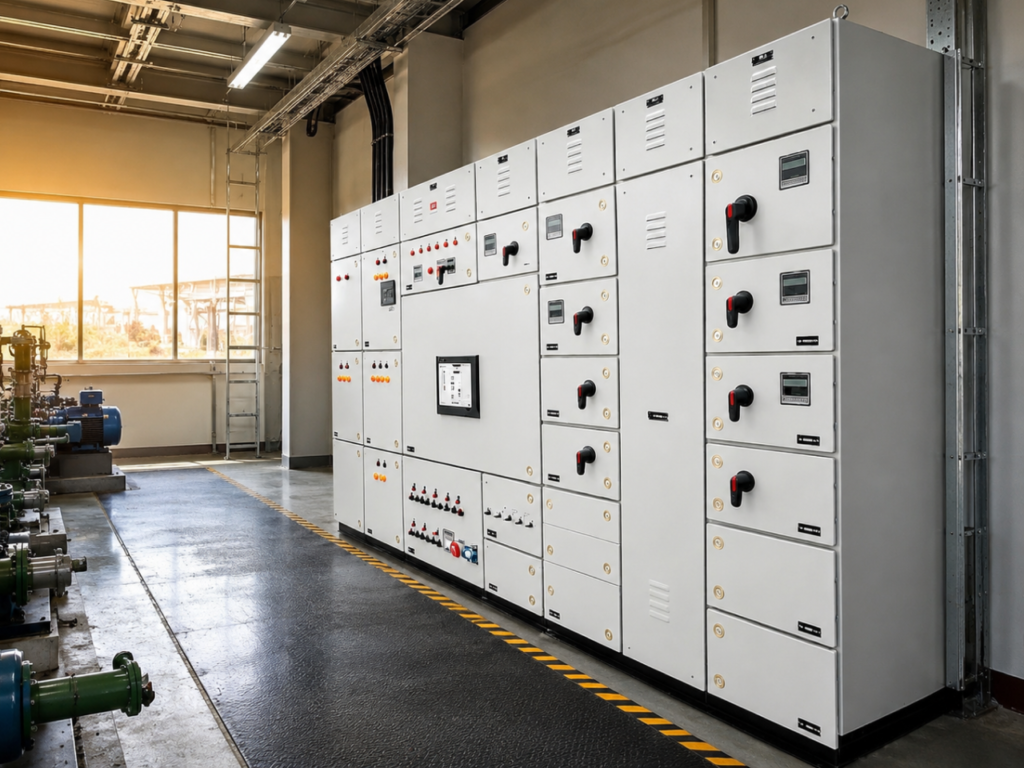
The PCC panel is housed in a robust and weather-resistant enclosure. The enclosure can be made of metal (typically sheet steel) and is designed to protect the internal components from environmental factors and unauthorized access.

Busbars
PCC panels have copper or aluminum busbars for efficient power distribution. Busbars are conductive bars that carry electrical current and connect various components within the panel.

Circuit Breakers
These are installed for individual circuits to provide protection against overloads and short circuits. The circuit breakers can be of various types, including air circuit breakers (ACBs) or molded case circuit breakers (MCCBs).

Switchgear
PCC panels incorporate switchgear for controlling and isolating electrical circuits. This may include switches, disconnectors, and other control devices.

Industrial Facilities
PCC panels are commonly used in manufacturing plants, refineries, and other industrial facilities to distribute power to motors, machinery, and other equipment.

Commercial Buildings
In large commercial buildings, PCC panels serve to distribute power to various loads such as lighting, HVAC systems, and other electrical appliances.

Critical Infrastructure
PCC panels are employed in critical infrastructure sectors like hospitals and data centers to ensure a reliable and controlled power supply.

Centralized Control
Efficient Power Distribution

Enhanced Safety