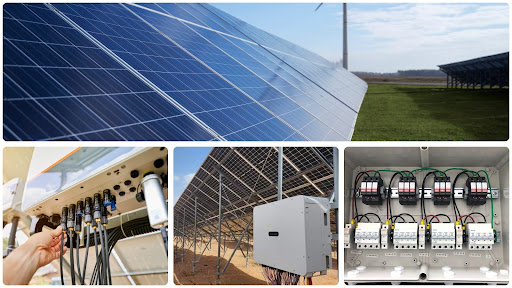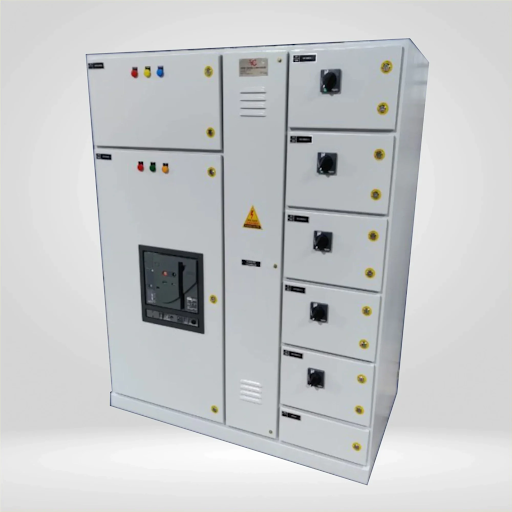
DC Fault Protection and Isolation Strategies in DCDB Panels for Large Solar PV Plants

In large solar PV power plants, the DC side of the system operates under conditions that are fundamentally different from conventional AC networks. High DC voltages, continuous current flow, long cable runs, and distributed generation sources make fault behavior complex and potentially hazardous. Unlike AC systems, DC faults do not benefit from natural current zero-crossing, making fault interruption and isolation significantly more challenging.

Within this environment, the DC Distribution Board (DCDB) plays a critical role. Effective DC Fault Protection in DCDB panels determines whether a fault is contained locally or escalates into widespread power loss, equipment damage, or safety incidents. For utility-scale solar plants, DC fault protection is therefore a primary design discipline rather than an auxiliary feature.

Nature of DC Faults in Large Solar PV Plants

DC faults in solar PV systems typically arise from insulation degradation, cable damage, connector failures, or internal inverter faults. These faults may manifest as short circuits, ground faults, or series arc faults, each with distinct electrical characteristics.

In large plants, the presence of multiple parallel strings increases available fault current, while long DC cable runs raise the likelihood of insulation-related failures. Additionally, environmental exposure—UV radiation, temperature cycling, moisture, and dust—accelerates aging of DC components. These factors make DC fault detection and isolation more demanding than in compact rooftop installations.

Why DC Fault Protection in DCDB Panels Is Critical

The DCDB aggregates multiple string or array outputs before feeding inverters. As a result, it is exposed to the combined fault energy of the DC system. Without robust DC fault protection in DCDB panels, a single fault can propagate across healthy strings, leading to inverter shutdowns or irreversible damage to DC equipment.

Another critical factor is safety. DC arcs sustain longer than AC arcs and can generate extreme thermal energy. Inadequate isolation increases the risk of arc flash incidents during maintenance or fault conditions. For large solar PV plants, DCDB panels must therefore be designed to detect faults early and isolate only the affected section without disturbing the entire array.

DC Fault Protection in DCDB – Detection Philosophy

Effective DC Fault Protection in DCDB begins with accurate fault detection. Overcurrent detection alone is often insufficient because DC fault currents may be limited by string impedance and inverter characteristics.

Modern DCDB designs incorporate a combination of protection elements. DC-rated fuses or circuit breakers provide fast response to high-magnitude faults, while ground fault detection devices monitor leakage currents to earth. In advanced systems, insulation monitoring devices continuously assess the health of DC circuits, enabling early detection of insulation degradation before a hard fault develops.

This layered detection approach is essential for maintaining reliability in large-scale installations.

Isolation Strategies for DC Fault Management

Isolation is as important as detection. Once a fault is identified, the DCDB must isolate the affected circuit quickly and safely. DC isolators and disconnect switches within the DCDB provide manual and automatic means of isolation, allowing maintenance personnel to work safely without exposure to live conductors.

Selective isolation is a key design objective. In large solar PV plants, isolating an entire DC bus due to a single string fault results in unnecessary generation loss. Proper DCDB design ensures that only the faulty string or array is disconnected, preserving output from healthy sections.

Coordination between DCDB protection devices and inverter-side protection is critical to achieving this selectivity.

Challenges in Interrupting DC Fault Currents

Interrupting DC current is inherently more difficult than AC due to the absence of natural current zero. DC-rated protective devices must rely on magnetic blowout, arc chutes, or solid-state interruption techniques to extinguish arcs.

In high-voltage DC systems commonly used in large solar plants, incorrect device selection can lead to sustained arcing and contact erosion. This makes it essential that DCDB panels use protection devices specifically designed and rated for DC fault interruption at the system’s operating voltage and current levels.

Coordination with Inverter and Plant Protection Systems

DC fault protection in DCDB panels cannot be designed in isolation. Inverter protection algorithms, string-level monitoring, and plant-level SCADA systems all influence fault response.

A coordinated protection scheme ensures that DC faults are cleared at the appropriate level without conflicting actions. For example, a DCDB fuse should operate before an inverter trips on DC overcurrent, preventing unnecessary inverter shutdown. Similarly, ground fault detection thresholds must align with inverter insulation monitoring to avoid false alarms or missed faults.

Such coordination improves plant availability and reduces fault recovery time.

Engineering Approach of Synchro Electricals

Synchro Electricals designs DCDB panels with DC fault behavior as a primary engineering consideration. Fault current analysis, insulation coordination, and selective isolation logic are integrated into the DCDB design from the earliest stages.

By focusing on real operating conditions in large solar PV plants, Synchro Electricals ensures that DC Fault Protection in DCDB panels delivers reliable fault containment, enhanced safety, and long-term system stability.

Conclusion

In large solar PV plants, DC-side faults present unique risks that demand specialized protection strategies. Effective DC Fault Protection in DCDB panels ensures early fault detection, selective isolation, and safe interruption of DC fault currents—preventing minor issues from escalating into major plant outages or safety hazards.

As PV plant capacities continue to grow, DCDB fault protection must be treated as a core system design discipline. Robust DC fault protection and isolation strategies are essential for achieving reliable, safe, and sustainable solar power generation at scale.
FAQs

1. Why is DC fault protection more challenging than AC fault protection?

DC systems lack natural current zero-crossing, making arc extinction and fault interruption more difficult and increasing thermal stress during faults.

2. What types of faults are typically addressed by DC fault protection in DCDB panels?

DCDB panels manage short-circuit faults, ground faults, and insulation-related faults occurring within PV strings and array circuits.

3. Is overcurrent protection alone sufficient for DCDB fault protection?

No. Overcurrent protection must be supplemented with ground fault detection and insulation monitoring to detect low-level and developing faults.

4. How does selective isolation improve plant availability?

By isolating only the affected string or array, healthy sections remain operational, minimizing generation loss during fault conditions.

5. Why is coordination with inverter protection important?

Proper coordination prevents unnecessary inverter shutdowns and ensures faults are cleared at the correct level for faster system recovery.

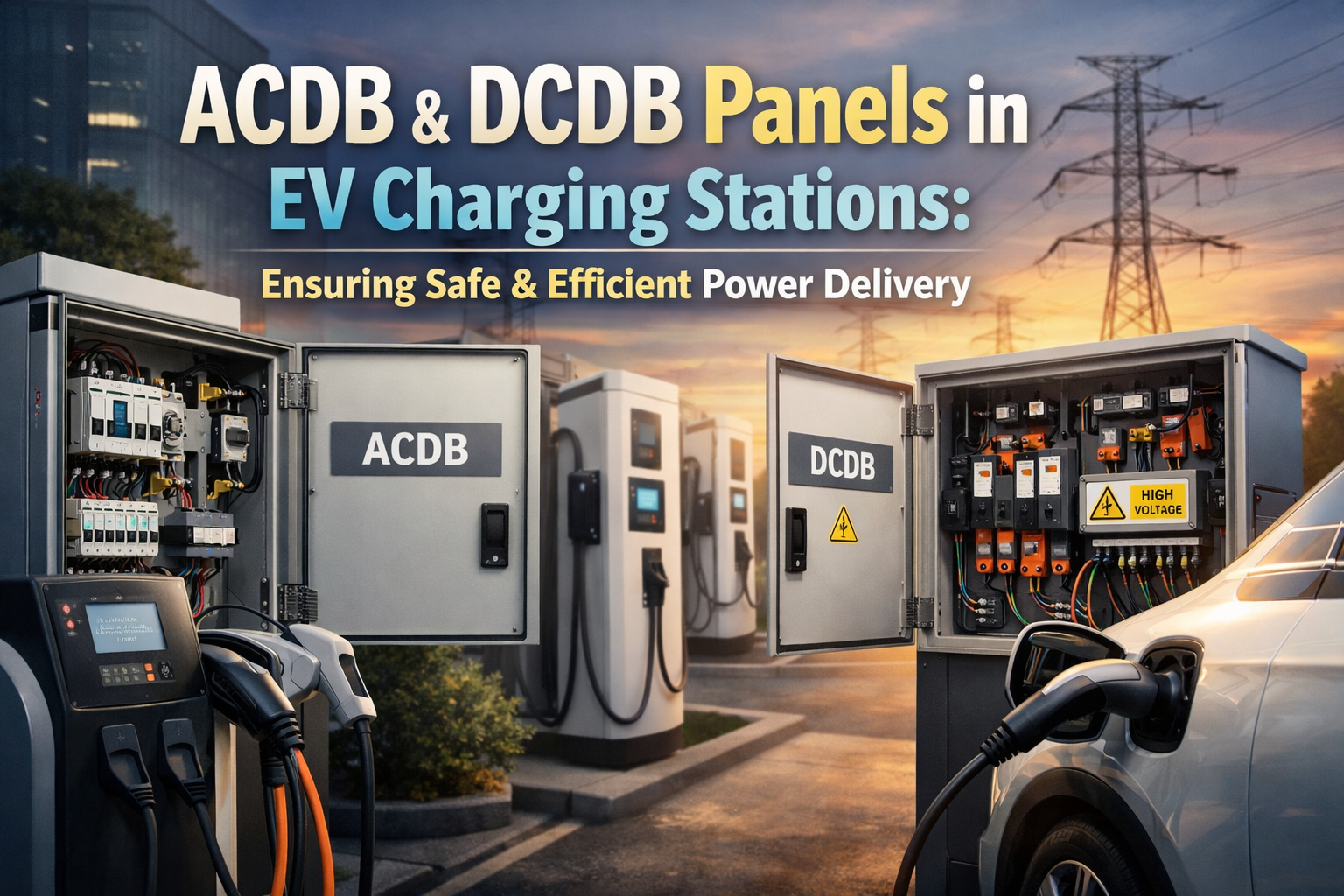
ACDB & DCDB Panels in EV Charging Stations: Ensuring Safe & Efficient Power Delivery

EV charging stations are no longer experimental infrastructure. They are now permanent, high-load electrical installations operating in public spaces, commercial premises, highways, and fleet depots. As charging capacities increase and fast chargers become standard, the electrical backbone behind these stations must handle continuous demand, thermal stress, and strict safety requirements.

In this environment, ACDB DCDB panels for EV charging are not secondary components. They define how power enters the site, how it is controlled, and how safely it reaches every charging point. Poorly designed distribution panels lead to frequent trips, overheating, inefficient energy use, and operational downtime—issues that directly affect charger availability and user trust.

How Power Distribution Shapes EV Charging Performance

Every EV charging station operates with a mix of AC and DC power. Incoming grid supply is managed on the AC side, while fast chargers rely heavily on DC distribution after conversion. This dual nature makes power management in EV charging stations fundamentally different from conventional electrical installations.

ACDB DCDB panels for EV charging provide the structured separation and coordination required to manage this mixed power environment. ACDB panels regulate and protect incoming AC supply, while DCDB panels handle high-current DC distribution to chargers. When these panels are designed as part of a single system rather than isolated units, power delivery becomes predictable, efficient, and safe.

Challenges Unique to EV Charging Stations

EV charging stations face electrical challenges that typical commercial buildings do not. Chargers operate for long durations at high current levels, often simultaneously. Fast-charging hubs experience rapid load fluctuations as vehicles connect and disconnect. Outdoor installations add environmental stress such as heat, dust, and moisture.

Without dedicated ACDB DCDB panels for EV charging, these conditions lead to uneven load distribution, frequent protective trips, and accelerated component wear. Distribution panels must be designed to support continuous operation while maintaining thermal stability and electrical safety.

ACDB & DCDB Panels as the Control Layer of EV Infrastructure

Rather than viewing ACDB and DCDB panels as simple distribution points, EV infrastructure treats them as control layers. These panels determine how power is prioritized, isolated, and expanded as charging demand grows.

ACDB panels ensure stable power flow from the grid to chargers and auxiliary systems such as lighting, monitoring, and payment terminals. DCDB panels manage DC outputs with precise isolation, ensuring that a fault in one charging line does not disrupt the entire station. Together, ACDB DCDB panels for EV charging enable selective operation, allowing stations to remain partially active even during faults or maintenance.

Impact on Safety, Reliability, and User Experience

For EV charging operators, safety and uptime directly influence reputation and revenue. Public charging stations must operate safely under all conditions while remaining accessible to users at all hours.

Well-engineered ACDB DCDB panels for EV charging reduce risks associated with electrical faults, overheating, and uncontrolled energy flow. They also improve reliability by ensuring consistent voltage and current delivery, which directly affects charging speed and equipment lifespan. From the user’s perspective, this translates into dependable charging sessions and minimal downtime.

Supporting Scalable EV Charging Networks

EV infrastructure is expanding rapidly. Charging stations installed today are often expected to support additional chargers, higher power ratings, or new charging technologies in the future. Power distribution systems must be designed with this scalability in mind.

ACDB DCDB panels for EV charging allow structured expansion by providing spare feeders, modular layouts, and clear separation between AC and DC systems. This approach enables operators to upgrade charging capacity without redesigning the entire electrical system, saving time and capital costs.

Design Considerations for Modern EV Charging Stations

Effective ACDB and DCDB panels are designed around real operating conditions rather than theoretical loads. Thermal management, fault isolation, and accessibility for maintenance are key factors. Panels must support frequent switching operations and continuous current flow without degradation.

In EV charging environments, panel reliability is just as important as charger technology itself. Distribution failures often result in multiple chargers going offline simultaneously, amplifying operational losses.

Delivering Infrastructure-Grade Power Distribution for EV Charging

Synchro Electricals develops ACDB DCDB panels for EV charging with a clear focus on infrastructure reliability and long-term performance. Designs are aligned with real-world EV charging conditions, ensuring safe power delivery, efficient operation, and readiness for future expansion.

Conclusion

EV charging stations depend on more than chargers alone. Behind every reliable charging point is a power distribution system capable of handling continuous demand, mixed AC/DC operation, and strict safety expectations.

By investing in well-designed ACDB DCDB panels for EV charging, operators create infrastructure that is safe, scalable, and ready for the next phase of electric mobility. In a rapidly evolving EV ecosystem, robust power distribution is not just supportive—it is foundational.

FAQs

1. Why are ACDB DCDB panels important in EV charging stations?

EV charging stations operate with both AC and DC power at high load levels. ACDB DCDB panels for EV charging ensure controlled distribution, protection, and isolation across the entire power system.

2. How do ACDB and DCDB panels improve charging station reliability?

They manage load distribution, handle continuous current demand, and isolate faults selectively, preventing a single issue from shutting down the entire station.

3. Are standard electrical panels suitable for EV charging infrastructure?

No. EV charging stations require panels designed for high current, frequent switching, and mixed AC/DC operation, which standard panels are not built to handle.

4. Do ACDB DCDB panels support fast and ultra-fast chargers?

Yes. Properly designed ACDB DCDB panels for EV charging support high-power DC fast chargers by managing DC distribution safely and efficiently.

5. Can EV charging stations be expanded without redesigning the entire system?

Yes. ACDB and DCDB panels are typically designed with modular feeders and capacity margins, allowing future expansion with minimal disruption.

Harmonic Impact Analysis of Inverter-Based Loads on ACDB Panel Design

The rapid growth of renewable energy systems has fundamentally changed the electrical behavior of power distribution networks. Unlike conventional rotating machines, inverter-based sources such as solar PV inverters, battery energy storage systems, and hybrid power converters introduce non-linear current characteristics into the AC network. These characteristics significantly affect the design and performance of AC Distribution Boards (ACDBs).

In modern renewable installations, understanding Harmonics in ACDB Panels is no longer optional. Harmonic distortion directly influences thermal performance, protection reliability, metering accuracy, and long-term equipment life. For engineers, harmonic impact analysis has become a critical design step rather than a post-commissioning concern.

Nature of Harmonics in Inverter-Dominated Systems

Inverter-based loads generate current waveforms that deviate from pure sinusoidal form due to high-frequency switching. While modern PWM techniques improve waveform quality, residual harmonic components remain unavoidable. These harmonics are typically of odd order and increase in magnitude as inverter penetration rises.

In renewable energy plants, multiple inverters operate in parallel and feed common AC buses through ACDB panels. The harmonic currents from individual inverters do not simply cancel out; instead, they often accumulate, leading to elevated Total Harmonic Distortion (THD) levels at the distribution point.

At the ACDB level, this harmonic accumulation becomes electrically significant.

Why ACDB Panels Are Sensitive to Harmonic Stress

ACDB panels act as the aggregation point for inverter outputs. As such, they are exposed to the combined harmonic spectrum of the system. Harmonic currents increase RMS current levels without increasing useful power transfer, leading to additional thermal stress in busbars, cables, and switching devices.

Unlike upstream transformers, which may be designed with harmonic derating in mind, ACDB panels are often constrained by space, compact layouts, and standardized ratings. If harmonic effects are not considered during design, overheating and insulation degradation may occur even when apparent load current remains within nominal limits.

This makes harmonic impact analysis essential for reliable ACDB operation.

Thermal and Electrical Implications of Harmonics

Harmonic currents cause non-uniform heating due to skin effect and proximity effect, particularly at higher frequencies. Busbars experience increased resistive losses, while circuit breakers and contactors may operate closer to their thermal limits. In extreme cases, nuisance tripping occurs due to elevated internal temperatures rather than true overload conditions.

Additionally, harmonics distort voltage waveforms across the ACDB, affecting downstream equipment performance. Protection relays calibrated for sinusoidal conditions may misinterpret distorted signals, reducing selectivity and accuracy. Metering devices may also report incorrect power and energy values if harmonic distortion exceeds their measurement capability.

These effects accumulate over time, accelerating aging of panel components.

Impact of Harmonics on Protection and Coordination

Protection systems within ACDB panels are typically designed around fundamental frequency assumptions. Harmonics alter current wave shapes, potentially affecting the response of thermal and magnetic trip elements. Electronic protection units offer better tolerance but still require correct configuration based on harmonic levels.

In renewable energy systems with high inverter penetration, coordination between protective devices must consider harmonic heating rather than just short-circuit current. Failure to do so can result in either delayed tripping under fault conditions or unnecessary tripping during normal operation.

Thus, harmonic behavior directly influences protection philosophy at the ACDB level.

Design Considerations for Harmonic-Resilient ACDB Panels

Effective ACDB design begins with quantifying expected harmonic levels through system studies. Inverter specifications, operating modes, and diversity factors must be evaluated to estimate worst-case harmonic current flow.

Once harmonic levels are understood, busbar sizing is adjusted not just for nominal current but for increased RMS current under harmonic loading. Thermal margins become more important than absolute current ratings. Selection of circuit breakers and isolators must also account for continuous operation under distorted waveforms.

In many cases, integration of harmonic mitigation devices such as passive filters or line reactors upstream of the ACDB reduces stress on the panel itself. However, even with mitigation, panel design must assume residual harmonics.

System-Level Perspective on Harmonics

Harmonics do not originate or terminate at the ACDB; they are a system-wide phenomenon. Poor grounding practices, inadequate cable segregation, and improper layout can amplify harmonic effects through resonance and circulating currents.

From a system perspective, ACDB panels must be designed as part of a coordinated harmonic management strategy rather than isolated distribution components. This includes coordination with inverter manufacturers, transformer design, and grid interconnection requirements.

Ignoring this system context often leads to localized overheating and unexplained operational issues.

Engineering Approach of Synchro Electricals

Synchro Electricals approaches ACDB panel design with harmonic behavior as a fundamental input parameter. Harmonic impact analysis, thermal derating considerations, and protection compatibility are integrated into the design process from the early engineering stage.

Rather than relying on standard panel configurations, Synchro Electricals evaluates inverter characteristics, system topology, and operating conditions to ensure that ACDB panels remain electrically and thermally stable throughout their service life in renewable energy environments.

Conclusion

As renewable energy systems become increasingly inverter-dominated, harmonic distortion has emerged as a defining factor in power distribution reliability. ACDB panels, positioned at the convergence point of inverter outputs, are particularly vulnerable to harmonic stress if not designed accordingly.

A thorough understanding of Harmonics in ACDB Panels enables engineers to design distribution systems that remain thermally stable, electrically reliable, and protection-coordinated under real operating conditions. Harmonic impact analysis is no longer a refinement—it is a core requirement for modern renewable energy infrastructure.

FAQs

What causes harmonics in renewable energy systems?

Harmonics are generated by inverter switching actions and non-linear current draw inherent to power electronic converters.

Why are ACDB panels more affected by harmonics than other equipment?

They aggregate multiple inverter outputs, causing harmonic currents to accumulate at a single point.

Can harmonics cause ACDB overheating without overload?

Yes. Harmonics increase RMS current and losses even when fundamental current is within rated limits.

Do electronic breakers eliminate harmonic issues?

They improve tolerance but do not remove harmonic heating or distortion effects.

Is harmonic analysis necessary for all solar plants?

It becomes critical as inverter capacity and system size increase, especially in industrial and utility-scale installations.

Optimizing Industrial Solar PV Systems with Advanced ACDB/DCDB Layouts

Industrial solar power plants are built for scale, efficiency, and long-term reliability. As system capacities increase and grid integration becomes more complex, the performance of a solar PV plant is no longer determined by panels and inverters alone. The way power is collected, protected, and distributed across AC and DC stages plays a decisive role in energy yield, safety, and operational stability.

This is where ACDB DCDB panels for solar plants become critical. Advanced AC Distribution Boards (ACDB) and DC Distribution Boards (DCDB) form the electrical backbone of industrial PV systems, ensuring structured power flow, effective protection, and optimized system performance from the PV array to the grid.

Synchro Electricals designs ACDB and DCDB solutions specifically for high-capacity industrial solar plants, where electrical reliability and compliance are non-negotiable.

Understanding Power Flow in Industrial Solar PV Plants

In an industrial solar PV system, power generation and distribution occur across two distinct electrical domains. On the DC side, power flows from PV modules through string connections toward inverters. On the AC side, inverter output is collected, protected, and routed toward transformers or grid interconnection points.

As plant size increases, this power flow becomes highly distributed:

  • Multiple PV strings operate in parallel
  • Several inverters feed a common AC network
  • Fault levels rise due to higher system capacity
  • Maintenance access becomes more complex

Without a structured ACDB/DCDB layout, these conditions can lead to unorganized cabling, difficult fault isolation, higher electrical stress, and reduced system uptime.

Why Distribution Architecture Matters in Industrial Solar Plants

Industrial solar plants operate under continuous electrical stress—high DC currents, fluctuating solar output, and grid-side disturbances. Poorly designed distribution layouts often result in:

  • Increased DC losses due to long cable runs
  • Difficulty in isolating faulty strings or inverters
  • Higher risk of DC arc faults and AC short circuits
  • Delays during maintenance or fault rectification
  • Reduced compliance with safety and grid standards

Advanced ACDB DCDB panels for solar plants address these challenges by introducing structure, protection coordination, and clear separation between DC and AC domains.

What Role DCDB Panels Play in Solar Optimization

DC Distribution Boards (DCDBs) operate on the DC side of the plant, typically between PV strings and inverters. Their primary role is to aggregate, protect, and manage DC power before it reaches the inverter.

In industrial-scale systems, DCDB panels:

  • Combine multiple PV string outputs in a controlled manner
  • Provide overcurrent protection using fuses or DC breakers
  • Enable safe isolation of individual strings during faults or maintenance
  • Reduce cable complexity by centralizing DC collection
  • Improve system safety through surge protection devices

By minimizing DC-side losses and enabling fast fault isolation, DCDB panels directly contribute to higher energy yield and improved plant reliability.

How ACDB Panels Strengthen the AC Side of Solar Plants

Once DC power is converted to AC by inverters, ACDB panels become the primary control and protection interface. AC Distribution Boards collect output from multiple inverters and distribute it toward transformers or LT panels.

In industrial solar plants, ACDB panels ensure:

  • Structured collection of inverter outputs
  • Protection against overloads, short circuits, and grid faults
  • Balanced power distribution across phases
  • Safe isolation of individual inverters
  • Compliance with utility and grid interconnection requirements

Well-designed ACDB layouts reduce electrical stress on inverters and transformers, improving overall system stability.

Advanced ACDB/DCDB Layouts: Moving Beyond Basic Distribution

Modern industrial solar projects demand more than basic aggregation panels. Advanced ACDB/DCDB layouts are engineered with system optimization in mind.

Key characteristics include:

  • Optimized busbar sizing to handle high current without excessive temperature rise
  • Coordinated protection to ensure selective tripping during faults
  • Clear segregation between power, protection, and control sections
  • SCADA-ready metering and monitoring integration
  • Modular designs that support future plant expansion

These design considerations ensure that the distribution system scales efficiently with plant capacity while maintaining safety and compliance.

Engineering Features That Matter in Industrial Installations

In high-capacity solar plants, ACDB and DCDB panels must withstand demanding electrical and environmental conditions. Critical engineering aspects include:

  • High fault-withstand capacity to manage inverter-side and grid-side faults
  • Weatherproof enclosures suitable for outdoor inverter yards
  • Surge protection devices for lightning-prone locations
  • Thermal management to maintain performance under high ambient temperatures
  • Standardized layouts that simplify installation and commissioning

By focusing on these parameters, ACDB/DCDB panels become long-term assets rather than maintenance liabilities.

Where ACDB/DCDB Panels Deliver Maximum Value

Advanced ACDB and DCDB panels are essential across a wide range of industrial solar applications, including:

  • Large rooftop solar installations for manufacturing facilities
  • Ground-mounted captive solar plants
  • Solar parks supplying power to industrial clusters
  • Hybrid solar plants integrated with storage or DG backup
  • Export-oriented solar projects requiring strict grid compliance

In each scenario, optimized distribution layouts improve reliability, simplify operations, and enhance energy output.

Benefits for Plant Owners and EPC Contractors

Implementing well-engineered ACDB DCDB panels for solar plants delivers clear advantages:

  • Improved energy yield through reduced losses
  • Faster fault detection and isolation
  • Safer operation and easier maintenance
  • Higher compliance with electrical and grid standards
  • Reduced downtime and operational risk
  • Scalable infrastructure for future capacity upgrades

For EPC contractors, standardized and tested layouts reduce commissioning challenges. For plant owners, they ensure predictable, long-term performance.

Why Synchro Electricals for ACDB/DCDB Solutions

Industrial solar plants require distribution panels designed with a system-level understanding of power flow and protection coordination. Synchro Electricals approaches ACDB and DCDB design as an integral part of the plant’s electrical architecture—not as standalone components.

Each solution is tailored to inverter capacity, fault levels, site conditions, and monitoring requirements. Emphasis is placed on durability, compliance, and ease of integration with plant control systems, ensuring smooth operation throughout the plant lifecycle.

Conclusion

As industrial solar PV systems continue to scale, optimization must extend beyond generation to distribution architecture. Advanced ACDB DCDB panels for solar plants play a central role in ensuring safe, efficient, and reliable power flow across both DC and AC stages.

By adopting thoughtfully engineered ACDB/DCDB layouts, plant owners and EPCs can improve energy yield, reduce operational risk, and build solar power plants that perform consistently over decades.

FAQs

1. What is the main difference between ACDB and DCDB panels in solar plants?

DCDB panels manage and protect DC power from PV strings, while ACDB panels handle AC power output from inverters.

2. Why are ACDB/DCDB layouts important in industrial solar plants?

They ensure structured power distribution, fault protection, and reduced losses in high-capacity systems.

3. Do ACDB/DCDB panels support SCADA integration?

Yes. Modern panels can be equipped with metering and communication for real-time monitoring.

4. Are these panels suitable for outdoor installation?

Yes. They are designed with weatherproof enclosures for outdoor inverter yards.

5. Can ACDB/DCDB panels be customized for different inverter capacities?

Absolutely. Panels are engineered based on inverter rating, plant size, and site conditions.

Protecting Data Centers with Advanced ACDB Panels

In today’s digital world, data centers are the backbone of business operations, supporting critical IT infrastructure, cloud services, and enterprise applications. Ensuring uninterrupted power distribution while maintaining high levels of safety and efficiency is paramount. ACDB Panels for Data Centers play a crucial role in managing alternating current (AC) power, protecting sensitive equipment, and optimizing operational reliability.

Synchro Electricals, manufacturer of ACDB panels, designs advanced ACDB panels engineered specifically for the demands of modern data centers. Their panels combine safety, monitoring, and scalability to ensure seamless power distribution and enhanced protection for mission-critical operations.

What Are ACDB Panels and Why They Matter in Data Centers

An ACDB (Alternating Current Distribution Board) panel serves as a central hub for distributing AC power across a data center. Unlike conventional panels, advanced ACDBs integrate protective devices, monitoring systems, and automation features tailored for high-density IT environments.

Key functions include:

  • Centralizing AC power distribution to efficiently route electricity to server racks, cooling systems, and other critical infrastructure.
  • Providing surge, overcurrent, and short-circuit protection to safeguard expensive IT equipment.
  • Supporting real-time monitoring of voltage, current, and power quality for proactive maintenance.
  • Enabling modular expansion to accommodate growing data center demands.

By deploying ACDB panels for data centers, operators can ensure consistent power delivery, minimize downtime, and maintain optimal equipment performance.

Why Data Centers Rely on Advanced ACDB Panels

With the increasing demand for uptime, energy efficiency, and secure operations, traditional distribution methods are no longer sufficient. Advanced ACDB panels offer:

  • Enhanced Protection: Integrated breakers, fuses, and surge protection devices prevent damage to servers and networking equipment.
  • Operational Efficiency: Centralized monitoring and modular design simplify maintenance and upgrades, reducing operational costs.
  • Energy Optimization: Real-time power monitoring enables load balancing and efficient energy usage.
  • Scalability: Panels can be expanded or reconfigured easily to support additional servers, racks, or infrastructure upgrades.

For IT managers and data center operators, these benefits translate into improved reliability, lower energy costs, and protection against costly downtime.

Advanced Features of Synchro Electricals’ ACDB Panels

Synchro Electricals’ ACDB panels are designed with the unique demands of data centers in mind, combining durability, safety, and smart monitoring. Key features include:

  • High-Performance Circuit Breakers: UL/IEC-certified breakers protect sensitive IT equipment from electrical faults.
  • Real-Time Monitoring: Track voltage, current, and load distribution to identify potential issues before they impact operations.
  • Surge and Overcurrent Protection: Prevents downtime due to unexpected surges, short circuits, or overloads.
  • Modular and Scalable Design: Enables easy addition of new circuits or integration with existing infrastructure.
  • Remote Management Capability: Operators can monitor and control panels from centralized control rooms or remote locations.

Each panel is built to meet stringent international safety standards, ensuring reliable, continuous power for critical data center operations.

Applications of ACDB Panels in Data Centers

ACDB panels are deployed across various aspects of data center infrastructure, including:

  • Server Racks and IT Equipment: Ensuring precise and reliable AC power distribution.
  • Cooling and HVAC Systems: Protecting and controlling power for temperature-sensitive environments.
  • Power Redundancy Systems: Supporting UPS and backup generators for continuous uptime.
  • High-Density Data Halls: Managing complex power requirements with centralized, modular panels.

By integrating ACDB panels, data centers can achieve maximum protection, efficiency, and operational visibility.

Why Choose Synchro Electricals for Data Center ACDB Panels

Synchro Electricals stands out as a trusted partner for ACDB panels by combining engineering excellence, energy efficiency, and reliable support. Leading IT companies and data center operators trust Synchro Electricals panels for:

  • Customizable Configurations: Panels tailored to specific data center layouts and electrical requirements.
  • Proven Reliability: Components rigorously tested for high-load and critical environments.
  • Ease of Maintenance: Modular design allows quick circuit replacement and system upgrades.
  • Comprehensive Support: Assistance from design and supply to installation and ongoing monitoring.

Investing in ACDB panels for data centers ensures operational continuity, equipment protection, and energy-efficient power management.

Conclusion

ACDB panels for data centers are more than just power distribution units—they are central to operational safety, efficiency, and scalability. By integrating advanced protection, real-time monitoring, and modular design, these panels enable data centers to maintain uninterrupted performance, optimize energy usage, and safeguard critical IT infrastructure. Synchro Electricals continues to empower IT operators with high-quality, performance-driven ACDB panels that enhance reliability and control across modern data centers.

FAQs

What is an ACDB panel for data centers?

It is a specialized distribution board that manages AC power, providing protection and monitoring for servers, networking equipment, and other critical infrastructure.

How do ACDB panels protect data center equipment?

They include surge, overcurrent, and short-circuit protection devices to prevent electrical faults from damaging sensitive IT systems.

Can ACDB panels be monitored remotely?

Yes. Synchro Electricals’ ACDB panels offer remote monitoring and control, enabling proactive management from anywhere.

Are ACDB panels scalable for growing data centers?

Absolutely. Modular design allows for easy expansion as data center infrastructure grows.

What is the ROI of installing advanced ACDB panels?

Benefits include reduced downtime, protection of high-value equipment, energy optimization, and lower operational costs, resulting in a strong return on investment.

Outdoor Telecom Panel Lightning Protection with ACDB/DCDB

Outdoor telecom panels are critical infrastructure in modern communication networks, powering base stations, signal repeaters, and other telecom equipment. These installations are often exposed to environmental hazards, with lightning strikes being one of the most damaging. Implementing reliable outdoor ACDB panels for telecom ensures system protection, continuity, and operational safety.

Synchro Electricals specializes in manufacturing ACDB and DCDB panels designed for outdoor telecom applications, providing robust lightning and surge protection, efficient power distribution, and compliance with industry safety standards. Our panels safeguard critical telecom equipment while ensuring uninterrupted service.

Understanding ACDB/DCDB Panels in Telecom Infrastructure

ACDB (AC Distribution Board) panels and DCDB (DC Distribution Board) panels are central to telecom site power management. ACDB panels distribute alternating current to various loads, while DCDB panels manage direct current from battery banks or rectifiers. Both panels are crucial in outdoor installations, where lightning and voltage surges can damage sensitive telecom electronics.

A well-designed outdoor ACDB panel for telecom provides:

  • Surge protection to mitigate lightning-induced voltage spikes

  • Overcurrent protection to prevent equipment damage

  • Isolation and disconnect options for safe maintenance

  • Organized wiring to simplify installation and troubleshooting

By integrating ACDB and DCDB panels, telecom operators can maintain high reliability and safety even in areas prone to electrical storms.

Why Lightning Protection is Crucial for Outdoor Telecom Panels

Lightning strikes can induce high-voltage transients in power and communication lines. Without proper protection, telecom sites may experience:

  • Equipment Damage: Sensitive electronics in base stations can fail.

  • Service Interruptions: Outages impact communication networks and customer satisfaction.

  • Fire Hazards: High currents from lightning can cause fires in poorly protected panels.

Using outdoor ACDB panels for telecom with integrated surge protection reduces these risks. Components like lightning arrestors, fuses, and circuit breakers isolate surges and safeguard both AC and DC loads.

Key Features of Synchro Electricals’ Outdoor ACDB Panels for Telecom

Synchro Electricals’ panels are engineered for maximum protection, durability, and operational efficiency in outdoor telecom environments:

  • Weatherproof Enclosures: IP65-rated cabinets protect against rain, dust, and harsh UV exposure.

  • Integrated Lightning and Surge Protection: Specialized SPD modules safeguard both AC and DC circuits.

  • Overcurrent Protection Devices: Fuses and breakers for each circuit enhance safety and reliability.

  • DC Disconnect Switches: Enable safe maintenance of telecom DC loads without powering down the entire system.

  • Optimized Wiring Layout: Reduces voltage drops, simplifies troubleshooting, and supports modular upgrades.

  • Compliance with Standards: Designed to meet international telecom and electrical safety requirements.

These features ensure uninterrupted telecom operations and reduce maintenance costs while protecting critical infrastructure.

Applications of ACDB/DCDB Panels in Outdoor Telecom Installations

Synchro Electricals’ ACDB and DCDB panels support a wide range of telecom applications:

  • Rooftop Base Stations: Distribute AC and DC power safely across multiple equipment racks.

  • Remote Tower Sites: Provide surge-protected power distribution for sites without grid stability.

  • Hybrid Energy Sites: Combine AC grid power with DC battery backups to ensure continuous operations.

  • Telecom Microgrids: Enable integration with renewable energy sources while maintaining lightning protection.

By deploying high-quality ACDB/DCDB panels, operators can maintain safe, reliable, and efficient power distribution at telecom sites.

Advantages of Using Synchro Electricals’ Outdoor ACDB Panels for Telecom

  • Enhanced Protection: Safeguards sensitive telecom equipment from lightning and electrical surges.

  • Reliable Power Distribution: Ensures AC and DC loads receive consistent and safe power.

  • Durable and Weatherproof: Panels withstand extreme outdoor conditions, reducing maintenance and replacement costs.

  • Modular Design: Facilitates upgrades and easy integration with additional telecom equipment.

  • Expert Support: Synchro provides technical assistance from panel selection to installation and maintenance.

Partnering with Synchro Electricals guarantees that telecom sites operate safely and efficiently, even in high-risk lightning zones.

Why Choose Synchro Electricals as Your ACDB/DCDB Panel Manufacturer

Synchro Electricals is a trusted ACDB/DCDB manufacturer in India, offering customized outdoor ACDB panels for telecom. Our panels are designed with industry best practices and high-quality components:

  • Experience in Telecom Electrical Solutions: Years of delivering safe, reliable ACDB and DCDB panels.

  • Customizable Solutions: Tailored designs for voltage ranges, load capacities, and environmental conditions.

  • Quality Assurance: Panels built with UL/IEC-certified components and robust enclosures.

  • Technical Support: Guidance on installation, surge protection integration, and ongoing operations.

Choosing Synchro Electricals ensures that your telecom infrastructure is protected, compliant, and highly reliable.

Conclusion

Outdoor telecom panels are critical assets that require robust protection against environmental hazards, particularly lightning. Outdoor ACDB panels for telecom from Synchro Electricals provide comprehensive overcurrent and surge protection, efficient AC/DC power distribution, and long-term durability.

Whether for remote towers, rooftop base stations, or hybrid telecom energy setups, Synchro Electricals’ ACDB and DCDB panels safeguard your investment, maintain uninterrupted operations, and enhance overall system reliability.

Invest in Synchro Electricals’ outdoor ACDB panels for telecom to ensure safe, efficient, and lightning-protected power management for your critical telecom infrastructure.

FAQS

1. What is an outdoor ACDB panel for telecom applications?

An outdoor ACDB panel for telecom distributes AC power safely to telecom equipment, providing overcurrent and lightning protection. It ensures reliable operation for base stations, rooftop towers, and remote telecom installations.

2. How do ACDB/DCDB panels protect telecom equipment from lightning?

ACDB and DCDB panels integrate surge protection devices (SPDs) and circuit breakers to isolate voltage spikes caused by lightning. This prevents equipment damage and reduces downtime at telecom sites.

3. What features should I look for in outdoor ACDB panels for telecom?

Key features include IP65/IP67 weatherproof enclosures, overcurrent protection, DC disconnect switches, modular wiring, and surge protection. These ensure safety, durability, and efficient power distribution in outdoor environments.

4. Why choose Synchro Electricals as a manufacturer for telecom ACDB/DCDB panels?

Synchro Electricals provides custom-engineered outdoor ACDB panels for telecom, with high-quality UL/IEC-certified components, robust enclosures, and expert technical support for safe and reliable operations.

5. Can ACDB/DCDB panels support hybrid or remote telecom sites?

Yes, ACDB/DCDB panels from Synchro Electricals are designed for hybrid and remote sites, integrating with battery backups, renewable energy sources, and lightning protection systems to ensure uninterrupted telecom operations.

Lightning Protection Strategies for Outdoor ACDB Panels: Essential Guide for Solar and Telecom Industries

Lightning strikes pose a significant threat to outdoor electrical infrastructure, particularly ACDB panels (AC Distribution Boxes) used in renewable energy and telecom applications. As extreme weather events become more frequent, implementing robust lightning protection strategies has become crucial for maintaining system reliability and preventing costly equipment damage. This comprehensive guide explores proven methods to safeguard your outdoor ACDB panels and ensure uninterrupted operations.

Understanding Lightning Risks for Outdoor ACDB Panels

Outdoor ACDB panels face unique vulnerabilities due to their exposed installation environments. Lightning-induced surges can cause catastrophic damage to sensitive electrical components, leading to system downtime, expensive repairs, and potential safety hazards. For solar EPC companies and telecom operators, protecting these critical infrastructure components is essential for maintaining operational efficiency and meeting service level agreements.

ACDB panels for industrial applications are particularly susceptible because they often serve as central distribution points for multiple circuits. A single lightning strike can cascade through the entire electrical system, affecting downstream equipment and causing widespread outages. Understanding these risks is the first step in developing an effective protection strategy.

Primary Lightning Protection Systems

The foundation of any lightning protection strategy begins with a properly designed primary protection system. This involves installing lightning rods or air terminals at strategic locations around your facility, creating a preferential path for lightning strikes to reach the ground safely.

For facilities housing ACDB panels for solar systems, the lightning protection network should extend beyond the electrical enclosures to cover solar arrays, support structures, and associated equipment. The lightning protection system must be designed according to international standards such as IEC 62305, ensuring comprehensive coverage and reliable performance.

Proper grounding is equally critical. A robust grounding system provides a low-impedance path for lightning currents, reducing the risk of dangerous voltage buildup in ACDB panels and connected equipment. Ground resistance should be regularly tested and maintained to ensure optimal performance.

Surge Protection Devices (SPDs) for ACDB Systems

Secondary protection involves installing surge protection devices specifically designed for ACDB applications. These devices act as the second line of defense, clamping voltage surges that may bypass or overwhelm primary protection systems.

For solar ACDB manufacturers and users, selecting appropriate SPD ratings is crucial. Type 1 SPDs should be installed at the service entrance, while Type 2 SPDs provide protection at distribution levels. The coordination between different SPD types ensures comprehensive protection throughout the electrical system.

Modern ACDB boxes should incorporate built-in surge protection features. Leading ACDB manufacturers now offer integrated solutions that combine distribution functions with surge protection capabilities, simplifying installation while ensuring optimal protection levels.

Shielding and Enclosure Design

The physical design of ACDB panels plays a crucial role in lightning protection. Metallic enclosures provide natural shielding against electromagnetic fields generated by lightning strikes, but proper bonding and grounding are essential for effectiveness.

For ACDB panels designed for harsh outdoor environments, additional considerations include:

  • Enhanced sealing: Preventing moisture ingress that could create conductive paths
  • Robust construction: Using materials that can withstand electromagnetic stresses
  • Strategic cable entry: Minimizing exposure points while maintaining functionality
  • Proper ventilation: Ensuring adequate cooling without compromising protection

Solar panel protection box suppliers should prioritize designs that balance accessibility for maintenance with maximum protection against lightning-induced damage.

Installation Best Practices

Proper installation techniques significantly impact the effectiveness of lightning protection systems. Key considerations for ACDB installations include:

Location Selection: Position ACDB panels away from tall structures that might attract lightning strikes, while ensuring accessibility for maintenance and operations.

Cable Management: Use shielded cables where possible and maintain proper separation between power and communication lines. Avoid creating loops in cable runs that could increase magnetic coupling.

Bonding Requirements: Ensure all metallic components are properly bonded to the facility’s grounding system. This includes ACDB enclosures, cable trays, conduits, and support structures.

Regular Maintenance: Implement scheduled inspection programs to verify the integrity of grounding connections, surge protection devices, and overall system performance.

Advanced Protection Technologies

Modern lightning protection extends beyond traditional methods. Smart monitoring systems can detect lightning activity and automatically implement protective measures, such as temporarily disconnecting sensitive equipment or adjusting system parameters.

For industrial ACDB applications, consider implementing:

  • Remote monitoring capabilities: Real-time status updates and fault detection
  • Predictive maintenance: Using data analytics to anticipate component failures
  • Integrated communication: Coordination with broader facility management systems

Synchro Electricals: Your Trusted Partner

As a leading ACDB manufacturer in India, Synchro Electricals combines decades of expertise with cutting-edge technology to deliver superior lightning protection solutions. Our comprehensive range includes ACDB panels for 5kW to 10kW solar systems and beyond, each designed with integrated protection features and built to withstand the harshest environmental conditions.

Our engineering team works closely with solar EPC companies and telecom operators to develop customized protection strategies that meet specific operational requirements while maintaining cost-effectiveness. From initial design consultation to ongoing maintenance support, Synchro Electricals provides end-to-end solutions that ensure your critical infrastructure remains protected and operational.

Conclusion

Effective lightning protection for outdoor ACDB panels requires a multi-layered approach combining primary protection systems, surge protection devices, proper enclosure design, and installation best practices. By partnering with experienced manufacturers like Synchro Electricals and implementing comprehensive protection strategies, organizations can significantly reduce lightning-related risks while maintaining operational reliability.

Investing in proper lightning protection today prevents costly downtime tomorrow, making it an essential consideration for any facility operating outdoor electrical infrastructure in lightning-prone environments.

Frequently Asked Questions (FAQs)

1. What is an ACDB panel and why does it need lightning protection?

An ACDB (AC Distribution Box) panel distributes alternating current from solar inverters or grid connections to various loads. Lightning protection is essential because outdoor ACDB panels are vulnerable to voltage surges that can damage sensitive electrical components, cause system downtime, and create safety hazards.

2. How much does lightning protection for solar ACDB panels cost?

Lightning protection costs typically range from 2-5% of the total ACDB panel price, depending on system complexity and protection levels required. The investment is cost-effective considering it prevents expensive equipment replacement and system downtime that can cost thousands of dollars.

3. Which ACDB manufacturer provides the best lightning protection features?

Leading ACDB manufacturers like Synchro Electricals integrate built-in surge protection devices, robust grounding systems, and electromagnetic shielding in their panels. Look for manufacturers offering Type 1 and Type 2 SPDs, proper earthing terminals, and weatherproof enclosures designed for outdoor installations.

4. Do ACDB boxes for 5kW and 10kW solar systems require different lightning protection?

While the protection principles remain the same, larger 10kW systems may require higher-rated surge protection devices and more comprehensive grounding systems. Both 5kW and 10kW ACDB boxes need properly sized SPDs, but the surge current rating and number of protection circuits may vary based on system capacity.

5. How often should lightning protection systems for ACDB panels be maintained?

Lightning protection systems should be inspected annually, with ground resistance testing every 2 years and SPD functionality checks every 6 months. After any nearby lightning strikes, immediate inspection is recommended to ensure all protection components remain functional and properly connected.

Choosing the Right ACDB/DCDB Panel for 5kW to 1MW Solar Systems – A Technical Sizing Guide

As solar power continues to revolutionize the energy landscape across industries, the importance of choosing the right ACDB (AC Distribution Board) and DCDB (DC Distribution Board) panels becomes undeniable. Whether you’re installing a 5kW rooftop solar system or managing a 1MW industrial solar plant, proper panel selection ensures maximum safety, reliability, and energy efficiency.

In this guide, we’ll break down the sizing, technical parameters, and smart considerations for selecting ACDB/DCDB panels for solar systems, while highlighting how Synchro Electricals leads as a top ACDB/DCDB panel manufacturer in India.

Understanding ACDB and DCDB Panels in Solar Systems

ACDB (AC Distribution Board) and DCDB (DC Distribution Board) panels are critical junctions in a solar power system.

  • DCDB: Connects multiple solar panel strings and channels their DC output to the inverter. It includes DC MCBs, SPD, fuses, and disconnects to protect against overcurrent and surges.
  • ACDB: Receives AC output from the inverter and feeds it to the load or utility grid. It incorporates AC MCBs, isolators, SPD, and energy meters for safety and monitoring.

Together, these panels form the solar panel protection box—safeguarding both components and personnel.

How to Size ACDB/DCDB Panels from 5kW to 1MW

For 5kW to 10kW Solar Systems (Residential/Small Commercial)

  • DCDB Box for 5kW Solar System:
    • Input Strings: 1 to 2
    • Voltage Rating: 600V–1000V DC
    • Protection: DC MCB, Fuse Holders, Surge Protection Device (SPD), DC Disconnect
    • Cable Entry: Cable glands suitable for 4–6 mm² PV cable
  • ACDB for 10kW Solar System:
    • Output Voltage: 230V/415V AC
    • Key Components: AC MCB, SPD, Energy Meter, Isolator
    • Enclosure: Weatherproof polycarbonate or powder-coated metal

These smaller systems benefit from compact ACDB/DCDB boxes, engineered for cost-effectiveness and ease of installation.

For 50kW to 100kW Solar Systems (Medium Industrial/EPC Projects)

  • DCDB Sizing:
    • Input Strings: 6–12
    • Voltage Rating: 1000V DC
    • Components: SPD Type II, String Monitoring, Disconnect Switches
  • ACDB Sizing:
    • Output Voltage: 415V AC (3-phase)
    • Inbuilt Energy Meters for Load/Export Monitoring
    • Cable Support: 16mm² to 70mm² AC cables
    • Ideal for: Solar EPC companies, MSMEs, educational institutions

At this scale, having custom-built DCDBs and ACDBs with accurate string tracking and load balancing is essential.

For 500kW to 1MW Solar Plants (Utility/Industrial)

  • DCDB for 1MW Solar Plant:
    • Input Strings: 20+
    • Voltage: 1000V–1500V DC
    • Surge Protection: Type I & II SPDs
    • Busbar Rating: 250A–400A Copper/Aluminium
    • Monitoring: Optional SCADA integration, individual string monitoring
  • ACDB for Industrial Solar:
    • 3-phase 415V output
    • Inbuilt MCCB (Moulded Case Circuit Breakers), CTs, and metering
    • Integration: Synchronization panels, utility metering
    • Material: IP65-rated enclosures, indoor/outdoor application

Industrial solar systems demand rugged ACDB & DCDB panel assemblies—built for load fluctuation and adverse conditions.

Why Sizing Accuracy Matters

Improperly sized or substandard ACDB/DCDB panels can lead to:

  • Overheating and equipment failure
  • Energy loss due to voltage drop
  • Inadequate protection against lightning and faults
  • Warranty voids on solar inverters/modules

This is why working with an experienced solar ACDB DCDB manufacturer is crucial to ensuring safety and long-term ROI.

What Makes Synchro Electricals a Trusted Manufacturer?

At Synchro Electricals, we’re not just another ACDB/DCDB panel manufacturer—we’re your partner in clean energy excellence.

Certified Quality

All our solar panels and components are certified, rigorously tested for safety, insulation, and environmental conditions.

Full Product Range

We’re among the top solar panel protection box suppliers and PV junction box manufacturers in India—serving residential to 1MW+ systems.

Tailored Engineering

From a DCDB box for 5kW systems to ACDB panels for 1MW solar EPCs, we customize every enclosure for cable size, voltage ratings, and busbar capacities.

Made in India

Proudly built in India, our ACDB/DCDB products offer global standards with cost-efficiency for EPCs, OEMs, and industrial solar developers.

Final Thoughts

Whether you’re setting up a 5kW rooftop project or a large-scale 1MW solar farm, selecting the right ACDB/DCDB box isn’t just about capacity—it’s about performance, safety, and long-term durability.

With decades of electrical expertise, Synchro Electricals delivers technically superior ACDB and DCDB panels, fully compliant with modern solar infrastructure requirements.

Need help choosing the right panel for your solar project?
Talk to Synchro Electricals today—India’s leading solar ACDB DCDB manufacturer for industries, EPCs, and OEMs.

FAQs

What is the function of ACDB and DCDB in a solar power system?

ACDB (AC Distribution Board) distributes the AC output from the inverter to the load/grid, while DCDB (DC Distribution Board) manages and protects the DC input from solar panels before it enters the inverter.

How do I size an ACDB/DCDB for a 5kW to 1MW solar plant?

Sizing depends on system capacity, string configuration, voltage/current ratings, protection requirements (MCB, SPD, isolators), and cable specifications. Each capacity range has specific design norms.

Is there a difference in panel requirements for on-grid vs off-grid solar systems?

Yes, on-grid systems need synchronization with the utility grid via suitable ACDBs, whereas off-grid systems may require battery integration and additional protection in DCDBs.

Can a single panel serve both ACDB and DCDB functions?

In small systems (5–10kW), combined ACDB/DCDB units are possible. For larger setups, separate panels are ideal for safety, maintenance, and scalability.

What protection devices are used in ACDB and DCDB panels?

Key devices include MCBs, MCCBs, surge protection devices (SPDs), fuses, isolators, and monitoring meters to safeguard against faults, overcurrent, and surges.

Are ACDB and DCDB panels customizable for different system sizes?

Yes, panels can be custom-designed based on system size, number of strings, site conditions, and client requirements, especially for capacities ranging from 100kW to 1M

Is DCDB required for a 600V solar PV string?

Yes. A 600V string requires a DCDB with: 600V DC fuse/MCB Type II DC SPD 600–1000V DC isolator UV-resistant enclosure (IP65)

Which DCDB rating is used for a 1000V solar system?

For 1000V systems, use a DCDB with: 1000–1200V DC fuse/MCB Type I+II SPD (1000V DC) 1000V DC isolator Min. 4–8 strings support (commonly required for 50kW–100kW)

What is the specification of ACDB for a 415V 3-phase inverter?

A 415V ACDB generally includes: 415V AC MCCB/MCB (60A/100A depending on inverter output) AC SPD Type II Energy meter (optional) AC Isolator Earthing & surge-protection system

How to size DC fuses for a 1500V PV system?

The fuse rating must match: 1500V DC voltage 1.25 × Isc (short-circuit current) Minimum fuse rating: 1500V DC, 20–32A Used in large solar farms (500kW–1MW).

What SPD is required for a 1500V DCDB?

A Type II or Type I+II SPD rated for: Ucpv = 1500V DC High lightning protection level (Iimp) Thermal disconnect mechanism

What DCDB rating is used for 1MW solar farms?

Up to 20–32 strings 1500V DC fuses SPD Type I+II 1500V isolator 400A copper busbar SCADA-ready monitoring

What is the ACDB specification for 100kW on-grid?

Inverter output: 415V 3-phase 100A MCCB AC SPD Type II CT-based energy meter Earthing & surge arrestors

Which DCDB is used for 50kW solar systems?

8–12 strings 1000V DC fuse DC SPD Type II 1000V isolator Busbar based combiners

What ACDB is required for a 10kW solar system?

230V/415V output AC MCB 40A AC SPD Type II 4-pole isolator Energy meter (optional)

What DCDB is required for a 5kW solar system?

1–2 PV strings 600–800V DC rating DC MCB 20–25A DC SPD Type II DC isolator 600V IP65 box

What is the short-circuit rating of ACDB?

ACDB must match inverter’s AC short circuit output (KA rating). Common: 10kA / 16kA / 25kA MCCB for 415V 3-phase systems.

How do I select cable size for DCDB to inverter?

Follow formula: Cable Size (mm²) = 1.25 × DC Current × Distance × Resistivity Factor Common sizes: 4–6 mm² (residential) 10–16 mm² (commercial) 25–70 mm² (industrial)

Do we need SPD on both AC and DC sides?

Yes. DC SPD protects PV strings from lightning surges. AC SPD protects inverter output & grid connection.

How Advanced ACDB DCDB Panels from Synchro Electricals Lead the Way in India’s C&I Solar Boom

The landscape of energy consumption in India is undergoing a monumental transformation, and ACDB DCDB panels are playing a critical role in enabling this shift. With a surging demand for sustainable power and a clear national commitment to renewable energy, Commercial & Industrial (C&I) solar installations are no longer a niche market; they are a driving force for economic growth and environmental stewardship. From sprawling factory rooftops to large-scale commercial complexes, businesses across the nation are increasingly turning to solar to reduce operational costs, enhance energy independence, and meet their sustainability goals.

However, harnessing the sun’s immense power effectively and reliably requires more than just high-quality solar panels. The true backbone of any efficient and safe solar photovoltaic (PV) system lies in its crucial protective and distribution components: ACDB and DCDB panels.

The best solar acdb dcdb manufacturer in india this is precisely where Synchro Electricals Pvt. Ltd., a name synonymous with excellence in electrical solutions since our establishment in Rajkot, Gujarat in 2018, is leading the way. We are not just manufacturers; we are innovators, committed to designing, testing, and commissioning advanced ACDB/DCDB panels that form the indispensable heart of India’s burgeoning C&I solarsector.

Beyond Basic Protection: The Synchro Electricals Advantage

Many might view ACDB/DCDB panels as mere enclosures for circuit breakers. At Synchro Electricals, we see them as sophisticated guardians of your solar investment and critical enablers of peak system performance. Our advanced panels go far beyond basic protection, offering a suite of features that address the unique demands of the Indian C&I environment:

  1. Robust Design for Indian Conditions: India’s diverse climate, from scorching summers to monsoon humidity, demands equipment that can withstand extreme conditions. Our ACDB/DCDB panels are engineered with high-grade, UV-resistant, and corrosion-proof materials (like IP65/IP67 rated enclosures) ensuring longevity and consistent performance, even in challenging industrial environments. This durability minimizes maintenance cycles and extends the operational life of the entire solar plant.

  2. Optimized Power Distribution & Efficiency: The core function of these panels is to efficiently collect and distribute power. Our designs meticulously optimize internal layouts, minimize cable runs, and incorporate high-quality busbars and connectors to reduce power losses. This translates directly into higher energy yields from your solar array, maximizing your return on investment.

  3. Enhanced Safety Features: Safety is paramount in any electrical installation. Synchro Electricals’ ACDB/DCDB panels are equipped with multi-layered safety mechanisms. This includes:
    • High-quality MCBs/MCCBs and SPDs (Surge Protection Devices): Protecting against overcurrents, short circuits, and lightning strikes, safeguarding both equipment and personnel.
    • Reverse Polarity Protection: A critical feature to prevent damage during installation errors.
    • Proper Isolation Switches: Enabling safe maintenance and troubleshooting without system-wide shutdowns.
    • Arc Fault Circuit Interrupters (AFCIs – where applicable): An increasingly vital technology to detect and mitigate dangerous arc faults.

  4. Compliance and Reliability at its Core: Our panels are designed and manufactured in strict adherence to national and international standards (such as IEC and relevant BIS standards). Each unit undergoes rigorous testing and quality checks in our Rajkot facility, ensuring unparalleled reliability and peace of mind for our clients. Our meticulous design, testing, and commissioning process guarantees that every panel performs exactly as specified, minimizing unexpected system interruptions.

  5. Scalability and Customization: The C&I sector is incredibly diverse, with varying energy demands and site-specific challenges. Synchro Electricals excels in providing customizable ACDB/DCDB solutions. Whether it’s a small commercial rooftop or a multi-megawatt industrial ground-mount system, we design panels that perfectly match the inverter capacity, string configurations, and protection requirements of your unique project. This flexibility makes us the preferred partner for a wide array of solar developers and EPCs.

  6. Seamless Integration and Monitoring: Our panels are designed for straightforward integration with solar inverters and monitoring systems. This allows for real-time performance tracking, fault detection, and predictive maintenance, giving operators granular control over their solar assets and ensuring maximum uptime.

Synchro Electricals: Powering India’s Green Future from Rajkot

The rapid growth of C&I solar in India signifies a profound shift towards sustainable energy. As businesses continue to embrace solar power, the demand for reliable, efficient, and safe electrical infrastructure will only intensify.

At Synchro Electricals Pvt. Ltd., situated at the heart of Gujarat’s industrial prowess in Rajkot, we are proud to be at the forefront of this revolution. By providing state-of-the-art ACDB/DCDB panels, we empower solar developers, EPCs, and end-users with the confidence that their solar installations are not just generating power, but doing so safely, efficiently, and reliably for years to come.

Choosing Synchro Electricals means choosing a partner committed to excellence in electrical distribution panels, a partner dedicated to the success of your C&I solar project, and a partner leading the way in building a more sustainable and energy-independent India. Contact us today to discuss how our advanced solutions can elevate your next solar venture.

FAQs

1. What are ACDB and DCDB panels, and why are they critical in solar power systems?

ACDB (AC Distribution Board) and DCDB (DC Distribution Board) panels are essential components in solar systems. DCDB collects power from solar panels, while ACDB distributes the converted AC power to the grid or load. Together, they ensure safe, efficient, and organized power flow.

2. How are Synchro Electricals’ panels different from conventional DBs in the solar industry?

Synchro Electricals designs panels with advanced safety features, custom engineering, and high-quality components like SPD (Surge Protection Devices), isolators, and MCBs tailored to India's demanding C&I (Commercial & Industrial) environments.

3. Why are Synchro's ACDB/DCDB panels gaining traction in India’s C&I solar boom?

C&I users demand high reliability, fast deployment, and strict safety compliance. Synchro’s panels are pre-tested, custom-built, and ready-to-integrate, reducing project delays and ensuring smooth solar plant commissioning.

4. Do Synchro Electricals’ panels comply with Indian and international standards?

Yes. Synchro ensures its panels adhere to IS/IEC standards and follow MNRE and DISCOM guidelines for solar installations, giving EPCs and developers assurance on safety and legal compliance.

5. Can Synchro’s panels be customized for different inverter capacities and project scales?

Absolutely. Synchro provides fully customized ACDB/DCDB solutions that match the site’s inverter configuration, voltage ratings, string counts, and monitoring needs—ideal for small to large C&I setups.

Get in Touch

Ready to power your next Commercial & Industrial (C&I) solar project with reliable, high-performance ACDB/DCDB panels? Or do you need a trusted partner for your electrical distribution panel requirements?

At Synchro Electricals Pvt. Ltd., based in Rajkot, Gujarat, we’re here to help you achieve your energy goals. Our team of experts is ready to discuss your specific needs, provide detailed information on our advanced solutions, and offer tailored guidance.

Reach out to us today:

Let’s build a more efficient and sustainable future, together!

Commercial & Industrial (C&I) Solar Growth in India: The Importance of Advanced ACDB/DCDB Panels

India is experiencing a renewable energy revolution, and at the forefront of this transformation is the Commercial & Industrial (C&I) solar sector. As businesses aim to reduce electricity costs and meet sustainability goals, solar energy adoption among commercial and industrial units has witnessed a remarkable surge.

However, the success and safety of these solar systems rely on more than just photovoltaic (PV) panels and inverters. One critical, yet often overlooked, component is the ACDB (Alternating Current Distribution Board) and DCDB (Direct Current Distribution Board). These panels play a crucial role in power distribution, system protection, and efficient monitoring.

Let’s explore the growth of the C&I solar segment in India and why advanced ACDB/DCDB panels are pivotal to the long-term reliability and performance of solar systems.

The Rise of C&I Solar in India

1. Policy Push and Cost Competitiveness

India’s energy demand is expected to double by 2040. In response, the Indian government has laid a strong foundation for solar adoption through supportive policies like:

  • Accelerated depreciation benefits
  • GST relief on solar components
  • Open access solar policies
  • Green energy corridors
  • Renewable purchase obligations (RPOs)

Alongside this, the cost of solar installation has dropped significantly in the last decade, making it a cost-competitive option for industries and businesses compared to grid electricity.

2. High Commercial Tariffs Drive Solar Adoption

Many Indian states have high electricity tariffs for commercial and industrial users, ranging from ₹7 to ₹12 per unit. In contrast, solar energy offers power at ₹2.5 to ₹4 per unit, generating 30-60% savings on electricity bills. This economic benefit has led major industries, manufacturing units, corporate parks, and warehouses to invest in rooftop and open-access solar systems.

3. Net Metering and Grid Integration

With policies allowing net metering, businesses can sell excess power back to the grid, further improving ROI. As more C&I units opt for grid-tied solar systems, the importance of system safety, power quality, and effective energy monitoring increases.

Understanding ACDB & DCDB Panels in Solar Systems

What is a DCDB (Direct Current Distribution Board)?

The DCDB panel receives DC power from solar panels and routes it to the inverter. It helps in:

  • String-level protection using fuses or MCBs
  • Monitoring of individual string currents
  • SPD (Surge Protection Device) for overvoltage protection

   Isolation of strings during maintenance

What is an ACDB (Alternating Current Distribution Board)?

  The ACDB panel is installed after the inverter. It manages the distribution of AC power to the grid or local loads and provides:

  • Overcurrent and short-circuit protection
  • Energy metering and load balancing
  • SPD and isolators to ensure safe grid injection

  Seamless integration with net meters

Both these boards act as protective backbones, ensuring that power flows safely, equipment remains unharmed, and operators are protected from faults or overloads.

Why Advanced ACDB/DCDB Panels Matter in the C&I Segment

C&I solar systems are typically large—ranging from 50 kW to multiple MWs. With scale comes complexity. Here’s why advanced, high-quality ACDB/DCDB panels are non-negotiable:

1. Enhanced System Safety

Industrial environments are susceptible to power surges, short circuits, and high-load fluctuations. Poor-quality panels can:

  • Fail under high temperatures or current loads
  • Cause fire hazards
  • Lead to inverter and module damage

Advanced panels use high-grade copper bus bars, certified breakers, flame-retardant enclosures, and branded surge protection devices to ensure maximum safety.

2. Real-Time Monitoring and Diagnostics

Modern ACDB/DCDB units integrate IoT-enabled monitoring systems, allowing:

  • String-level performance tracking
  • Energy data logging
  • Remote fault detection
  • Preventive maintenance scheduling

This intelligent monitoring helps O&M teams quickly detect performance issues and ensure 99%+ uptime, critical for ROI in large C&I systems.

3. Customization as per Project Needs

No two C&I projects are alike. Factors like:

  • Rooftop or ground-mounted layout
  • Inverter capacity
  • Number of strings
  • Export-import metering requirements

All demand custom-designed ACDB/DCDB panels tailored for specific site conditions. Advanced manufacturers offer modular, scalable designs for seamless integration.

4. Ease of Commissioning and Maintenance

Professionally manufactured panels come pre-wired, pre-tested, and tagged for faster on-site commissioning. Labels, testing ports, and breaker layouts are optimized for easy access, ensuring quick troubleshooting and safety compliance.

5. Compliance with International Standards

Modern C&I projects demand bankability and compliance. Investors, EPCs, and DISCOMs prefer panels that follow:

  • IEC/IS standards
  • BIS certifications
  • IP65/IP67 protection levels
  • Type-tested assemblies

Using advanced ACDB/DCDB panels ensures that the overall project passes audits, safety checks, and performance guarantees with ease.

Synchro Electricals: Powering C&I Solar with Smart Panels

As India transitions into a green economy, panel manufacturers like Synchro Electricals Pvt. Ltd., based in Rajkot, Gujarat, are leading the charge in offering premium-quality ACDB/DCDB panels for solar EPCs and industries.

Founded in 2018, Synchro Electricals specializes in:

  • Custom ACDB/DCDB solutions for rooftop and ground-mounted projects
  • Panels tested to international safety and performance standards
  • Dedicated support for project commissioning and documentation

Whether you’re an EPC contractor, solar consultant, or industrial consumer, partnering with a reliable panel manufacturer ensures system longevity, safety, and higher yield.

 Contact Synchro Electricals
+91 96019 65426
Plot No. 35 to 40, Ravaki Rev. Sur. No. 670, Pushti Parishar Industrial Area, Near Maa Khodal Ind-1, Ravki, Taluka Lodhika, Rajkot, Gujarat, India – 360004

Closing Insights

The C&I solar boom in India is not just about clean power—it’s about smart, safe, and scalable solutions. As system sizes and complexity grow, advanced ACDB and DCDB panels are no longer optional—they are essential.

From ensuring safety and performance to enabling smart monitoring, these panels are the backbone of a reliable solar installation. Investing in quality from the start saves costs, minimizes risks, and maximizes returns.

For industries eyeing a sustainable future with solar, the choice is clear: Prioritize panel quality, partner with experts, and power your growth with confidence.

FAQ

Q1: Can we use a standard electrical panel instead of an ACDB/DCDB in solar systems?

No. ACDB/DCDB panels are specifically designed for solar applications with surge protection, DC isolation, and monitoring features not found in standard panels.

Q2: What certifications should an ACDB/DCDB panel have?

Panels should comply with IEC/IS standards, offer IP65/IP67 ingress protection, and undergo type testing to ensure reliability in industrial settings.

Q3: How often should ACDB/DCDB panels be maintained?

Regular maintenance every 6 months is recommended, including thermal scans, cleaning, and checking for loose connections or component degradation.

Q4: Are ACDB/DCDB panels useful in off-grid solar setups?

Yes. They manage battery and inverter connections, protect components, and ensure the system works efficiently even without grid support.

Q5: How do I choose the right ACDB/DCDB panel for my C&I project?

Work with expert manufacturers like Synchro Electricals, who analyze your inverter ratings, string configuration, and site conditions to offer the most optimized solution.


Welcome to Synchro Electricals

We provide trusted, high-performance electrical solutions tailored for every industry.

Apply For Job