
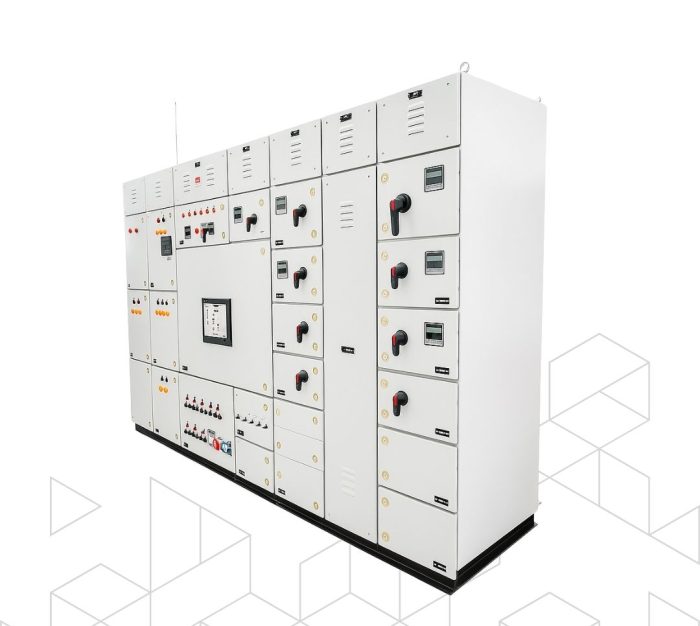
PCC Panels for Plastic Manufacturing Units: Managing High Energy Loads with Ease

Plastic and polymer manufacturing units are among the most power-intensive industrial environments. From injection molding and extrusion to compounding, blow molding, and recycling, these processes rely on machines that draw heavy, continuous electrical loads. Any instability in power distribution directly impacts production quality, machine life, and operational efficiency.

In this context, PCC Panels for Plastic Industry play a central role. Power Control Center (PCC) panels are not just electrical distribution units; they are the backbone that manages high-energy loads, stabilizes power flow, and ensures uninterrupted operations in plastic manufacturing plants. Poorly designed PCC panels often result in frequent tripping, overheating, and unexpected downtime—issues that plastic manufacturers cannot afford.

Energy-Intensive Nature of Plastic Manufacturing

Plastic manufacturing equipment operates under demanding electrical conditions. Injection molding machines draw high peak loads during heating and clamping cycles. Extruders run continuously for long production shifts. Auxiliary systems such as chillers, compressors, dryers, and material handling units add further load complexity.

Because of this, PCC Panels for Plastic Industry must be designed to handle:

  • Continuous high current demand
  • Sudden load variations during machine cycles
  • Simultaneous operation of multiple heavy machines
  • Long operating hours without thermal stress

Generic power panels are rarely suitable for such environments. Plastic manufacturing requires PCC panels that are purpose-built for high-load, high-duty industrial applications.

How PCC Panels Stabilize Power in Plastic Manufacturing Units

In plastic plants, unstable power supply often leads to rejected batches, machine faults, and inconsistent product quality. PCC panels help stabilize the electrical system by managing how power is distributed across machines and process lines.

PCC Panels for Plastic Industry ensure balanced load distribution, preventing overloading of individual feeders. They also support controlled power delivery to sensitive equipment, reducing voltage fluctuations that affect heating elements and motor-driven systems. This stability directly improves process consistency and machine performance.

Managing Peak Loads and Continuous Operation

Plastic manufacturing rarely follows a fixed load pattern. Machines start and stop based on production schedules, mold changes, and material requirements. These frequent load variations place stress on the electrical distribution system.

Well-designed PCC Panels for Plastic Industry are engineered to manage both peak demand and continuous operation. They accommodate high starting currents, support parallel feeder configurations, and prevent nuisance tripping during load surges. This capability allows production teams to operate machines flexibly without worrying about electrical interruptions.

Reducing Downtime in Plastic Processing Plants

Downtime in plastic manufacturing is expensive. Restarting extrusion lines or molding machines often involves material waste, re-heating cycles, and production delays. Electrical failures at the PCC level can shut down entire sections of a plant.

By enabling structured power distribution and selective isolation, PCC Panels for Plastic Industry help contain electrical issues before they escalate. A fault in one machine feeder does not necessarily impact the entire plant, allowing other production lines to continue operating. This localized fault handling significantly improves plant uptime and operational reliability.

Supporting Auxiliary Systems in Plastic Manufacturing

Plastic plants rely heavily on auxiliary equipment—chillers for mold cooling, compressors for pneumatic systems, material dryers, and ventilation systems. These systems are critical for maintaining process quality and safety.

PCC panels act as the central coordination point for these auxiliary loads. PCC Panels for Plastic Industry ensure that both production machinery and support systems receive stable and protected power, maintaining overall plant efficiency. A failure in auxiliary systems can be just as disruptive as a machine shutdown, making reliable power distribution essential.

Scalability for Growing Plastic Manufacturing Units

Plastic and polymer plants often expand capacity by adding new machines, molds, or production lines. Electrical infrastructure must be able to support this growth without requiring a complete redesign.

PCC Panels for Plastic Industry are typically designed with future expansion in mind. Modular feeder arrangements, spare capacity, and structured layouts allow new equipment to be integrated smoothly. This scalability helps manufacturers grow operations while keeping electrical upgrades manageable and cost-effective.

Operational Safety and Compliance

High current levels and continuous operation increase electrical risks in plastic manufacturing environments. Overheating, insulation degradation, and arc faults pose safety concerns for both equipment and personnel.

By managing load distribution and fault isolation effectively, PCC Panels for Plastic Industry enhance operational safety. They support safer maintenance practices, controlled shutdowns, and compliance with industrial electrical standards. This is particularly important in plants operating around the clock with limited downtime windows.

Synchro Electricals designs PCC panels specifically for high-load industrial environments such as plastic and polymer manufacturing units. Their approach focuses on real production conditions—continuous operation, load variability, and expansion needs—ensuring PCC panels deliver reliable performance over the long term.

By aligning panel design with process demands, Synchro Electricals supports efficient energy management and stable operations in plastic manufacturing plants.

Conclusion

Plastic manufacturing units demand electrical systems that can handle high energy loads without compromising stability or safety. PCC Panels for Plastic Industry provide the control, reliability, and scalability required to support modern plastic processing operations.

By managing continuous loads, handling peak demand, and supporting both machines and auxiliary systems, PCC panels enable plastic manufacturers to operate efficiently and confidently. In an industry where power reliability directly affects productivity and quality, investing in the right PCC panels is a strategic decision, not just an electrical requirement.

FAQs

1. Why are PCC Panels for Plastic Industry essential in plastic manufacturing units?

Plastic manufacturing involves high, continuous, and fluctuating electrical loads. PCC Panels for Plastic Industry ensure stable power distribution, prevent overloads, and support uninterrupted production.

2. How do PCC panels handle high energy loads in plastic plants?

PCC panels are designed to manage continuous high current, peak load conditions, and simultaneous operation of multiple machines such as injection molding and extrusion equipment.

3. Can PCC Panels for Plastic Industry reduce production downtime?

Yes. By enabling selective isolation and structured power distribution, PCC panels limit the impact of electrical faults to specific sections instead of shutting down the entire plant.

4. Are PCC panels suitable for both machines and auxiliary systems in plastic plants?

Absolutely. PCC Panels for Plastic Industry support not only production machinery but also auxiliary systems like chillers, compressors, dryers, and ventilation units.

5. Do PCC panels support future expansion in plastic manufacturing units?

Yes. Well-designed PCC panels include spare capacity and modular feeder arrangements, allowing plastic plants to add new machines or lines without major electrical redesign.

PCC Panels for Data Centers: Ensuring Stable Power for Mission-Critical IT Loads

Data centers are among the most power-sensitive environments in modern infrastructure. From cloud computing and financial transactions to healthcare data and enterprise operations, even a brief power disturbance can result in service outages, data corruption, and significant financial loss. In such mission-critical facilities, power stability is not just an operational requirement—it is a core design principle.

At the center of this power architecture lies a crucial component: PCC Panels for Data Centers. Power Control Center (PCC) panels act as the primary interface between incoming power sources and downstream IT and mechanical loads, ensuring controlled distribution, fault protection, and long-term reliability. When engineered correctly, PCC panels form the backbone of stable, resilient data center power systems.

Synchro Electricals designs PCC panels specifically for high-availability environments, where electrical reliability directly impacts business continuity.

The Power Reality Inside Modern Data Centers

Data centers operate under constant, high electrical demand. Servers, storage arrays, networking equipment, cooling systems, and backup infrastructure run simultaneously—often at near-continuous load. Unlike conventional facilities, data centers experience minimal load fluctuation tolerance; voltage dips, phase imbalance, or transient faults can trigger shutdowns or damage sensitive equipment.

Additionally, data centers rely on multiple power sources:

  • Utility grid supply
  • Backup DG sets
  • UPS systems and battery banks
  • Renewable energy integration in some facilities

Managing power flow between these sources while maintaining absolute stability requires a structured and centralized control approach—this is where PCC panels become indispensable.

Why Data Centers Cannot Afford Power Instability

Power instability in data centers has consequences far beyond simple downtime. Common risks include:

  • Unplanned server shutdowns and reboot cycles
  • UPS stress and reduced battery life
  • Failure of cooling systems leading to thermal events
  • Damage to sensitive IT hardware
  • SLA violations and reputational impact

Unlike industrial plants, where processes may restart, data centers must maintain continuous, clean power delivery. Even milliseconds of disruption can cascade into major operational incidents. PCC Panels for Data Centers are designed to eliminate these risks by ensuring controlled, protected, and monitored power distribution at all times.

What Role PCC Panels Play in Data Center Power Architecture

A Power Control Center (PCC) panel serves as the main low-voltage distribution and control hub within a data center. Positioned downstream of transformers and upstream of critical loads, it manages power flow to UPS systems, cooling infrastructure, and auxiliary services.

In data center environments, PCC panels perform several critical functions:

  • Distributing power evenly across multiple feeders
  • Protecting systems from overloads, short circuits, and faults
  • Monitoring electrical parameters in real time
  • Supporting redundancy and failover strategies
  • Enabling safe isolation for maintenance

Rather than acting as a simple distribution board, the PCC panel becomes a control layer that ensures power predictability and resilience.

How PCC Panels Ensure Stability for Mission-Critical IT Loads

The stability of IT loads depends on how effectively upstream power disturbances are absorbed and controlled. Well-designed PCC panels contribute to this stability in several ways.

First, they ensure balanced load distribution across phases, preventing overheating and voltage imbalance that can affect IT equipment. Second, they provide fast fault isolation, ensuring that localized issues do not propagate across the facility. Third, integrated monitoring allows operators to detect abnormal conditions early, enabling preventive action rather than reactive intervention.

In facilities with N+1 or 2N redundancy, PCC panels also support seamless coordination between power paths—ensuring that failover occurs smoothly without affecting downstream systems.

Engineering Capabilities That Matter in Data Centers

In data center applications, PCC panel design is driven by reliability, precision, and scalability rather than basic distribution requirements. Key engineering aspects include:

  • High fault-withstand capability to handle short-circuit levels typical of large data centers
  • Advanced protection relays for overcurrent, earth fault, and feeder protection
  • Segregated busbar and feeder sections to improve safety and maintainability
  • Accurate metering and monitoring for voltage, current, power factor, and energy usage
  • SCADA and BMS integration for centralized monitoring and control
  • Modular construction allowing future expansion without major redesign

These capabilities ensure that PCC panels support not just current capacity, but long-term growth and evolving load profiles.

Where PCC Panels Are Used Within Data Centers

PCC panels are deployed across multiple layers of data center infrastructure, including:

  • Main LT distribution from transformers
  • Power supply to UPS and battery systems
  • Distribution to cooling plants and CRAC units
  • Auxiliary services such as lighting, fire systems, and control rooms
  • Interface panels supporting redundancy and power zoning

At each level, the PCC panel ensures controlled power flow, fault isolation, and operational visibility.

Operational Benefits for Data Center Owners and Operators

Implementing well-engineered PCC Panels for Data Centers delivers measurable benefits:

  • High power availability, supporting 24/7 operations
  • Reduced risk of downtime through fast fault isolation
  • Improved energy management via real-time monitoring
  • Extended equipment life due to stable electrical conditions
  • Simplified maintenance with safe isolation and clear diagnostics
  • Scalable infrastructure to support future capacity growth

These benefits directly contribute to lower operational risk and higher service reliability.

Why Synchro Electricals for Data Center PCC Panels

Data center power systems demand more than standard electrical panels. They require engineered solutions that align with redundancy philosophies, uptime targets, and long-term reliability goals.

Synchro Electricals designs PCC panels with a system-level understanding of data center operations. Each solution is tailored to fault levels, load profiles, and monitoring requirements specific to mission-critical IT environments. Emphasis is placed on build quality, protection coordination, and seamless integration with facility management systems.

This approach ensures that PCC panels perform reliably under continuous load and evolving operational demands.

Conclusion

In data centers, power stability is the foundation of digital reliability. PCC Panels for Data Centers play a central role in ensuring that mission-critical IT loads receive clean, controlled, and uninterrupted power—regardless of upstream conditions.

By deploying robust, well-engineered PCC panels, data center operators can reduce operational risk, support high availability targets, and build power infrastructure that is resilient, scalable, and future-ready.

FAQs

1. Why are PCC panels critical in data centers?

They ensure stable power distribution, fast fault isolation, and continuous operation for mission-critical IT loads.

2. How do PCC panels support redundancy in data centers?

They enable controlled power paths and seamless coordination between redundant sources and feeders.

3. Can PCC panels integrate with BMS or SCADA systems?

Yes. Modern PCC panels support full integration for real-time monitoring and alarms.

4. Are PCC panels scalable for data center expansion?

Absolutely. Modular designs allow capacity expansion without major system disruption.

5. What makes PCC panels different for data centers compared to industrial plants?

Data center PCC panels prioritize reliability, monitoring precision, and continuous uptime over process-driven load variation.

Welcome to Synchro Electricals

We provide trusted, high-performance electrical solutions tailored for every industry.

Apply For Job