Maximizing Efficiency with VCB Panels

In today’s fast-paced industrial and commercial environments, power reliability, safety, and efficiency are more critical than ever. One of the key technologies enabling modern electrical infrastructure to meet these demands is the Vacuum Circuit Breaker (VCB) panel. Designed for medium-voltage applications, VCB panels are pivotal in protecting and optimizing electrical distribution systems.

In this blog, we’ll explore how VCB panels contribute to operational efficiency, their key advantages, applications, and best practices for maximizing their benefits.

What is a VCB Panel?

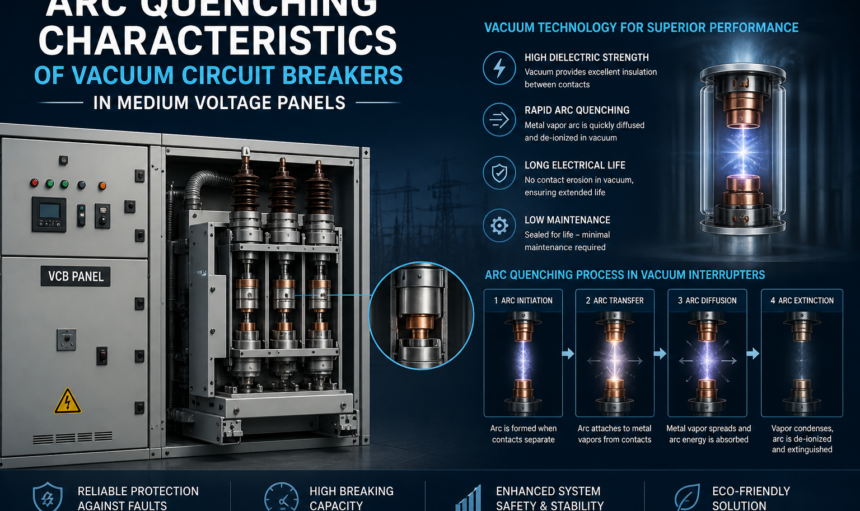
A Vacuum Circuit Breaker (VCB) is a type of circuit breaker where arc quenching takes place in a vacuum environment. A VCB panel is an assembly that houses the VCB and associated protective, control, and metering equipment. These panels are used in medium voltage systems, typically ranging from 3.3kV to 36kV.

Unlike traditional air or oil circuit breakers, VCBs operate in a vacuum, which offers significantly better dielectric strength and arc interruption capability.

Importance of VCB Panels

VCB panels are crucial in various applications, including industrial plants, commercial buildings, and utility substations. They provide reliable protection against short circuits, overloads, and other electrical faults, minimizing downtime and ensuring the safety of both equipment and personnel.

How VCB Panels Improve Efficiency

1. High-Speed Operation and Minimal Downtime

VCBs are designed to operate rapidly and reliably during fault conditions. This fast response time helps to:

  • Minimize equipment damage
  • Limit the spread of faults
  • Restore power quickly
  • Reduce downtime, especially in process-driven industries

This responsiveness translates directly into increased system uptime and efficiency.

2. Longer Life and Reduced Maintenance

Thanks to the vacuum interrupter, VCB panels suffer minimal contact erosion compared to oil or air breakers. The arc is extinguished quickly and cleanly, which leads to:

  • Extended lifespan (20+ years with proper maintenance)
  • Fewer scheduled maintenance intervals
  • Lower operational cost over the system’s lifecycle

The result? Lower total cost of ownership and higher operational continuity.

3. Enhanced Safety Features

Safety directly correlates with efficiency — fewer accidents mean fewer interruptions. VCB panels often come with built-in features like:

  • Arc-proof enclosures
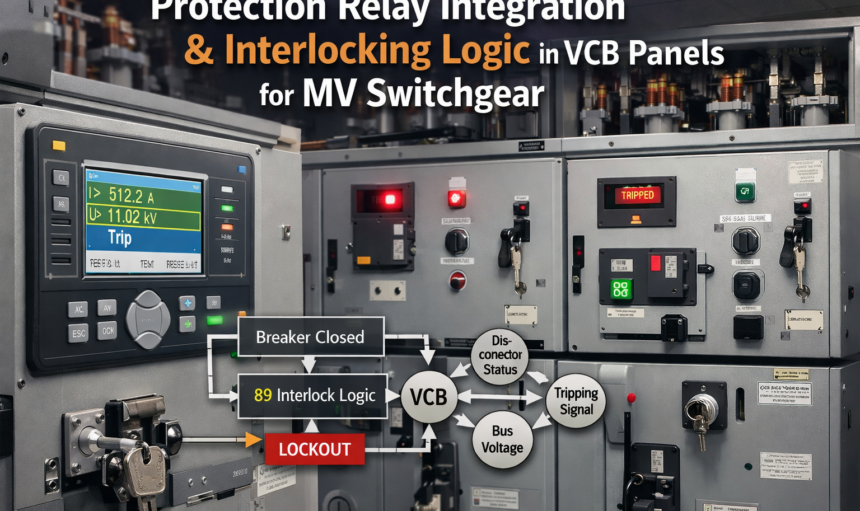
  • Interlocking systems to prevent unsafe operations
  • Automatic fault detection and isolation

These ensure safe operation for both personnel and equipment, creating a more secure and efficient working environment.

4. Compact Design for Space Optimization

In commercial and industrial setups, space is premium. Modern VCB panels are designed to be compact and modular, which allows:

  • More panels in a limited space
  • Easy expansion and scalability
  • Better layout efficiency in power rooms

Efficient space utilization translates to lower building costs and higher operational density.

Applications Where VCB Panels Shine

1. Power Plants and Substations

In power generation and transmission systems, reliability is non-negotiable. VCB panels offer the ability to handle frequent switching operations and high fault levels with ease.

2. Industrial Manufacturing

Heavy machinery and production lines rely on stable power. A VCB panel ensures quick fault isolation and minimal production disruptions, which is critical in sectors like automotive, steel, and chemicals.

3. Commercial Buildings and Campuses

Office parks, hospitals, universities, and malls require stable power across multiple zones. VCB panels support this with their intelligent monitoring systems and zone-based protection.

4. Renewable Energy Installations

Solar farms and wind power stations benefit from VCBs’ low maintenance needs and robust fault management, essential for remote or unattended locations.

Technical Advantages That Drive Efficiency

● Superior Arc Quenching

VCBs use vacuum interrupters that extinguish arcs within milliseconds, even under high current conditions. This reduces the thermal and mechanical stress on connected systems.

● High Insulation Strength

The vacuum offers a dielectric strength that is 8-10 times higher than air, allowing for closer contact spacing and more compact designs without compromising safety.

Environmentally Friendly

Unlike SF₆ circuit breakers, which use potent greenhouse gases, VCBs have no emissions or environmental hazards. This makes them ideal for eco-conscious operations aiming to reduce their carbon footprint.

● Ease of Automation

Modern VCB panels support remote control, SCADA integration, and predictive maintenance analytics, which help teams monitor and optimize power usage with minimal manual intervention.

Future of VCB Panels

As industries move toward automation, AI-based maintenance, and green energy, VCB panels are also evolving. Expect features like:

  • Self-diagnosing systems
  • Integration with energy management platforms
  • Even more compact, modular designs

VCB panels will continue to play a central role in smart, efficient, and sustainable energy systems.

Best VCB Panels Provider –Synchro Electrical Pvt.Ltd.

When it comes to selecting a VCB panel provider, Synchro Electrical stands out as a reliable and trusted choice. With years of experience in the industry, Synchro Electricals Pvt. Ltd., established in 2018 and based in Rajkot, Gujarat, is a leading manufacturer specializing in the design, testing, and commissioning of electrical distribution panels.

Why Choose Synchro Electrical for VCB Panels?

Proven Track Record

Synchro Electrical has a proven track record of delivering top-notch VCB panels that meet the highest standards of quality and performance. Its panels are known for their reliability, durability, and advanced features, making it a preferred choice for various applications.

Comprehensive Product Range

Synchro Electrical offers a comprehensive range of VCB panels to cater to different voltage levels, current ratings, and application requirements. Whether you need a panel for industrial, commercial, or utility applications, they have the right solution for you.

Customization Options

Understanding that every project has unique needs, Synchro Electrical provides customization options to tailor VCB panels to specific requirements. Its team of experts works closely with clients to design and manufacture panels that meet exact specifications.

Excellent Customer Support

Synchro Electrical is committed to providing excellent customer support throughout the entire lifecycle of its products. From initial consultation and installation to maintenance and technical assistance, its dedicated support team ensures a seamless experience for its customers.

Final thoughts 

Vacuum Circuit Breaker panels are not just safety devices — they are efficiency enablers. From minimizing downtime to reducing maintenance and energy losses, VCB panels provide the reliability and performance modern electrical systems demand.

Whether you’re building a new facility or retrofitting an aging power distribution system, investing in a high-quality VCB panel setup is a smart move for long-term efficiency, safety, and sustainability.

FAQs

1. What is the lifespan of a VCB panel?

A well-maintained VCB panel can last 20–30 years, depending on operating conditions and frequency of fault interruptions. Regular inspections will help extend its usable life.

2. Can VCB panels be used outdoors?

Typically, VCB panels are designed for indoor use. However, outdoor variants with weatherproof enclosures are available and widely used in substations and rural installations.

3. Are VCBs better than SF6 breakers?

For medium-voltage applications, VCBs are generally preferred due to their eco-friendly nature and low maintenance needs. SF6 breakers are more common in high-voltage applications but have environmental concerns due to gas emissions.

4. How often should VCBs be serviced?

Routine visual checks can be done annually, while detailed inspections and testing should be conducted every 3–5 years or after a fault event. Manufacturer guidelines provide service intervals specific to each model.

5. Can VCB panels be integrated with automation systems?

Yes, modern VCB panels are SCADA-compatible and can be integrated with PLC, HMI, or building management systems (BMS) for centralized control and monitoring.

How Dust and Moisture Affect VCB Panels in Rainy Seasons

Introduction to VCB Panels

What are VCB Panels?

VCB panels, or Vacuum Circuit Breaker panels, are a vital part of any modern electrical distribution system. These panels use a vacuum medium to extinguish electrical arcs during fault conditions, making them more reliable and efficient compared to older technologies. Brands like Synchro Electricals have pioneered robust, weather-resistant VCB solutions, particularly suited for challenging environmental conditions such as rainy seasons.

Built for medium-voltage applications, VCBs operate efficiently in industrial setups, substations, and commercial buildings, ensuring protection against overloads and short circuits. Their compact design, low maintenance, and long life make them indispensable for safe power management.

Importance of VCB Panels in Electrical Systems

A well-functioning VCB panel is like a dedicated sentinel in your electrical system—ready to isolate faults instantly and maintain continuous operations. These panels are especially critical in high-risk environments, where reliability is non-negotiable.

Synchro Electricals understands the importance of this protection. That’s why their panels are engineered with high-quality materials, vacuum interrupters, and precision relay coordination to ensure maximum uptime and safety, even in moisture-heavy climates.

Common Environmental Challenges in Rainy Seasons

Increased Humidity and Its Electrical Impacts

Humidity is a silent saboteur. In the rainy season, when the moisture content in the air rises, the insulation inside VCB panels becomes susceptible to dielectric weakening. Moisture leads to tracking, corrosion, and internal arcing, especially if the panel isn’t properly sealed.

To counter this, Synchro Electricals integrates anti-condensation heaters and insulated sealing gaskets in their VCB panels, significantly reducing the risk of moisture penetration and internal condensation.

Dust Suspension in Moisture-Laden Air

Rain doesn’t just bring water—it stirs up dust. And when dust mixes with humidity, it becomes a sticky, conductive film that deposits on insulators and contact points. This compromises insulation and accelerates panel deterioration.

That’s why Synchro Electricals’ panels are designed with high-efficiency filters and smart ventilation systems that limit dust ingress and maintain internal air quality during volatile weather.

How Moisture Enters VCB Panels

Leaky Enclosures and Improper Sealing

Moisture intrusion often results from small structural flaws—worn seals, loose panels, and poor enclosure designs. Once inside, water corrodes metal parts and creates an environment ripe for failure.

To address this, Synchro Electricals employs IP65-rated enclosures and reinforced panel sealing mechanisms in its VCB models, offering maximum protection against leaks and external weathering.

Capillary Action and Condensation Inside Panels

Capillary action allows moisture to travel through microscopic gaps in cable entries and joints. Add fluctuating temperatures, and you get condensation forming right on sensitive components.

Synchro Electricals combats this with internal heating elements and anti-condensation coatings, especially in products tailored for monsoon-prone regions.

Impact of Moisture on VCB Panels

Corrosion of Electrical Contacts

When moisture reacts with metallic contacts, corrosion sets in, leading to higher resistance, heat buildup, and eventual contact failure. This issue is common in poorly ventilated or neglected systems.

Panels from Synchro Electricals feature corrosion-resistant contacts, silver-plated components, and sealed contact chambers to withstand such threats over time.

Dielectric Breakdown and Flashovers

Moisture lowers insulation resistance and allows arcs to jump across unintended paths. Flashovers are violent events that can destroy equipment in seconds.

That’s why Synchro Electricals rigorously tests its insulation materials and integrates arc flash protection systems, ensuring superior dielectric stability even under damp conditions.

Reduction in Insulation Resistance

One of the earliest signs of moisture damage is falling insulation resistance. When ignored, it can cause equipment malfunction and safety hazards.

Regular insulation monitoring is recommended, and Synchro Electricals’ maintenance plans offer such diagnostics as part of their service offerings, providing peace of mind to clients during critical weather periods.

Effects of Dust Accumulation

Creation of Conductive Paths on Insulators

Dust mixed with rainwater becomes a semi-conductive layer that supports current leakage. This weakens insulation and leads to system instability.

Synchro Electricals designs their insulators with smooth, self-cleaning surfaces and recommends periodic cleaning to avoid such build-up.

Hindrance in Arc Quenching Mechanism

Dust on arc chutes and contacts hampers the vacuum’s ability to extinguish arcs effectively. This increases the chances of restriking, which is dangerous.

In response, Synchro Electricals’ arc chambers are tightly sealed and made from materials that repel dust accumulation.

Overheating Due to Poor Ventilation

Blocked ventilation due to dust leads to hotspots. Overheating degrades insulation, deforms components, and reduces panel lifespan.

Synchro Electricals employs thermal airflow designs, including filtered vents and heat sinks, to keep temperatures under control, even in the toughest weather.

Combined Effect of Dust and Moisture

The Formation of Sludge and Its Impact

When dust and moisture combine, they form sludge—a sticky layer that corrodes components and blocks electrical pathways.

Synchro Electricals combats this with double-layered sealing systems and easy-clean internal designs to prevent sludge formation.

Impact on Switchgear Reliability and Lifespan

Dust and moisture significantly shorten equipment life. Malfunctions increase, maintenance costs rise, and unexpected downtime becomes a threat.

With Synchro Electricals’ rugged designs, regular maintenance support, and real-time monitoring options, long-term switchgear health is guaranteed.

Early Signs of Dust and Moisture Damage in VCB Panels

Visual Indicators

Rust, fogging, stains, and grime around terminals are red flags. Synchro Electricals’ trained technicians are skilled at spotting these signs during scheduled service visits.

Performance and Operational Symptoms

False tripping, slow response, and unexplained temperature rises indicate contamination. With Synchro Electricals’ diagnostic tools, such issues are addressed before failures occur.

Preventive Measures Against Dust and Moisture

Regular Inspection and Maintenance

Synchro Electricals recommends routine testing—IR thermography, insulation resistance, and visual checks—especially during the rainy season. Their service team provides custom maintenance packages for high-risk environments.

Environmental Controls

From anti-condensation heaters to weatherproof filters, Synchro Electricals ensures its panels are ready to face the monsoon head-on. Clients are also offered room layout consultation to optimize ventilation and drainage.

Best Practices for VCB Panel Protection in Rainy Weather

Using Enclosures with High IP Ratings

All outdoor VCB panels from Synchro Electricals come with IP65 or higher-rated enclosures, protecting against dust, water, and extreme temperatures.

Panel Design Modifications for Wet Conditions

Synchro Electricals offers customized panels with canopies, dual-layered doors, sloped roofs, and waterproof gland plates—ideal for regions with prolonged rainy seasons.

Conclusion

Rainy seasons bring beauty to the world, but chaos to electrical systems. Dust and moisture are serious threats to VCB panels, causing corrosion, breakdowns, and insulation failure. However, with the right technology and maintenance, these threats can be mitigated.

Synchro Electricals is proud to be a trusted partner in this journey, offering rugged, rain-ready VCB panels built to withstand the worst that nature throws at them. Whether it’s monsoon preparedness, preventive maintenance, or smart panel designs, Synchro Electricals is always by your side to ensure safe, uninterrupted power flow.

FAQs

Can Synchro Electricals' VCB panels handle extreme humidity?

Absolutely. Our panels are built with sealed enclosures and moisture-resistant insulation to perform reliably in high-humidity zones.

How does Synchro Electricals prevent moisture buildup in their panels?

We use IP-rated designs, weatherproof gland plates, and anti-condensation coatings to eliminate moisture risks.

Can your VCB panels be installed outdoors?

Of course. Our outdoor panels come with IP66-rated enclosures, sloped roofs, and special venting systems for optimal weather resistance.

How frequently should I service my VCB panels in the rainy season?

We recommend bi-monthly inspections during heavy rain seasons. Our support team can schedule and conduct full diagnostics based on your needs.

Are indoor VCB panels safe from dust and moisture?

Not entirely. Even indoor panels can be affected by humidity, condensation, or poor ventilation if not properly maintained.

VCB Panels: How Vacuum Circuit Breakers Enhance Electrical Safety

Introduction to VCB Panels and Their Role in Modern Electrical Infrastructure

In today’s power-driven world, the backbone of industrial and commercial operations is a reliable and secure electrical infrastructure. At the heart of this infrastructure are VCB panels—vacuum circuit breaker panels—that have revolutionized the way electrical systems are protected. For businesses, especially in manufacturing, data centers, and power utilities, a single electrical fault can cost thousands, even millions, in downtime and equipment loss. That’s where VCB panels step in—not just as a piece of electrical equipment but as a shield that ensures operational continuity and safety.

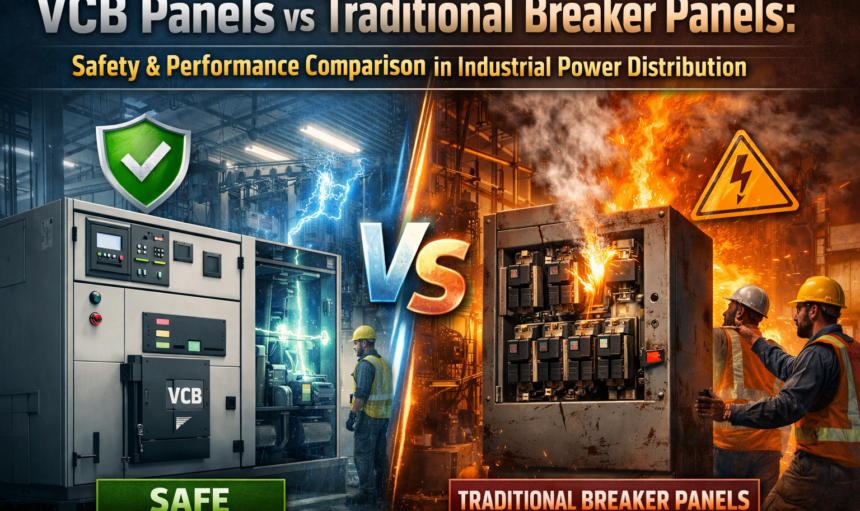
VCB panels are designed to interrupt high-voltage currents in a matter of milliseconds, preventing arc formation and fire hazards. Unlike older technologies such as air or oil circuit breakers, VCBs use vacuum as the arc-quenching medium. The result? A cleaner, more efficient, and safer method to manage electrical faults.

For B2B clients, this isn’t just about choosing a better circuit breaker—it’s about investing in peace of mind. At Synchro Electricals, we understand that your business depends on power quality and safety. That’s why we design VCB panels that go beyond industry standards to deliver unmatched protection and performance.

Whether you’re operating a substation, running heavy machinery, or managing a commercial property, having the right VCB panel in place can mean the difference between a minor hiccup and a catastrophic outage. Let’s dive deeper into the world of VCBs and why they’re becoming the go-to choice for forward-thinking businesses.

Understanding Vacuum Circuit Breakers (VCBs)

So, what exactly is a vacuum circuit breaker, and how does it work? Unlike traditional circuit breakers that use air or oil to extinguish the electrical arc, VCBs use a vacuum as the insulating medium. When a fault occurs and the contacts separate, the vacuum rapidly quenches the arc, ensuring quick disconnection and minimal energy loss.

Key Components of a VCB Panel Include:

  • Interrupter unit: The core where the arc is quenched.
  • Operating mechanism: Controls the movement of contacts.
  • Insulation system: Prevents electrical leakage and ensures user safety.
  • Protection relays and control wiring: Enhances automation and control capabilities.

Vacuum circuit breakers are specifically favored for medium-voltage applications (typically from 11kV to 33kV) and have a much longer service life compared to their air or oil-based counterparts. They’re compact, require minimal maintenance, and can operate for tens of thousands of cycles without performance degradation.

From a B2B perspective, this means fewer service interruptions, reduced maintenance costs, and improved uptime for operations. No wonder VCBs are fast becoming a staple in modern industrial infrastructure.

Why Safety is Paramount in Industrial Electrical Systems

Think of your electrical system like the nervous system of a factory or commercial building. One short circuit, overload, or ground fault can not only halt production but also pose severe risks to life and property. Industrial electrical systems typically deal with high voltages and large current loads—when something goes wrong, the consequences are immediate and potentially devastating.

Common Hazards Without Proper Circuit Protection:

  • Arc flash incidents: These can cause serious injury or death.
  • Fire hazards: Resulting from failed insulation or circuit overloads.
  • Equipment damage: Fault currents can fry sensitive machinery.
  • Unplanned downtime: Every minute of interruption translates to revenue loss.

Regulatory bodies like the International Electrotechnical Commission (IEC) and Indian Standards (IS) mandate strict compliance for circuit protection in industrial setups. VCB panels help businesses meet these compliance benchmarks while significantly reducing the risk of electrical mishaps.

For B2B clients, the safety implications aren’t just operational—they’re financial and reputational. Investing in reliable VCB panels is not an expense, it’s an essential layer of defense that ensures the longevity of equipment, the safety of employees, and the credibility of your brand.

How VCB Panels Enhance Electrical Safety

Let’s get to the crux: How exactly do VCB panels boost safety in real-world scenarios? First off, vacuum circuit breakers are exceptionally efficient at arc quenching. When contacts open in a vacuum, there’s no medium for the arc to sustain itself. This eliminates the risk of fire and minimizes heat generation.

Key Safety Enhancements with VCB Panels:

  1. Instantaneous fault interruption: Reduces energy release during faults.
  2. No risk of oil spillage or fire: Unlike oil circuit breakers, VCBs are clean.
  3. Reduced risk of arc flash injuries: Thanks to quick and enclosed arc suppression.
  4. Remote operation capability: Enhances safety during switchgear maintenance.
  5. Insulation integrity: High dielectric strength of vacuum ensures zero leakage.

VCB panels are also built with fail-safe mechanisms and interlocks. This means even in the event of an operational error, the panel will default to a safe state, preventing accidents.

For industries operating 24/7, like steel plants, data centers, and metro systems, these panels are a lifesaver—literally and figuratively. They not only protect the systems but also the personnel working around high-voltage equipment daily.

Advantages of Vacuum Technology Over Traditional Breakers

So why not stick to the traditional air or oil circuit breakers? The answer lies in performance, reliability, and total cost of ownership. Vacuum circuit breakers outperform other technologies across multiple parameters.

Comparison Table: VCBs vs. ACBs vs. OCBs

Feature VCB ACB (Air Circuit Breaker) OCB (Oil Circuit Breaker)
Arc Quenching Medium Vacuum Air Oil
Arc Quenching Efficiency Excellent Moderate Moderate
Maintenance Frequency Very Low High High
Environmental Risk None Low (Air Emissions) High (Oil Spills, Fire Risk)
Cost Over Life Cycle Cost-Effective High Very High
Size and Compactness Very Compact Bulky Bulky

From the table, it’s clear that VCBs provide a superior return on investment. For B2B clients, this means fewer disruptions, longer equipment life, and enhanced safety, all packed into a compact, cost-effective panel.

Synchro Electricals leverages advanced vacuum interrupter technology to engineer panels that are robust, scalable, and tailored to your operational demands.

Application Scenarios of VCB Panels in B2B Sectors

VCB panels aren’t just technical equipment; they’re strategic assets. Different industries have different power demands, and each one benefits uniquely from vacuum circuit breaker panels. Whether you’re dealing with large-scale energy distribution or mission-critical operations, the use of VCB panels is an absolute game-changer.

1. Power Plants and Electrical Substations

In power generation and distribution, stability and fault management are crucial. Substations deal with high voltages and heavy load switching. A VCB panel helps prevent cascading failures by isolating the fault immediately and precisely. VCBs offer fast and reliable arc suppression, which is essential when working with fluctuating power levels.

2. Heavy Manufacturing and Industrial Plants

Industries such as steel, cement, textiles, and chemicals often operate massive machinery that consumes immense power. Any fault here could result in equipment damage worth millions. With a VCB panel, you not only ensure safety but also increase system reliability and lower maintenance downtime.

3. Commercial Complexes and High-Rise Buildings

In commercial environments like malls, business towers, and IT parks, safety and continuity of power are non-negotiable. A fire caused by an arc flash can damage infrastructure and endanger lives. With VCB panels installed, these buildings enjoy clean switching, minimal wear, and zero oil hazards.

4. Data Centers and IT Infrastructure

Downtime in data centers equals lost data, revenue, and trust. That’s why redundancy and protection are key. VCB panels integrated with intelligent monitoring provide real-time diagnostics and instant fault handling, making them ideal for these sensitive environments.

At Synchro Electricals, our VCB panels are engineered with versatility in mind—customized solutions that serve industry-specific needs while delivering the core promise of safety and efficiency.

Integration of VCB Panels in Smart Electrical Grids

The modern electrical ecosystem is evolving rapidly with the rise of smart grids, IoT, and automation. VCB panels are not just passive breakers anymore—they’re becoming intelligent components of a connected grid system.

1. Remote Monitoring and Control

Our VCB panels at Synchro Electricals come IoT-ready. That means you can monitor load data, fault history, and system health remotely, using SCADA or cloud-based platforms. This capability is essential for large-scale operations that require real-time decisions based on system conditions.

2. Automation and Self-Healing Networks

Smart grids are designed to reconfigure themselves after faults. VCBs support this through automated switching, reducing human intervention and restoring power faster in fault scenarios. This translates to higher reliability and lower operational costs.

3. Predictive Maintenance and AI Integration

Instead of reactive maintenance, smart VCB panels enable predictive analytics. Sensors detect anomalies early, like rising contact resistance or insulation breakdown, so you can take action before a failure occurs. This prevents unexpected outages and enhances safety.

In the digital age, VCB panels are no longer just hardware—they are integrated safety systems that offer intelligence, adaptability, and proactive fault management. Synchro’s smart VCB solutions are tailored for businesses looking to stay ahead of the curve.

Choosing the Right VCB Panel for Your Business Needs

Not all VCB panels are built the same. The right choice depends on your load profile, operational complexity, safety requirements, and future scalability. Whether you’re powering a single unit or an entire plant, Synchro Electricals can guide you through the selection process.

Key Factors to Consider:

  • Voltage rating: Match your system’s voltage level—typically 11kV, 22kV, or 33kV.
  • Short-circuit withstand capacity: This defines how much fault current your breaker can handle.
  • Frequency of operation: Higher switching frequencies demand more durable interrupters.
  • Installation space: Compact designs save room in crowded electrical rooms.
  • Automation compatibility: Integration with SCADA and PLCs for remote control.

At Synchro Electricals, we don’t offer one-size-fits-all. We offer tailored engineering solutions that fit your business’s electrical blueprint. Our team collaborates with facility managers, electrical consultants, and OEM partners to design VCB panels that aren’t just efficient, but future-ready.

Synchro Electricals: Delivering Excellence in VCB Panels

As a trusted name in power solutions, Synchro Electricals is redefining what VCB panels can do for businesses. We combine cutting-edge vacuum technology with robust engineering to deliver products that ensure long-term safety and performance.

Why Synchro Electricals?

  • Innovative Design: Modular, scalable, and easy to integrate.
  • Advanced Safety Features: Built-in arc protection and interlocks.
  • Customized Solutions: Designed per IEC/IS standards to fit client-specific requirements.
  • Support Ecosystem: End-to-end service—from consultation to installation and maintenance.

Our panels are being used across sectors—from steel plants in Raipur to data centers in Bengaluru—and have consistently exceeded performance expectations. We don’t just sell panels; we provide power safety strategies that strengthen your infrastructure.

Every VCB panel delivered by Synchro is a product of rigorous testing, premium components, and precision assembly. That’s how we deliver electrical safety, not just equipment.

Installation and Maintenance Best Practices

Even the best VCB panels need proper installation and regular upkeep to maintain their edge. At Synchro Electricals, we empower clients with detailed protocols and on-ground technical support to get the most out of every system.

Installation Checklist:

  1. Site readiness assessment: Adequate ventilation, spacing, and power requirements.
  2. Pre-commissioning inspection: Check for transport damage or loose components.
  3. Earthing and insulation: Ensure proper ground connections and dielectric clearances.
  4. Interlock verification: Test mechanical and electrical interlocks before energizing.

Maintenance Schedule:

  • Monthly visual inspection: Look for signs of wear, heating, or dust accumulation.
  • Quarterly functional tests: Trip mechanism, relays, and control circuits.
  • Annual contact resistance test: Ensures arc contacts are in good shape.
  • 5-year full service: Includes vacuum interrupter assessment and dielectric testing.

Following these practices enhances the lifespan and reliability of your VCB panels. Synchro also provides AMC (Annual Maintenance Contracts) to ensure your systems stay audit-ready and compliant.

Regulatory Standards and Certifications for VCB Panels

In industrial electrical systems, adhering to global and national standards isn’t optional—it’s mission-critical. Compliance ensures that the VCB panels not only meet minimum safety benchmarks but are also suitable for integration into complex infrastructures. At Synchro Electricals, all our VCB panels are meticulously designed and tested to align with these standards, so clients can operate confidently in any region or sector.

Key Certifications and Standards Include:

  • IEC 62271-100: Governs high-voltage switchgear and controlgear—essential for medium-voltage VCB panels.
  • IS 13118: Indian Standard that lays down specifications for vacuum circuit breakers up to 36 kV.
  • ANSI C37.06 / C37.09: Commonly used in North America for performance and testing protocols.
  • ISO 9001 & ISO 14001: For quality management and environmental responsibility in manufacturing processes.

These certifications aren’t just rubber stamps—they’re guarantees of product integrity. Panels are tested for dielectric strength, short-circuit withstand capacity, mechanical endurance, and temperature rise performance.

What Does This Mean for B2B Clients?

  • Fewer system audits and penalties from local regulators.
  • Peace of mind during insurance and safety inspections.
  • Trust and credibility when dealing with international partners or expanding globally.

Synchro Electricals maintains an in-house compliance team that keeps track of evolving regulations to ensure your investments are future-proof. Our quality assurance process is documented, audited, and consistently improved to meet global benchmarks.

Future Trends in VCB Technology

Technology waits for no one, and VCB panels are evolving too. If you’re a B2B decision-maker thinking long-term, it’s essential to stay ahead of the curve. The future of vacuum circuit breakers lies in smart integration, sustainability, and AI-powered intelligence.

1. Arc Quenching Innovations

New materials like ceramic and advanced composites are making interrupters more durable and responsive. These upgrades are pushing the limits of how quickly and efficiently arcs can be extinguished, resulting in safer, more compact designs.

2. Integration with Renewable Energy

As more industries adopt solar, wind, and hybrid energy systems, VCB panels are being redesigned to handle intermittent generation and bidirectional power flows. Our newer models at Synchro are engineered to support smart energy mix environments.

3. AI and Machine Learning

Imagine your panel telling you it’s about to fail—before it actually does. With AI, VCB panels can now analyze fault trends, wear levels, and operational patterns to predict failures and schedule service alerts.

4. Modular, Scalable Systems

Instead of replacing an entire system, future VCB panels will be modular and plug-and-play, allowing clients to scale up or upgrade without massive overhauls. This means better CAPEX control and ROI.

At Synchro, we’re already integrating some of these next-gen features into our designs, ensuring that your investment today is still relevant five years down the line.

Cost-Benefit Analysis for B2B Clients

Every smart business move comes down to numbers. So let’s get analytical. While the initial investment in a VCB panel may appear higher than older breaker technologies, the long-term financial and operational returns are where the magic happens.

Upfront Costs vs. Lifecycle Value:

Parameter Traditional Breakers Synchro VCB Panels
Initial Equipment Cost Lower Moderate
Installation & Setup Moderate to High Optimized
Maintenance Costs Very High Minimal
Downtime Costs Frequent Rare

Real-World ROI Example:

One of our clients—a 24×7 manufacturing unit in Pune—switched to Synchro’s 22kV VCB panels. Within 18 months:

  • Equipment breakdowns dropped by 67%
  • Insurance premiums were reduced by 25% (due to safety upgrades)
  • Maintenance crew labor hours fell by 40%

That’s what you call power with purpose. By investing in the right safety tech upfront, B2B clients save substantially on operational, insurance, and maintenance costs down the road.

Common Myths About VCB Panels – Debunked

Let’s be honest. There are a lot of misconceptions floating around about VCB panels. And if you’re basing your buying decision on myths rather than facts, you could be risking more than just money.

Myth 1: VCBs Are Too Expensive for Medium-Scale Industries

Truth: With compact designs and improved manufacturing, the cost of VCB panels has come down significantly. Plus, lower maintenance and downtime costs make them more affordable over time.

Myth 2: They’re Complex to Operate

Truth: Synchro VCB panels are designed with user-friendly HMIs, clear labeling, and remote control options, making them easy to integrate even in older systems.

Myth 3: VCBs Require Constant Maintenance

Truth: On the contrary, they’re almost maintenance-free. A basic inspection and test cycle is all that’s needed, unlike oil breakers that require frequent oil filtration.

Myth 4: Not Suitable for Harsh Environments

Truth: With IP54/IP65-rated enclosures, Synchro panels can handle dust, moisture, and corrosive conditions, making them ideal for outdoor and industrial environments.

Myth 5: Only for Large Enterprises

Truth: Whether it’s a textile mill, a solar farm, or a hospital, every facility can benefit from the safety and efficiency of VCB technology.

At Synchro Electricals, we believe in educating and empowering our clients. That’s why we offer demos, webinars, and site visits—so you can see the difference yourself.

Conclusion: Investing in VCB Panels for a Safer Tomorrow

In the evolving world of industrial power systems, safety, reliability, and efficiency are no longer optional—they’re essential. VCB panels, with their unmatched arc-quenching capabilities and low-maintenance design, are the definitive answer for modern electrical safety challenges. For B2B clients who prioritize uptime, compliance, and cost-efficiency, these panels aren’t just an upgrade—they’re a strategic investment.

At Synchro Electricals, we don’t just deliver products. We deliver peace of mind. Our VCB panels are custom-built, regulation-compliant, and future-ready, giving your business the power to thrive, uninterrupted.

So, whether you’re planning a new facility, upgrading an aging system, or simply looking to make a smart, safe investment, make VCB panels from Synchro part of your power strategy.

FAQs

What makes VCB panels safer than traditional breakers?

VCB panels quench arcs in a vacuum, eliminating fire risks, reducing heat, and offering faster fault interruption compared to oil or air-based breakers.

Can Synchro customize VCB panels for unique industry needs?

Absolutely. We offer custom-designed solutions based on voltage levels, space constraints, and automation needs for every industry vertical.

What are the typical maintenance intervals for VCB panels?

Routine visual checks monthly, functional tests quarterly, and detailed service annually are sufficient. Full interrupter testing may be needed every 5 years.

Are VCB panels suitable for renewable energy systems?

Yes, our panels are designed to handle bidirectional power and fluctuations from sources like solar or wind, making them perfect for green systems.

How fast can Synchro Electricals deliver a VCB panel solution?

Depending on specifications, we typically deliver within 4 to 6 weeks, including installation and commissioning support.

Welcome to Synchro Electricals

We provide trusted, high-performance electrical solutions tailored for every industry.

Apply For Job