Ultimate Guide to APFC Panels for B2B Industries – Powered by Synchro Electricals

Introduction to APFC Panels

What is an APFC Panel?

An Automatic Power Factor Correction (APFC) Panel is an advanced electrical control system designed to manage the power factor of a facility. In simple terms, it’s the brain that tells your power system how to behave efficiently. Power factor refers to how effectively electrical power is being used. A low power factor means wasted electricity, increased utility bills, and even penalties from energy providers. APFC panels correct this imbalance by switching capacitors in and out based on the load’s reactive power requirement.

For industrial setups, particularly in the B2B sector, maintaining an optimal power factor is not just about saving energy—it’s a compliance necessity. Modern APFC panels are equipped with microprocessor-based relays that constantly monitor and improve the power factor in real-time. These systems prevent penalties and reduce wear and tear on electrical components, leading to significant cost savings and extended equipment life.

Why B2B Industries Need APFC Panels

In the B2B industrial world, where power consumption is not only massive but also fluctuating, APFC panels act as silent power savers. Companies running heavy machinery or production lines often experience dips in power factor due to inductive loads. Without correction, these dips can snowball into serious financial and operational issues.

Here’s where Synchro Electricals steps in with its range of APFC panels—from 20 kVAR to 400 kVAR and beyond. With industries like textiles, manufacturing, metal processing, chemical plants, and automotive assembly lines in mind, Synchro delivers tailored APFC solutions to ensure stability, efficiency, and compliance.

Understanding kVAR Ratings in APFC Panels

Overview of kVAR and Its Role in Power Factor Correction

kVAR (kilo-volt-ampere reactive) is the unit that measures reactive power. This is the part of electricity that does no real work but is necessary for magnetizing the equipment like motors and transformers. While reactive power doesn’t perform any physical task, it is crucial for operating industrial machinery efficiently.

Here’s the catch: utility companies charge for both real and reactive power. A high reactive component increases your bill without providing tangible benefits. That’s where APFC panels help. They inject capacitive reactive power to balance the inductive load, keeping the power factor near unity (1), which is ideal.

Synchro Electricals ensures that their APFC panels, regardless of size—20 kVAR or 400 kVAR—are finely tuned to deliver just the right amount of correction, thereby optimizing power usage and preventing energy loss.

Matching the Right kVAR with Industrial Load Requirements

Selecting the right kVAR-rated APFC panel is key to effective power management. A mismatch can either underperform or overcompensate, both of which are inefficient and risky.

Let’s break it down:

  • A 20 kVAR APFC panel suits small facilities with minimal inductive loads, like workshops or compact production units.

  • A 150 kVAR or 200 kVAR APFC panel is more appropriate for mid-sized plants with continuous operations.

  • A 400 kVAR APFC panel is engineered for heavy-duty industries with large-scale, high-reactive loads.

Synchro Electricals provides expert consultation for load analysis and power audits to guide businesses toward the perfect APFC solution—ensuring no overspending, no underperformance, just pure efficiency.

Detailed Breakdown of Key APFC Panel Ratings

20 kVAR APFC Panel – Ideal for Small Industrial Loads

If you run a compact workshop, printing unit, or a facility with basic motor loads, a 20 kVAR APFC panel from Synchro Electricals is an excellent start. Small doesn’t mean inefficient. These panels are equipped with:

  • Intelligent relay controllers

  • Contactor or thyristor-based switching

  • Real-time monitoring

Despite their small size, they make a significant impact by improving power factor from around 0.75 to 0.95 or higher. That’s a straight path to saving on energy bills and avoiding utility penalties. And since they’re modular, you can scale up as your operations grow.

Use Case Example: A small packaging unit in Gujarat integrated Synchro’s 20 kVAR APFC panel and reduced monthly electricity expenses by nearly 18%. That’s the kind of ROI small businesses love.

30 kVAR APFC Panel – Balancing Medium-Sized Operations

A 30 kVAR APFC panel is ideal for businesses that are somewhere between small and mid-scale—think bottling plants, light assembly lines, or textile looms. These environments often experience moderate reactive power fluctuations that demand a more responsive correction mechanism.

The 30 kVAR range offers:

  • Multi-stage capacitor switching

  • Harmonic filtering options

  • Smart integration with SCADA and BMS systems

These panels bring in the perfect balance—not too bulky, not underpowered—just efficient enough to keep your PF close to 1 and your equipment running without a hitch.

With Synchro Electricals, even a 30 kVAR panel comes with scalable design, safety interlocks, and a heavy-duty enclosure to handle dusty or humid factory floors.

40 kVAR APFC Panel – Reliable for Growing Electrical Demands

As your operations expand, so do your energy needs. A 40 kVAR APFC panel is ideal for industries that are growing and have added new machinery or extended working hours. It suits units such as plastic molding factories, printing presses, and commercial cold storage units where demand can spike unexpectedly.

Synchro Electricals’ 40 kVAR panel delivers:

  • Dynamic switching for varying load conditions

  • Digital metering for power factor, voltage, and current

  • Protection circuits for overload, short circuit, and overvoltage

What makes it stand out? It’s engineered with robust capacitor banks and high-quality contactors that ensure smooth operation—even during heavy load transitions. These panels are also built with future-proofing in mind, allowing for expansion or modular upgrades as your business scales.

Case in Point: A medium-sized ceramics manufacturer in Rajasthan deployed Synchro’s 40 kVAR panel and achieved a consistent power factor of 0.98, all while handling frequent production surges during peak demand.

50 kVAR APFC Panel – Smooth Energy Efficiency for Light Manufacturing

The 50 kVAR APFC panel is a powerhouse tailored for continuous operation environments like machine shops, light automotive part manufacturers, or textile processing units. When machines start up and shut down frequently, the reactive load fluctuates, creating inefficiencies that can wear down equipment prematurely.

Synchro Electricals addresses this with:

  • Advanced APFC relays for real-time adjustments

  • Fault detection and auto-disconnection features

  • Aesthetic, wall-mountable or floor-standing designs

With a solid 50 kVAR capacity, this panel strikes a balance between scalability and functionality. It ensures uninterrupted operations while cutting down on excess power draw. Designed to handle high ambient temperatures and dust-laden industrial environments, it’s built for the long haul.

In a recent implementation, a light engineering unit in Maharashtra reported improved voltage stability and reduced monthly billing discrepancies after installing Synchro’s 50 kVAR APFC solution.

Medium to Large Capacity APFC Panels

150 kVAR APFC Panel – Best for Consistent Load Management

When your operations are 24/7, with consistent machinery running round the clock, a 150 kVAR APFC panel becomes a strategic investment. It’s suited for facilities like dairy plants, bottling units, and pharmaceutical industries.

Synchro’s 150 kVAR offering includes:

  • Modular capacitor stages with thyristor-based fast switching

  • Intelligent touchscreen controller interface

  • Custom protection for capacitor overcurrent and overtemperature

These panels automatically adapt to fluctuating load profiles throughout the day, ensuring you’re always in the “green zone” of power factor compliance. With built-in harmonic suppression capabilities, they also protect your sensitive equipment from voltage distortions.

Pro Tip: Avoid penalties and equipment wear by matching a 150 kVAR panel to your real-time load profile with Synchro’s free on-site power audit.

200 kVAR APFC Panel – Designed for Large-scale Plants

As production scales up, so does the complexity of energy management. The 200 kVAR APFC panel is engineered for continuous, heavy-load operations. Whether you’re in steel re-rolling mills, glass factories, or heavy-duty metal fabrication, this panel handles the power game for you.

Standout features from Synchro Electricals:

  • Multi-tier capacitor modules

  • Harmonic filtering (optional passive or active)

  • Microprocessor-based relay with advanced analytics

The panel dynamically adjusts power factor correction in milliseconds, offering unmatched responsiveness during high-load transitions. It also helps reduce wear on your DG sets and transformers, extending their operational life.

A reputed automotive component plant in Tamil Nadu deployed this model from Synchro and saw a 25% drop in reactive energy charges within just one billing cycle.

250 kVAR APFC Panel – High-Performance Power Factor Solution

The 250 kVAR APFC panel is the go-to choice for industries operating massive inductive loads, such as cement processing units, paper mills, or chemical refineries. These industries can’t afford downtime—and definitely not power inefficiencies.

With Synchro Electricals, the 250 kVAR panel includes:

  • IP55-rated enclosures for rugged environments

  • Step-wise capacitor engagement for seamless load matching

  • Ethernet-enabled control units for remote access and monitoring

Designed to reduce energy loss and enhance the lifespan of plant equipment, this panel is a workhorse. Its built-in alarms and safety interlocks protect against phase failures, thermal overloading, and faulty capacitor operations.

Clients who use the 250 kVAR panel often report less transformer heating and improved voltage stability across their power distribution systems. It’s an investment in operational resilience.

300 kVAR APFC Panel – Premium Power Correction Equipment

The 300 kVAR APFC panel is not just a power factor solution—it’s an intelligent energy manager. Perfect for large-scale industrial parks, mining facilities, or infrastructure-intensive sectors, this panel ensures maximum energy cost optimization.

Synchro Electricals delivers this powerhouse with:

  • Programmable controller with auto/manual operation

  • Smart capacitor banks that self-regulate for load balancing

  • Digital HMI interface for real-time performance insights

Equipped with load-sensing algorithms, it ensures zero manual intervention once installed. It’s built to integrate seamlessly with industrial automation and SCADA systems, putting power factor correction at your fingertips.

Whether you’re expanding capacity or modernizing existing infrastructure, Synchro’s 300 kVAR panel brings reliability and performance into one rugged unit.

400 kVAR APFC Panel – Ultimate Solution for Heavy Industries

The 400 kVAR APFC panel is the king of power factor correction. For sectors like oil and gas, thermal plants, large textile clusters, or multi-unit manufacturing setups, this panel handles massive reactive loads with ease.

Synchro Electricals’ 400 kVAR panels offer:

  • Advanced thermal and overcurrent protection

  • Modular build for phased capacitor expansion

  • RS485 communication and Modbus integration

This system is engineered to endure demanding industrial conditions—whether that means high temperatures, dust, or electrical noise. It doesn’t just correct your power factor; it empowers your entire electrical network with stability and long-term cost control.

A steel fabrication unit in Chhattisgarh deployed this panel and experienced a 30% reduction in transformer stress and substantial savings in capacitor maintenance costs.

Features and Functions of ABB APFC Panels

ABB Technology in APFC Solutions

ABB is a global leader in electrical engineering, and its APFC panels are known for their unmatched performance and precision. When it comes to power factor correction, ABB delivers systems that are engineered for longevity, accuracy, and adaptability—three things every industrial setup needs.

ABB APFC panels typically include:

  • Microprocessor-based intelligent relays

  • Digital control interfaces with HMI

  • Thyristor switching for rapid capacitor control

  • Built-in safety mechanisms like overload and temperature protection

These panels also come with harmonic mitigation capabilities, which is a critical requirement for industries using VFDs (Variable Frequency Drives), CNC machines, and robotic systems. ABB has optimized these panels to ensure a clean power supply, which significantly improves the life and reliability of sensitive equipment.

What makes ABB APFC panels stand out? Their ability to integrate seamlessly with building management systems (BMS), SCADA, and other automation platforms. This enables real-time monitoring and adjustment, keeping your operations running at peak efficiency without human intervention.

Benefits of Using ABB Panels in Industrial Setups

  • Longevity: ABB panels are built with industrial-grade materials, offering resistance to heat, dust, and vibration.

  • Precision Switching: Fast-reacting thyristor modules make them ideal for dynamic loads.

  • Low Maintenance: Fewer moving parts and auto-diagnosis features reduce downtime.

  • Future-Ready: Compatible with IoT, cloud monitoring, and AI-based energy systems.

For B2B industries looking for long-term returns, ABB’s APFC technology is a smart and scalable investment, and Synchro Electricals can source and integrate ABB components into custom-built solutions for a wide range of clients.

Synchro Electricals – Your APFC Panel Partner

Why Choose Synchro Electricals?

Synchro Electricals stands at the forefront of tailored APFC solutions for industrial clients. Unlike generic panel providers, Synchro offers customization at every level—design, rating, components, and even post-installation services.

Why B2B customers choose Synchro:

  • Custom kVAR Solutions: From 20 kVAR to 400+ kVAR, each panel is designed based on real load analysis.

  • Premium Components: Uses top-tier brands like ABB, Schneider, EPCOS, and L&T.

  • Expert Support: Includes site inspection, power audit, and load profiling for accurate sizing.

  • After-Sales Service: Includes annual maintenance contracts, on-call support, and periodic inspections.

They work closely with manufacturing units, logistics hubs, food processing plants, and more to ensure that power factor correction is not just installed—but optimized for savings and compliance.

Custom APFC Solutions for Industrial Clients

Synchro doesn’t believe in one-size-fits-all. Whether you need a wall-mounted 20 kVAR panel for a compact workspace or a freestanding 400 kVAR panel with advanced control logic, Synchro engineers design around your requirements.

Their workflow includes:

  1. Site Audit & Load Survey

  2. Panel Design & Engineering

  3. Component Sourcing

  4. Fabrication & Testing

  5. Installation & Commissioning

  6. Training & Handover

And it doesn’t stop there. Clients receive insights through monthly reports, load behavior analytics, and alerts if the system detects anomalies. It’s energy management that’s as smart as it is efficient.

APFC Electrical Panel: Components and Configuration

Key Components of an APFC Panel

Understanding the parts that make up an APFC panel helps you appreciate how this system manages reactive power. Here are the key components:

  • Power Factor Controller: The brain of the system. It monitors the power factor and initiates switching actions.

  • Capacitor Banks: These provide the reactive power compensation.

  • Switching Devices: Contactors or thyristors that switch capacitors on or off.

  • Circuit Breakers: For protecting the panel from overloads and short circuits.

  • Fuses & Relays: Provide safety and response to abnormalities.

  • Current Transformers (CTs): Monitor load current and provide input to the controller.

  • Cooling Systems: Ventilation fans or heat sinks to manage internal temperatures.

Synchro Electricals designs every APFC panel with top-tier safety and performance components, ensuring minimal energy loss and maximum uptime.

Control Logic and Automation in APFC Panels

Modern APFC panels are not just boxes with capacitors. They’re smart systems with automation built into their DNA.

  • Stage-Based Control: Capacitors are switched in stages based on real-time load.

  • Programmable Settings: Adjust delay time, switching priority, and response thresholds.

  • Alarm Systems: Alerts for over/under voltage, capacitor failure, or system faults.

  • Digital Displays: Show voltage, current, power factor, and capacitor status.

Automation reduces manual intervention and increases precision. Synchro ensures their panels are factory-tested and field-ready with easy integration into larger energy systems.

APFC Panel Working Explained

How APFC Panels Improve Power Efficiency

An APFC panel continuously monitors your facility’s power factor using CTs (current transformers) and voltage sensors. When it detects a drop in power factor due to an increase in inductive load, it activates capacitor banks in stages.

These capacitors inject reactive power into the system, neutralizing the inductive effects caused by equipment like motors, welding machines, or large HVAC systems. This maintains the power factor close to 1.0, minimizing energy losses.

Benefits of this real-time correction:

  • Reduces penalty charges from utility providers.

  • Improves transformer and DG efficiency, reducing operational strain.

  • Extends equipment life by stabilizing voltage and reducing load on cables.

  • Increases overall energy efficiency, which is critical for ESG goals.

Step-by-Step Breakdown of Its Operation

  1. Monitoring: CTs track current flow; the relay measures voltage.

  2. Detection: Power factor is calculated instantly.

  3. Decision: The APFC relay determines how much reactive power is needed.

  4. Activation: Capacitor banks are switched ON via contactors or thyristors.

  5. Stabilization: Power factor is adjusted to the desired level.

  6. Continuous Feedback: The system repeats the process every few seconds.

Synchro Electricals uses advanced microprocessor-based relays to ensure high accuracy and responsiveness, making sure the power factor never strays too far from optimal.

B2B Industry Use Cases and Applications

Applications Across Different Industrial Verticals

APFC panels have become a cornerstone for energy efficiency in B2B industries. They aren’t just another electrical component—they’re a strategic investment. Here’s how different industries use APFC panels:

  • Textile Manufacturing: Operates large motorized looms and spinning machines that cause frequent drops in power factor. APFC panels ensure these machines run efficiently without energy wastage.

  • Metal Fabrication and Foundries: Use welding equipment and induction furnaces that generate high reactive loads. APFC panels stabilize the grid and protect expensive machinery.

  • Pharmaceutical Plants: Require constant climate control and automated systems. Power fluctuations are not tolerated here, and APFC ensures electrical stability.

  • Food Processing Units: Heavy refrigeration and packaging lines rely on consistent power. APFC panels reduce billing and ensure uninterrupted processing.

  • Commercial Buildings and Malls: Though not a “factory,” these facilities benefit from APFC by optimizing HVAC and elevator systems.

Each of these applications has one thing in common—the need to minimize energy bills while keeping operations smooth and reliable. That’s where APFC panels, especially when tailored by experts like Synchro Electricals, come in.

Case Studies with Synchro Electricals

Case Study 1: Textile Cluster in Surat
Synchro Electricals deployed a combination of 50 kVAR and 150 kVAR panels for a group of textile dyeing units. The result? An average power factor improvement from 0.72 to 0.97 and a 20% drop in monthly energy costs.

Case Study 2: Automotive Components Manufacturer, Pune
Installed a 300 kVAR APFC panel with harmonic filtering. Not only did the client see a massive cost reduction, but they also qualified for a government incentive on energy conservation.

Case Study 3: Cold Storage Facility, Ludhiana
Using 40 kVAR and 60 kVAR panels, Synchro provided round-the-clock correction for variable refrigeration loads. The setup reduced transformer heating and increased uptime during the summer months.

Each of these real-world examples reflects Synchro’s commitment to data-driven, customized APFC solutions that meet the unique needs of industrial clients.

How to Choose the Right APFC Panel for Your Industry

Key Considerations Before Buying

Choosing the right APFC panel is not just about the size or brand—it’s about matching the solution to your operational needs. Here are the top things to consider:

  1. Load Type and Variation: Is your load steady or does it fluctuate frequently? Steady loads can use contactor-based systems, while fluctuating loads benefit from thyristor-based switching.

  2. Harmonics Level: If your site uses VFDs, you’ll need filtering options to avoid resonance and protect capacitors.

  3. Future Load Expansion: Choose a panel that’s modular or scalable.

  4. Environmental Conditions: Dusty, humid, or high-temperature environments require rugged enclosures like IP55 or IP65.

  5. Panel Integration: Make sure the APFC can communicate with your BMS, SCADA, or energy monitoring systems.

Making the wrong choice can lead to poor correction, wasted investment, and operational issues. That’s why expert consultation is essential.

Consulting Synchro Electricals for Tailored Solutions

Synchro Electricals provides a full-spectrum consultation and delivery model. Here’s how they ensure you get the right panel:

  • Free On-Site Load Analysis: Real-time data collection to understand your power factor profile.

  • Custom Engineering: Panel built from the ground up with your unique needs in mind.

  • Pre-Installation Testing: Rigorous testing of functionality and safety parameters.

  • Seamless Commissioning: Installed by licensed professionals with full documentation.

They also offer training to your team, so maintenance and troubleshooting become easier down the line. Choosing Synchro means you don’t just buy an APFC panel—you invest in peace of mind.

Maintenance and Safety Tips for APFC Panels

Preventive Measures for Long-Term Efficiency

Just like any high-performance system, APFC panels require periodic checks to maintain optimal performance. Preventive maintenance ensures:

  • Reduced risk of capacitor failure

  • Consistent power factor correction

  • Increased lifespan of internal components

Checklist for routine APFC panel maintenance:

  • Clean internal dust and debris monthly

  • Tighten all cable connections

  • Inspect capacitor banks for swelling or leakage

  • Test relay functionality and software settings

  • Check the condition of contactors or thyristors

  • Record and monitor power factor trend logs

Synchro Electricals offers Annual Maintenance Contracts (AMCs) that include these services plus 24/7 support in case of breakdowns or faults.

Troubleshooting Common APFC Panel Issues

Here are a few common problems and how to address them:

  • Low Power Factor Despite Panel Operation: Likely due to failed capacitor banks. Check individual capacitors and relays.

  • High Temperature in Panel: Could indicate poor ventilation. Check cooling fans or install additional airflow components.

  • Alarm on Relay Display: Each alarm code corresponds to a fault—refer to the relay’s manual or contact Synchro’s support team.

  • Capacitor Banks Not Switching On: Check if contactors or thyristors are functional and if control voltage is present.

Proper training and documentation can help your in-house team handle these issues. For more complex faults, Synchro’s field engineers are just a call away.

Future Trends in Power Factor Correction Technology

The Role of AI and IoT in Next-Gen APFC Panels

Tomorrow’s APFC panels are being shaped by emerging technologies like AI, cloud computing, and the Internet of Things (IoT). Here’s what the future holds:

  • Predictive Maintenance: AI algorithms forecast component failure based on usage data.

  • Smart Alerts: IoT-enabled systems send performance notifications directly to your mobile device.

  • Load Pattern Analysis: Cloud-based analytics suggest optimization strategies in real time.

  • Remote Configuration: Engineers can modify panel settings remotely via secure platforms.

Synchro Electricals is actively integrating these features into their next-gen product line, ensuring clients stay ahead of the curve.

How Synchro Electricals is Adapting for the Future

Synchro isn’t just keeping up—they’re pioneering innovation in the APFC panel industry by:

  • Collaborating with software developers to build smart dashboards

  • Launching mobile apps for panel monitoring and maintenance reminders

  • Partnering with IoT hardware providers for real-time sensor integration

Their goal is to make APFC panels not just efficient—but intelligent. For forward-thinking B2B industries, this means unmatched visibility, control, and savings.

Conclusion

Power inefficiencies are silent killers in the industrial world. APFC panels from Synchro Electricals empower B2B companies to take control of their energy consumption, avoid penalties, and protect their equipment from voltage instabilities. Whether you need a modest 20 kVAR panel for a small plant or a 400 kVAR beast for heavy-duty manufacturing, Synchro has a solution built just for you.

It’s not just about power correction. It’s about building a smarter, more resilient energy system for your business—one panel at a time.

FAQs

1. What size APFC panel is right for my plant?

It depends on your total connected load and power factor. Synchro Electricals offers free load analysis to determine the right kVAR rating for your facility.

2. How does Synchro Electricals ensure quality control?

Every panel undergoes factory testing, component inspection, and load simulation before it leaves the facility. Panels are certified and adhere to ISO and IEC standards.

3. Can I upgrade an existing APFC panel with Synchro’s components?

Yes, Synchro offers retrofitting services. They can upgrade your panel with better controllers, capacitors, or switchgear without requiring full replacement.

4. Do APFC panels require periodic servicing?

Yes, to function optimally, APFC panels should be serviced at least once every 6 months. Synchro offers AMC plans to handle that for you.

5. What sets Synchro Electricals apart from other manufacturers?

Customization, superior quality components, expert consultation, and long-term support. Synchro doesn’t just sell a panel—they deliver a full energy management solution.

Mastering Power Control – A Complete Guide to Synchronizing Panels for B2B Industries

Power reliability isn’t just an operational need in B2B industries—it’s the heartbeat of productivity. Imagine a factory floor that halts due to grid failure or a hospital that can’t switch seamlessly to backup power. That’s where synchronizing panels step in—your silent warriors in the background, making sure the power flows without a hitch.

If you’re an operations head, plant manager, or electrical consultant, chances are you’ve heard of or worked with synchronizing systems. But the real power lies in understanding them deeply—how they function, the types available, and how they integrate diverse sources like diesel generators and solar into one seamless power supply. And if you’re sourcing high-quality, customized panels, Synchro Electricals is a name you can’t afford to ignore.

Introduction to Synchronizing Panels

What is a Synchronizing Panel?

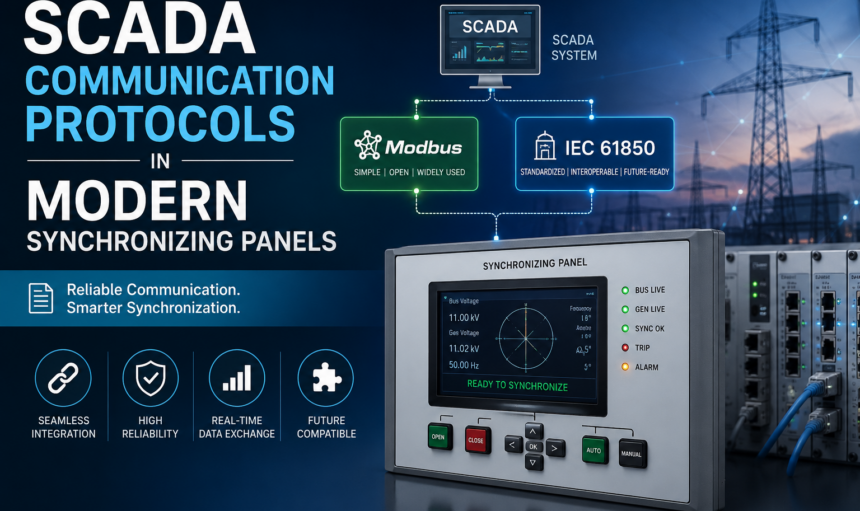
A synchronizing panel is an electrical control unit designed to match the voltage, frequency, and phase of two or more power sources before connecting them to a common bus. These sources can be multiple diesel generators, solar panels, or utility grids.

Think of it like traffic merging smoothly on a highway—without accidents or stops. The synchronizing panel is the smart controller that ensures generators or power systems come online in harmony, eliminating the risk of power surges or outages.

These panels are crucial in B2B industries such as manufacturing plants, hospitals, data centers, construction sites, and refineries—places where power loss can result in severe downtime, revenue loss, or even life-threatening situations.

Why Synchronization Matters in Industrial Power Systems

Synchronization is more than a technical requirement—it’s a strategic advantage. Here’s why:

  • Uninterrupted Operations: When your grid power fails, and backup generators kick in, the transition must be seamless. A synchronizing panel ensures there’s no lag or inconsistency.

  • Load Sharing: In setups with multiple DGs (diesel generators), the panel allows load distribution across generators to avoid overloading or underutilizing any one unit.

  • Grid Compliance: Modern utilities demand that any power source feeding into the grid be synchronized precisely to avoid instability. Whether you’re feeding solar into the grid or running a cogeneration system, synchronization is mandatory.

  • Energy Optimization: By integrating renewable energy with conventional sources like DGs, synchronizing panels help balance power demand and supply efficiently.

In short, these panels are the unsung heroes that ensure power systems talk the same language before collaborating.

Understanding Generator Synchronization Panels

The Functionality of a DG Synchronizing Panel

A DG synchronizing panel is purpose-built for controlling multiple diesel generators. It’s the brains behind bringing multiple gensets online, coordinating their output, and managing load dynamically. Whether it’s two gensets or ten, the panel ensures they operate together without crashing the system.

Main functions include:

  • Auto Start/Stop of DGs based on load

  • Voltage and Frequency Matching

  • Phase Sequence Verification

  • Load Sharing and Shedding

  • Manual and Auto Override Controls

The panel reads the power parameters in real time and uses microprocessor-based logic to initiate or halt synchronization. For example, if one generator needs maintenance, the panel offloads its load to the others and disconnects it smoothly.

How a Generator Synchronization Panel Works in Industrial Setups

Let’s consider a food processing plant that runs 24/7. Power failures aren’t acceptable. This plant uses three 500 kVA generators. The generator synchronization panel ensures all three can work together or be operated individually, depending on load requirements.

During peak demand, all three DGs run in sync and share the load equally. During non-peak hours, only one or two generators run, while the third stays offline. The panel switches between these modes based on programmed logic or operator command.

It also monitors:

  • Temperature

  • Oil pressure

  • Fuel consumption

  • Fault conditions

All of this helps in preventive maintenance and reduces operational costs.

Auto vs Manual Synchronization Modes

Modern panels from Synchro Electricals support both manual and automatic synchronization modes.

  • Manual Mode: An operator manually adjusts speed, voltage, and phase alignment using analog indicators. It’s time-consuming but allows precise human control.

  • Automatic Mode: Sensors and logic controllers do the job with pinpoint accuracy. Ideal for mission-critical environments like hospitals or server farms.

While manual synchronization was the norm a decade ago, most B2B sectors are now shifting toward auto-synchronizing panels for safety, speed, and efficiency.

Types of Synchronizing Panels

Based on Power Source Integration

Different industries require different synchronization configurations. Common types include:

  • DG to Grid Panels: Synchronizes diesel generators with the utility grid.

  • Solar to Grid Panels: Integrates solar inverters with grid power using anti-islanding protection.

  • DG + Solar Hybrid Panels: Seamlessly blends solar and diesel for optimal performance and reduced carbon footprint.

Each type ensures power sources merge without conflicts—like choreographed dancers performing in sync.

Based on Operational Control

There are two major classes based on the control mechanism:

  • Manual Synchronizing Panels: Best for sites with technical manpower and less dynamic loads.

  • Automatic Synchronizing Panels: Ideal for large-scale industries with complex load profiles and limited room for manual intervention.

Digital Synchronizing Panels – The Future of Power Management

With Industry 4.0 around the corner, digital panels with IoT capabilities are taking center stage. These offer:

  • Remote Monitoring

  • Predictive Maintenance

  • Real-Time Alerts

  • Cloud-Based Reporting

Synchro Electricals offers advanced panels integrated with SCADA systems and touchscreen HMIs, ensuring top-tier control and transparency.

Synchronized Control Panel in Power Distribution

Key Features of a Synchronized Control Panel

These panels aren’t just metal boxes with wires—they’re sophisticated systems packed with features like:

  • Voltage and frequency monitoring

  • Synchronization check relays

  • PLC/SCADA integration

  • Motorized circuit breakers

  • Alarm annunciators

  • Load balancing relays

Role in Reducing Downtime and Load Sharing

One of the biggest reasons businesses invest in synchronized control panels is uptime reliability. Whether you’re running an oil refinery or a cement plant, downtime means dollars lost. These panels intelligently shift load, isolate faults, and auto-restart systems, minimizing interruptions and maximizing productivity.

Solar Power Synchronization with Grid

How Solar Power is Synced with Grid Power

As industries shift toward renewable energy, solar power synchronization has become a vital part of B2B power infrastructure. When you generate solar power and want to feed it into the grid—or use it alongside grid or diesel sources—it must be properly synchronized to avoid electrical faults.

So, how does this happen?

A solar synchronization panel ensures that the voltage, frequency, and phase angle of the solar inverter output align precisely with those of the utility grid. The system checks these parameters continuously. If there’s even a slight mismatch, it delays or halts the connection to protect both systems.

Solar synchronizing panels use the following components:

  • Grid-tie Inverter with built-in MPPT

  • Synchronization Relay

  • Phase Sequence Monitor

  • Reverse Power Relay

  • Zero Export Device (if required)

The result? You can safely and efficiently consume your solar energy, export excess power, or even operate in hybrid mode.

Importance of Grid-Tied Solar Synchronizing Panels

For industries with high daytime loads—like textile factories, manufacturing plants, or logistics hubs—grid-tied solar panels offer significant cost savings. But connecting them directly to the grid without a synchronizing panel can be dangerous and non-compliant with power regulations.

Here’s why synchronization is essential:

  • Compliance with DISCOM Standards: Utility providers require that any input from solar be phase-aligned and safely integrated.

  • Safety: Unsynchronized power leads to voltage spikes, blackouts, and possible damage to grid infrastructure.

  • Efficient Energy Use: Synchronizing panels enable smart switching between solar and grid, reducing dependency on diesel and improving ROI.

Synchro Electricals offers solar grid synchronization panels equipped with anti-islanding protection, which ensures the system disconnects during grid outages—protecting maintenance workers and your assets.

Case Example: Solar + DG + Grid Integration

Let’s say a large pharmaceutical plant in Mumbai uses a 200kWp solar system, two 400kVA DGs, and a grid supply. The challenge? Efficiently using solar during the day, switching to DGs during outages, and avoiding any reverse feed into the grid.

With Synchro Electricals’ hybrid synchronization panel, the plant was able to:

  • Automatically switch between solar, DG, and grid

  • Maintain uninterrupted power during outages

  • Optimize diesel usage by prioritizing solar

  • Avoid reverse feed and penalties using zero-export devices

That’s the kind of flexibility and reliability today’s B2B industries demand.

Applications of Synchronizing Panels in B2B Industries

Manufacturing

Manufacturing industries often run 24/7 with machines that demand steady and high power. Synchronizing panels enable:

  • Seamless power transfer during outages

  • Load sharing between multiple generators

  • Prioritized solar usage during the day

  • Reduced machine downtime due to voltage irregularities

For example, an automotive component factory might use three DG sets in parallel, synchronized to handle varying production shifts. If one line is shut down, the panel can auto-isolate and redistribute the load, improving fuel efficiency.

Hospitals and Data Centers

These are mission-critical environments where even a second’s power failure can cost lives or millions in data loss.

A synchronizing panel ensures:

  • Auto-start of backup DGs within seconds of a power cut

  • Parallel running of generators for continuous uptime

  • Zero power transition delay (ideal for life-support systems)

  • Integration with UPS and solar sources for hybrid backup

Hospitals often deploy DG + Grid + Solar hybrid systems controlled through automatic synchronizing panels.

Infrastructure and Construction

Construction projects are spread across dynamic terrains, often lacking reliable grid connections. Synchronizing panels allow:

  • Synchronization of mobile DG sets

  • Load sharing across temporary worksites

  • Safe parallel operation of multiple generators

Whether it’s a metro project or highway development, these panels keep construction machines running without interruptions.

Benefits of Using Synchronizing Panels

Uninterrupted Power Supply

Downtime is the enemy of productivity. A single-minute power cut can ruin hours of production or corrupt critical data. Synchronizing panels offer:

  • Seamless switching between power sources

  • Auto-recovery after grid faults

  • Continuous supply even during load changes or DG transitions

Imagine a cold storage warehouse—the temperature can’t drop, not even for a minute. A synchronizing panel ensures generators kick in instantly, maintaining the required environment.

Fuel and Energy Optimization

Fuel costs are one of the biggest headaches in industries using diesel gensets. Synchronizing panels optimize fuel usage by:

  • Running only the required number of DGs

  • Prioritizing solar or grid when available

  • Load balancing for improved engine performance

Some companies report up to 30% savings on diesel after deploying intelligent synchronization systems.

Improved Load Management

Whether it’s peak-hour demand or machinery starting loads, synchronization systems manage it all by:

  • Spreading loads across multiple sources

  • Auto-starting extra DGs when needed

  • Shedding non-critical loads during emergencies

Smart load management equals less wear and tear, longer equipment life, and better safety for workers.

Challenges and Solutions in Power Synchronization

Frequency Mismatch and Load Imbalance

When two power sources don’t match in frequency or voltage, it can lead to:

  • Equipment malfunction

  • Dangerous arc flashes

  • Generator damage

  • Tripped breakers

Synchronization panels solve this by using high-precision sensors and digital controllers to match every parameter before closing the breaker.

They also detect reverse power flow, ensuring no DG is overloaded by the grid or another source.

Role of Modern Panels in Overcoming These Issues

With the advent of PLC-based and IoT-enabled synchronizing panels, most of these challenges are tackled automatically:

  • Digital governors fine-tune generator speed

  • Advanced relays check phase alignment and time delays

  • Auto fault detection isolates problematic sources

  • Cloud dashboards let you monitor everything remotely

Synchro Electricals leads the way with adaptive systems that continuously learn from load behavior and suggest improvements in usage and maintenance.

Why Synchro Electricals is the B2B Industry’s Go-To Partner

Overview of Synchro Electricals’ Product Range

From basic manual panels to custom hybrid synchronization systems, Synchro Electricals has a diverse catalog. Key offerings include:

  • DG Synchronization Panels

  • Solar Synchronization Panels

  • Grid-Tie Synchronizing Units

  • Digital and IoT-Based Smart Panels

  • Customized Industry-Specific Solutions

All panels come with high-grade switchgear, microprocessor-based control units, and compliance with IEC and ISO standards.

Customization for Industry-Specific Needs

No two businesses are alike—and neither should be their power systems. Synchro Electricals offers:

  • Site surveys and power audits

  • Custom-built panels matching your load profile

  • Integration with SCADA, PLCs, or HMI dashboards

  • Options for wall-mounted, floor-standing, or containerized enclosures

Whether you’re running a textile mill in Surat or a solar farm in Rajasthan, Synchro Electricals has a panel for your needs.

Buying Guide – What to Look for in a Synchronizing Panel

Compatibility with Existing Infrastructure

Before buying a synchronizing panel, the first step is ensuring it works with your current electrical setup. Here’s what to consider:

  • Generator Specifications: The panel must match the kVA, phase, and voltage ratings of your diesel generators or solar inverters.

  • Grid Compatibility: Check if the utility grid supply aligns with your load’s needs and local DISCOM regulations.

  • Breaker Ratings: Confirm whether your switchgear (like ACBs or MCCBs) can handle the combined load and sync transitions.

  • Communication Protocols: For smart industries, the panel must support protocols like MODBUS, PROFIBUS, or CAN for integration with SCADA/BMS systems.

A mismatch between panel and infrastructure can lead to faulty synchronization or even equipment damage. That’s why customization is key—and something Synchro Electricals excels at.

Safety, Automation, and Certifications

Safety is non-negotiable in any industrial setup. When choosing a synchronizing panel, ensure it comes equipped with:

  • Phase Failure Relays

  • Under/Over Voltage Protection

  • Reverse Power and Sync Check Relays

  • Emergency Stop Switch

  • Earth Fault Detection

Alongside these, automation is critical to reducing manpower and human error. Look for:

  • Auto Generator Start/Stop

  • Remote Load Control

  • Touchscreen HMI Interfaces

  • Real-time Alerts

Also, check for certifications like:

  • ISO 9001:2015

  • CE Marking

  • IEC 61439 Compliance

  • IP55 or higher enclosure protection

Panels from Synchro Electricals meet and often exceed these benchmarks, making them a reliable choice for industries that can’t afford to compromise.

Installation and Maintenance of Synchronizing Panels

Installation Process by Certified Experts

Installing a synchronizing panel isn’t plug-and-play—it’s a technical process that demands experienced professionals. Here’s a typical installation workflow:

  1. Site Survey: Assessment of load requirements, generator specifications, and utility availability.

  2. Panel Mounting: Wall-mounted or floor-standing based on site conditions.

  3. Wiring and Busbar Integration: Precise connections to generators, grid input, and load distribution panels.

  4. Testing and Commissioning:

    • Phase sequence checks

    • Voltage/frequency matching simulation

    • Load trials under different scenarios

  5. Training: On-site training for operators and maintenance staff.

Synchro Electricals provides end-to-end services, including panel delivery, on-site installation, and post-installation support. Their engineers are certified and trained to handle multi-site projects across industries.

Routine Maintenance and Remote Monitoring

Even the most robust synchronizing panel needs regular check-ups. Preventive maintenance ensures:

  • Long panel life (10–15 years)

  • Early fault detection

  • Reduced downtime

  • Compliance with safety standards

Typical maintenance includes:

  • Tightening of terminals and busbars

  • Cleaning air filters and enclosures

  • Software/firmware updates for digital panels

  • Load testing under real conditions

Many modern panels come with remote monitoring capabilities via GSM, LAN, or Wi-Fi. This allows facilities managers to check performance, receive alerts, and generate reports without being on-site.

Synchro Electricals offers AMC (Annual Maintenance Contracts) for their panels, including scheduled inspections and emergency support.

Future Trends in Power Synchronization

IoT-Enabled Synchronizing Panels

The integration of IoT (Internet of Things) is revolutionizing the way synchronizing panels function in the B2B space. These advanced panels now offer:

  • Remote Performance Analytics

  • Predictive Maintenance Alerts

  • Real-Time Synchronization Logs

  • Data-Driven Load Optimization

By embedding sensors and smart controllers, IoT-enabled panels can monitor thousands of parameters and transmit data to centralized dashboards. This is especially useful for enterprises managing multiple sites across regions.

Use case: A logistics company with 12 warehouses across India uses Synchro Electricals’ IoT panels to monitor power usage, DG runtime, and solar generation—all from their HQ in Gurgaon.

AI-Based Load Forecasting and Management

Another emerging trend is AI-powered synchronization. These systems learn from historical data, weather patterns, and load behavior to:

  • Predict peak demand hours

  • Suggest optimized generator run times

  • Automatically shift between solar and DG based on load economics

This not only boosts energy efficiency but also extends the lifespan of generators and inverters. AI modules can be added as plug-ins to existing panels, offering B2B clients scalability without a complete overhaul.

Synchro Electricals is currently piloting AI + IoT hybrid panels for smart factories and data centers—marking a bold step toward Industry 5.0.

Conclusion

In today’s power-critical industries, synchronizing panels have evolved from optional add-ons to mission-critical components. Whether you’re running multiple diesel generators, integrating solar into your power mix, or syncing with a volatile grid, a well-designed synchronizing panel ensures smooth, safe, and efficient operations.

From basic manual synchronization to IoT-powered smart panels, the technology is robust, scalable, and highly customizable. And with increasing demands for sustainability and uptime, power synchronization isn’t just a technical process—it’s a strategic investment.

Synchro Electricals stands out as a trusted B2B partner, offering not just panels but full-scale solutions—from design to deployment, and from support to scaling. With a proven track record across industries and a sharp focus on innovation, they’re empowering businesses to stay energized, always.

FAQs

1. What is the difference between a synchronizing panel and a control panel?

A synchronizing panel specifically manages the integration of multiple power sources like generators, solar, or grid supply. A control panel, on the other hand, may manage basic on/off operations or distribution, but doesn't handle synchronization logic.

2. Can solar and diesel generators be synchronized together?

Yes. Hybrid synchronization panels allow solar systems and diesel generators to work together seamlessly, prioritizing solar usage while using DGs for backup when solar output is low.

3. How long does it take to install a synchronization panel?

Installation typically takes 2 to 5 days depending on complexity. Larger systems with multiple generators and solar integration may require a week or more for testing and commissioning.

4. What industries benefit most from synchronizing panels?

Industries such as manufacturing, healthcare, data centers, construction, telecom, and logistics benefit greatly due to their dependency on an uninterrupted and optimized power supply.

5. Why should I choose Synchro Electricals?

Synchro Electricals offers end-to-end B2B power synchronization solutions—high-quality panels, expert customization, reliable support, and future-ready innovations like IoT and AI integration.

How Advanced ACDB DCDB Panels from Synchro Electricals Lead the Way in India’s C&I Solar Boom

The landscape of energy consumption in India is undergoing a monumental transformation, and ACDB DCDB panels are playing a critical role in enabling this shift. With a surging demand for sustainable power and a clear national commitment to renewable energy, Commercial & Industrial (C&I) solar installations are no longer a niche market; they are a driving force for economic growth and environmental stewardship. From sprawling factory rooftops to large-scale commercial complexes, businesses across the nation are increasingly turning to solar to reduce operational costs, enhance energy independence, and meet their sustainability goals.

However, harnessing the sun’s immense power effectively and reliably requires more than just high-quality solar panels. The true backbone of any efficient and safe solar photovoltaic (PV) system lies in its crucial protective and distribution components: ACDB and DCDB panels.

The best solar acdb dcdb manufacturer in india this is precisely where Synchro Electricals Pvt. Ltd., a name synonymous with excellence in electrical solutions since our establishment in Rajkot, Gujarat in 2018, is leading the way. We are not just manufacturers; we are innovators, committed to designing, testing, and commissioning advanced ACDB/DCDB panels that form the indispensable heart of India’s burgeoning C&I solarsector.

Beyond Basic Protection: The Synchro Electricals Advantage

Many might view ACDB/DCDB panels as mere enclosures for circuit breakers. At Synchro Electricals, we see them as sophisticated guardians of your solar investment and critical enablers of peak system performance. Our advanced panels go far beyond basic protection, offering a suite of features that address the unique demands of the Indian C&I environment:

  1. Robust Design for Indian Conditions: India’s diverse climate, from scorching summers to monsoon humidity, demands equipment that can withstand extreme conditions. Our ACDB/DCDB panels are engineered with high-grade, UV-resistant, and corrosion-proof materials (like IP65/IP67 rated enclosures) ensuring longevity and consistent performance, even in challenging industrial environments. This durability minimizes maintenance cycles and extends the operational life of the entire solar plant.

  2. Optimized Power Distribution & Efficiency: The core function of these panels is to efficiently collect and distribute power. Our designs meticulously optimize internal layouts, minimize cable runs, and incorporate high-quality busbars and connectors to reduce power losses. This translates directly into higher energy yields from your solar array, maximizing your return on investment.

  3. Enhanced Safety Features: Safety is paramount in any electrical installation. Synchro Electricals’ ACDB/DCDB panels are equipped with multi-layered safety mechanisms. This includes:
    • High-quality MCBs/MCCBs and SPDs (Surge Protection Devices): Protecting against overcurrents, short circuits, and lightning strikes, safeguarding both equipment and personnel.
    • Reverse Polarity Protection: A critical feature to prevent damage during installation errors.
    • Proper Isolation Switches: Enabling safe maintenance and troubleshooting without system-wide shutdowns.
    • Arc Fault Circuit Interrupters (AFCIs – where applicable): An increasingly vital technology to detect and mitigate dangerous arc faults.

  4. Compliance and Reliability at its Core: Our panels are designed and manufactured in strict adherence to national and international standards (such as IEC and relevant BIS standards). Each unit undergoes rigorous testing and quality checks in our Rajkot facility, ensuring unparalleled reliability and peace of mind for our clients. Our meticulous design, testing, and commissioning process guarantees that every panel performs exactly as specified, minimizing unexpected system interruptions.

  5. Scalability and Customization: The C&I sector is incredibly diverse, with varying energy demands and site-specific challenges. Synchro Electricals excels in providing customizable ACDB/DCDB solutions. Whether it’s a small commercial rooftop or a multi-megawatt industrial ground-mount system, we design panels that perfectly match the inverter capacity, string configurations, and protection requirements of your unique project. This flexibility makes us the preferred partner for a wide array of solar developers and EPCs.

  6. Seamless Integration and Monitoring: Our panels are designed for straightforward integration with solar inverters and monitoring systems. This allows for real-time performance tracking, fault detection, and predictive maintenance, giving operators granular control over their solar assets and ensuring maximum uptime.

Synchro Electricals: Powering India’s Green Future from Rajkot

The rapid growth of C&I solar in India signifies a profound shift towards sustainable energy. As businesses continue to embrace solar power, the demand for reliable, efficient, and safe electrical infrastructure will only intensify.

At Synchro Electricals Pvt. Ltd., situated at the heart of Gujarat’s industrial prowess in Rajkot, we are proud to be at the forefront of this revolution. By providing state-of-the-art ACDB/DCDB panels, we empower solar developers, EPCs, and end-users with the confidence that their solar installations are not just generating power, but doing so safely, efficiently, and reliably for years to come.

Choosing Synchro Electricals means choosing a partner committed to excellence in electrical distribution panels, a partner dedicated to the success of your C&I solar project, and a partner leading the way in building a more sustainable and energy-independent India. Contact us today to discuss how our advanced solutions can elevate your next solar venture.

FAQs

1. What are ACDB and DCDB panels, and why are they critical in solar power systems?

ACDB (AC Distribution Board) and DCDB (DC Distribution Board) panels are essential components in solar systems. DCDB collects power from solar panels, while ACDB distributes the converted AC power to the grid or load. Together, they ensure safe, efficient, and organized power flow.

2. How are Synchro Electricals’ panels different from conventional DBs in the solar industry?

Synchro Electricals designs panels with advanced safety features, custom engineering, and high-quality components like SPD (Surge Protection Devices), isolators, and MCBs tailored to India's demanding C&I (Commercial & Industrial) environments.

3. Why are Synchro's ACDB/DCDB panels gaining traction in India’s C&I solar boom?

C&I users demand high reliability, fast deployment, and strict safety compliance. Synchro’s panels are pre-tested, custom-built, and ready-to-integrate, reducing project delays and ensuring smooth solar plant commissioning.

4. Do Synchro Electricals’ panels comply with Indian and international standards?

Yes. Synchro ensures its panels adhere to IS/IEC standards and follow MNRE and DISCOM guidelines for solar installations, giving EPCs and developers assurance on safety and legal compliance.

5. Can Synchro’s panels be customized for different inverter capacities and project scales?

Absolutely. Synchro provides fully customized ACDB/DCDB solutions that match the site’s inverter configuration, voltage ratings, string counts, and monitoring needs—ideal for small to large C&I setups.

Get in Touch

Ready to power your next Commercial & Industrial (C&I) solar project with reliable, high-performance ACDB/DCDB panels? Or do you need a trusted partner for your electrical distribution panel requirements?

At Synchro Electricals Pvt. Ltd., based in Rajkot, Gujarat, we’re here to help you achieve your energy goals. Our team of experts is ready to discuss your specific needs, provide detailed information on our advanced solutions, and offer tailored guidance.

Reach out to us today:

Let’s build a more efficient and sustainable future, together!

How Regular Electrical Safety Audits Can Prevent unexpected system interruption

In today’s fast-paced industrial and commercial landscape, uninterrupted operations are not just a convenience—they are a critical necessity. Every minute of downtime translates to lost productivity, financial setbacks, and potential reputational damage. While many factors can contribute to system interruptions, a significant and often overlooked culprit is electrical system failure. This is precisely where the power of regular electrical safety audits comes into play.

At Synchro Electricals Pvt. Ltd., established in 2018 and proudly based in Rajkot, Gujarat, we understand this criticality firsthand. As a leading manufacturer of Electrical Distribution panels, specializing in the design, testing, we recognize that the panels we build are only as reliable as the systems they integrate into. Our expertise extends beyond manufacturing; it encompasses a deep understanding of electrical safety and operational continuity.

The Hidden Costs of Unexpected Interruptions

Imagine a manufacturing plant grinding to a halt due to a tripped breaker that couldn’t handle an overloaded circuit, or a data center experiencing a power surge that damages critical equipment. These aren’t just minor inconveniences. They represent:

  • Financial Losses: Lost production, missed deadlines, spoiled materials, and emergency repair costs.
  • Operational Delays: Backlogs, supply chain disruptions, and difficulty in resuming normal operations.
  • Safety Risks: Faulty electrical systems can lead to fires, electrocution, and other severe hazards for personnel.
  • Reputational Damage: Unreliable systems can erode client trust and impact business relationships.

The Role of Regular Electrical Safety Audits

An electrical safety audit is a comprehensive, systematic inspection and evaluation of an electrical system. It goes far beyond a simple visual check. Conducted by qualified professionals, these audits meticulously examine:

  • Wiring and Connections: Identifying loose connections, frayed wires, and improper installations that can lead to shorts or overheating.
  • Circuit Breakers and Fuses: Ensuring they are appropriately sized for their loads and functioning correctly to prevent overcurrents.
  • Grounding and Bonding: Verifying that grounding systems are intact and effective in preventing shock hazards and equipment damage.
  • Panel Boards and Distribution Systems: Checking for signs of wear, corrosion, overheating, and proper labeling, much like the precision we apply in every electrical distribution panel we design, test, and commission.
  • Compliance with Standards: Ensuring the entire electrical system adheres to relevant national and international safety standards and codes.
  • Load Balancing and Capacity: Assessing if the existing electrical infrastructure can safely handle current and projected power demands, preventing unexpected overloads.

How Synchro Electricals Pvt. Ltd. Champions Reliability

While Synchro Electricals is renowned for our state-of-the-art, leading-manufactured electrical distribution panels, our commitment to preventing unexpected system interruptions extends to advocating for proactive electrical safety measures. We understand that a meticulously designed panel must operate within a robust and safe electrical ecosystem.

Our experience in electrical panel manufacturing gives us unique insights into the common failure points and best practices. We build our panels with safety and longevity in mind, but even the best equipment needs a safe environment to operate optimally. Regular audits help ensure that the entire electrical infrastructure, including the panels, remains in peak condition. They help identify potential weaknesses before they escalate into critical failures, allowing for timely repairs, upgrades, or adjustments.

Proactive vs. Reactive: The Choice is Clear

Waiting for an electrical system to fail before taking action is a reactive and costly approach. A proactive strategy, centered around regular electrical safety audits, offers immense benefits:

  • Reduced Downtime: By identifying and rectifying issues early, you drastically minimize the risk of sudden, unexpected outages.
  • Enhanced Safety: A safer working environment for employees and reduced risk of electrical fires or accidents.
  • Extended Equipment Lifespan: Proper maintenance and timely repairs prevent premature wear and tear on valuable electrical assets.
  • Cost Savings: Preventing major breakdowns is almost always more cost-effective than emergency repairs and dealing with the aftermath of an interruption.
  • Regulatory Compliance: Staying compliant with safety regulations avoids potential penalties and legal issues.

Closing insights

In conclusion, for any business or industrial facility aiming for uninterrupted operations and peak efficiency, regular electrical safety audits are not an option—they are a necessity. Just as Synchro Electricals Pvt. Ltd. is dedicated to delivering reliable electrical distribution panels from our base in Rajkot, Gujarat, we strongly encourage businesses to invest in these crucial audits to safeguard their operations, their assets, and their people.

FAQ

1. Are electrical audits only for large facilities?

No, even small businesses and residential complexes can benefit from audits. Any place using electrical systems is vulnerable to disruptions without regular safety checks.

2. What is an electrical safety audit?

An electrical safety audit is a systematic inspection and evaluation of an organization’s electrical systems to identify potential hazards, ensure regulatory compliance, and improve overall safety and reliability.

3. How can electrical safety audits prevent system interruptions?

Audits detect early signs of equipment wear, faulty wiring, overloading, or grounding issues—factors that could lead to sudden outages or electrical failures if left unaddressed.

4. What types of problems can be identified during an electrical safety audit?

Audits can reveal issues like overheating components, loose connections, outdated circuit breakers, improper earthing, and violations of electrical codes—all of which can cause system breakdowns.

5. Is thermal imaging part of an electrical safety audit?

Yes, many audits include infrared thermography to detect hot spots in panels and connections—indicators of potential failure that may not be visible to the naked eye.

Improving Your Electrical System with Vacuum Circuit Breaker Panels

In the dynamic world of industrial operations, a robust and reliable electrical system isn’t just an asset – it’s the very backbone of productivity and safety. While many components contribute to this intricate network, the circuit breaker stands as a critical guardian, tirelessly protecting equipment and personnel from the destructive forces of overcurrent and short circuits.

For decades, various types of circuit breakers have served this vital role. However, modern industries are increasingly turning to a superior solution for medium voltage applications: Vacuum Circuit Breaker (VCB) Panels. These advanced systems offer significant advantages over their traditional counterparts, leading to enhanced performance, greater safety, and reduced operational costs.

If you’re looking to fortify your electrical infrastructure, understanding the benefits of VCB panels is crucial. At Synchro Electricals Pvt. Ltd., established in 2018 in Rajkot, Gujarat, we specialize in the design, testing, and commissioning of state-of-the-art electrical distribution panels, including advanced Vacuum Circuit Breaker Panels. Let’s explore how these powerful panels can elevate your electrical system.

Why Vacuum Circuit Breaker Panels Are a Game Changer for Your Industrial System

The core innovation in a VCB lies in its vacuum interrupter. Instead of oil or SF6 gas, the arc generated during current interruption is extinguished in a high vacuum environment. This fundamental difference brings a host of compelling benefits:

  1. Superior Arc Quenching and Faster Interruption
  • The Advantage: When a fault occurs, the vacuum inside the interrupter chamber rapidly extinguishes the arc. This quick action minimizes the duration of the fault, reducing the stress on your entire electrical system and limiting potential damage to connected equipment.
  • Impact on Your System: Faster fault clearance means less downtime, reduced thermal and mechanical stress on cables and transformers, and a quicker return to normal operation. This directly translates to higher productivity and lower repair costs.
  1. Enhanced Safety for Personnel and Equipment
  • The Advantage: Because the arc is contained within a sealed vacuum bottle, there’s no release of hot gases or hazardous byproducts into the atmosphere, unlike some older technologies. This significantly reduces the risk of fire and explosions.
  • Impact on Your System: This inherent safety feature is paramount in industrial environments where personnel safety is a top priority. It also contributes to a safer working environment and reduces the potential for arc flash incidents, protecting both human life and valuable assets.
  1. Minimal Maintenance Requirements
  • The Advantage: VCBs are renowned for their low maintenance needs. The vacuum interrupter is a sealed unit, meaning there’s no need for periodic oil changes, gas refilling, or frequent contact wear inspections.
  • Impact on Your System: Reduced maintenance translates directly into lower operational expenditure (OpEx). Less time spent on maintenance means more uptime for your production lines and a more efficient allocation of your maintenance team’s resources. Their long operational life also means fewer replacements.
  1. Environmentally Friendly Operation
  • The Advantage: Unlike SF6 gas circuit breakers, VCBs use no greenhouse gases. SF6 is a potent greenhouse gas, and its release contributes to climate change.
  • Impact on Your System: Opting for VCB panels aligns with modern environmental sustainability goals and regulations. It helps reduce your carbon footprint and contributes to a greener industrial operation, which is increasingly important for corporate responsibility and compliance.
  1. Compact Design and Space Efficiency
  • The Advantage: The vacuum interrupters are compact, allowing for a more streamlined and space-efficient panel design compared to older technologies.
  • Impact on Your System: In industrial facilities where space is often at a premium, a compact VCB panel can be a significant advantage, allowing for more efficient plant layouts or making upgrades possible in existing confined areas. This can reduce installation costs and free up valuable floor space for other critical equipment.

Integrating VCB Panels into Your Electrical Infrastructure

Upgrading to or installing new Vacuum Circuit Breaker Panels is a strategic move that pays dividends in reliability and safety. However, proper design, expert installation, and thorough commissioning are vital to unlock their full potential.

This is where specialized expertise becomes indispensable. At Synchro Electricals Pvt. Ltd., based in Rajkot, Gujarat, we don’t just supply panels; we provide comprehensive solutions. Our team excels in designing VCB panels that are meticulously tailored to your specific industrial loads and environmental conditions. We ensure seamless integration into your existing system, rigorous testing to guarantee performance, and precise commissioning for optimal operation.

Beyond VCB panels, our range of electrical solutions includes robust Power Control Centers (PCC), efficient Power Distribution Boards (PDB), accurate Meter Panels, and much more – all designed to empower your industrial operations.

Elevate Your System with Confidence

Don’t let outdated electrical infrastructure be a bottleneck to your industrial growth. Embrace the advancements offered by Vacuum Circuit Breaker Panels to build a more resilient, safer, and efficient electrical system. Partner with experts who understand the nuances of industrial power distribution. Contact Synchro Electricals Pvt. Ltd. today to discuss how our VCB panel solutions can transform your operations.

FAQs

1. What is a Vacuum Circuit Breaker (VCB) panel?

A VCB panel is an electrical distribution board that uses vacuum circuit breakers to interrupt fault currents. It is commonly used in medium-voltage applications (3.3kV to 33kV) and offers fast, arc-free switching with high reliability and low maintenance.

2. How does a vacuum circuit breaker work?

When a fault occurs, the VCB interrupts the current by separating contacts within a sealed vacuum. The vacuum extinguishes the arc instantly, preventing fire hazards and damage to the system.

3. What are the key advantages of using VCB panels?

High safety – Minimal arcing reduces risk of fire or explosion Low maintenance – No oil or gas insulation to check or replace Long service life – Contact wear is minimal due to vacuum interruption Fast operation – Ideal for critical systems needing quick response Environmentally friendly – No SF₆ or toxic materials used

4. Are VCB panels suitable for all types of industries?

VCB panels are best suited for: Heavy industries (steel, mining, cement) Power plants and substations Manufacturing facilities Large commercial complexes They are not typically used in low-voltage (<1kV) applications.

5. What’s the difference between VCBs and SF₆ circuit breakers?

VCBs use vacuum for arc extinction SF₆ breakers use sulfur hexafluoride gas VCBs are more environmentally friendly and have lower maintenance needs, while SF₆ breakers handle higher voltages but raise concerns due to greenhouse gas emissions.


Top 5 Mistakes to Avoid When Purchasing Electrical Panels for Heavy Industries

In the relentless world of heavy industry, every second counts, and every component plays a critical role. While the hum of machinery, the roar of furnaces, and the precise dance of automated systems often capture our attention, there’s a silent guardian behind the scenes: the electrical panel. More than just a box of wires, these panels are the nerve centers that distribute immense power, protect invaluable assets, and ensure the continuous flow of production.

Unlike the relatively straightforward requirements of a residential home, selecting an electrical panel for a heavy industrial environment is a complex undertaking. The colossal loads, harsh operating conditions, and stringent safety regulations demand a level of foresight and precision that goes far beyond typical considerations. Yet, even the most seasoned industrial managers can stumble, leading to costly downtimes, dangerous failures, and significant operational inefficiencies.

Consider this your essential guide to navigating the intricate landscape of industrial electrical panel procurement. We’re going to illuminate the top five critical mistakes that industrial entities often make, helping you safeguard your operations, your people, and your bottom line. For expertly designed, tested, and commissioned solutions, consider leading manufacturers like Synchro Electricals Pvt. Ltd., a trusted name in electrical distribution panels since 2018.

Mistake 1: Underestimating Current and Future Load Demands – The “Just Enough” Industrial Nightmare

In heavy industry, “just enough” is rarely enough. Industrial processes are dynamic, often expanding, upgrading, or integrating new, power-hungry machinery. Failing to accurately project these needs is a recipe for disaster.

The Scenario: You install a panel based purely on current peak load calculations. Perhaps a new production line is planned for next year, or an upgrade to more powerful motors is on the horizon.Your new panel can barely handle today’s demands, let alone tomorrow’s.

The Consequence: Constant overloads, frequent circuit breaker trips (leading to frustrating and costly production halts), premature equipment failure due to power surges or sags, and the eventual, unavoidable expense of a complete, emergency panel replacement.this isn’t just about lost productivity; it’s about potential damage to extremely expensive machinery and compromised safety protocols.

The Solution: Engage in meticulous load forecasting. This involves a comprehensive audit of all existing machinery, factoring in their starting and running currents, power factors, and duty cycles. Crucially, involve your engineering and production planning teams to project future expansion, new machinery acquisitions, and potential technology upgrades (e.g., transitioning from conventional to highly efficient, but power-intensive, induction heating).over-specifying capacity by a healthy margin (e.g., 20-30% beyond immediate needs) is a wise investment.It provides a buffer for unexpected surges, future growth, and ensures stable operations without constantly battling overload issues. Manufacturers like Synchro Electricals Pvt. Ltd. excel in designing panels with future scalability in mind.

Mistake 2: Ignoring Environmental Conditions and Enclosure Ratings – The “One Size Fits All” Industrial Illusion

Industrial environments are notoriously harsh. Dust, moisture, corrosive chemicals, extreme temperatures, and even explosive gases are common. Assuming a standard panel will suffice is a grave oversight.

The Scenario: You purchase an electrical panel with a basic NEMA 1 or IP20 rating, suitable for a clean, dry indoor environment, and install it in a dusty cement plant, a humid textile factory, or a chemical processing unit.

The Consequence: Rapid corrosion of internal components, ingress of dust leading to short circuits, moisture causing insulation breakdown, and potentially explosive atmospheres igniting due to inadequate sealing. This not only significantly shortens the panel’s lifespan but also creates immediate and severe safety hazards, including arc flashes and fires.

The Solution: Meticulously assess the specific environmental conditions of the panel’s intended location. This includes levels of dust, moisture (humidity, splashes, jets), corrosive agents, ambient temperature fluctuations, and the presence of any hazardous (flammable/explosive) gases or dusts. Select an enclosure with the appropriate NEMA (National Electrical Manufacturers Association) or IP (Ingress Protection) rating. For example, NEMA 4X for washdown areas with corrosive elements, NEMA 12 for dusty industrial environments, or NEMA 7/9 for hazardous locations. Investing in the correct enclosure rating upfront is critical for panel longevity, operational reliability, and, most importantly, personnel safety. Reputable manufacturers, such as Synchro Electricals Pvt. Ltd., understand these critical requirements and offer panels tailored for diverse industrial environments.

Mistake 3: Cutting Corners on Safety Features and Arc Flash Mitigation – The “It Won’t Happen to Us” Blind Spot

In industrial settings, the sheer magnitude of available fault current makes arc flashes and electrical explosions a very real, and potentially catastrophic, threat. Prioritizing cost over cutting-edge safety features is an unacceptable risk.

The Scenario: To save on procurement costs, you opt for a panel with minimal safety features, neglecting modern arc flash protection, robust interlocking mechanisms, or remote operation capabilities.

The Consequence: When an electrical fault occurs, the resulting arc flash can cause severe burns, permanent injury, or even death to personnel. Beyond human tragedy, an arc flash can also cause immense damage to equipment, leading to extended downtime and astronomical repair/replacement costs. Ignoring these features also puts your facility in direct violation of evolving safety standards (like NFPA 70E), risking heavy fines and legal liabilities.

Mistake 4: Neglecting Scalability and Modularity – The “Rigid System” Bottleneck

Heavy industries are rarely static. Production lines evolve, processes are optimized, and technology changes. Purchasing a rigid, non-modular electrical panel can quickly become a significant bottleneck.

The Scenario: You acquire a custom-built, fixed-configuration panel that perfectly meets today’s needs. A year later, you need to add a new motor control center, integrate a new PLC, or simply add a few circuits. Your current panel has no spare capacity or provisions for expansion.

The Consequence: This forces a complete re-engineering and costly replacement of the entire panel, even if only minor additions are needed. It leads to prolonged downtimes, complex retrofitting challenges, and a substantial drain on resources that could have been allocated elsewhere. It severely limits your operational agility.

The Solution: Prioritize panels with a modular design. Look for features like standardized compartments, ample spare circuit breaker slots, bus bar systems designed for future expansion, and easy integration of new control or protection modules. Panels that allow for hot-swappable components or straightforward addition of new sections offer immense flexibility. Discuss your long-term growth projections with the panel manufacturer or system integrator to ensure the design inherently supports future expansion without requiring a complete overhaul. Leading manufacturers like Synchro Electricals Pvt. Ltd. understand the need for adaptability in industrial settings.

Mistake 5: Overlooking Integration Capabilities and Smart Features – The “Isolated Island” Problem

In today’s smart factories and Industry 4.0 environments, electrical panels are no longer isolated units. They are vital data hubs that can provide crucial insights into energy consumption, equipment health, and overall operational efficiency.

The Scenario: You purchase a basic panel with traditional analog meters and no communication capabilities, even though your plant is moving towards advanced automation and data analytics.

The Consequence: You miss out on invaluable operational data that could optimize energy usage, predict maintenance needs, or identify inefficiencies. Troubleshooting becomes a manual, time-consuming process. The panel becomes an isolated island, hindering your facility’s overall digital transformation efforts and preventing the realization of predictive maintenance and energy management benefits.

The Solution: Consider panels equipped with smart circuit breakers, intelligent motor control centers (MCCs), and integrated power monitoring devices that offer communication protocols like Modbus, Ethernet/IP, or Profinet. These enable real-time data acquisition on voltage, current, power factor, harmonics, and energy consumption. This data can be fed into your SCADA system, DCS, or a dedicated energy management platform, allowing for predictive maintenance, remote diagnostics, energy optimization, and precise fault location. Investing in these “smart” capabilities positions your facility for greater efficiency, reduced downtime, and enhanced operational intelligence. As specialists in the design, testing, and commissioning of electrical distribution panels, Synchro Electricals Pvt. Ltd. offers solutions that are primed for seamless integration into modern industrial ecosystems

The Industrial Imperative: A Proactive Approach to Power

In the demanding landscape of heavy industry, an electrical panel is far more than a utility item; it is a strategic asset. Avoiding these common mistakes by meticulously planning, prioritizing safety, anticipating future needs, and embracing technological advancements will not only protect your investments but empower your operations for sustainable success. Choose your industrial powerhouse wisely, and ensure it’s built to withstand the rigorous demands of tomorrow, today.

FAQs

1. What are the biggest mistakes to avoid when buying electrical panels for heavy industrial use?

Ignoring load requirements Not considering future scalability Choosing substandard materials Overlooking compliance with local electrical codes Neglecting proper vendor vetting and support

2. Why is it critical to consider future scalability in electrical panels?

Heavy industries often expand or modify operations. Failing to plan for future loads can lead to premature panel replacement or costly retrofits. Scalable designs save time and money long-term.

3. How can I ensure the electrical panel complies with local and international codes?

Work with certified manufacturers and demand compliance documentation like UL, IEC, or ANSI standards. Involve a licensed electrical engineer familiar with local regulations during the specification phase.

4. What should I look for in a reliable electrical panel supplier?

Proven track record in heavy industries Availability of technical support Customization capabilities Strong after-sales service Certification and warranty offerings

5. How do I determine the correct panel capacity for my facility?

Conduct a detailed load analysis with help from an electrical engineer. Factor in peak loads, operational diversity, safety margins, and potential future expansions


Commercial & Industrial (C&I) Solar Growth in India: The Importance of Advanced ACDB/DCDB Panels

India is experiencing a renewable energy revolution, and at the forefront of this transformation is the Commercial & Industrial (C&I) solar sector. As businesses aim to reduce electricity costs and meet sustainability goals, solar energy adoption among commercial and industrial units has witnessed a remarkable surge.

However, the success and safety of these solar systems rely on more than just photovoltaic (PV) panels and inverters. One critical, yet often overlooked, component is the ACDB (Alternating Current Distribution Board) and DCDB (Direct Current Distribution Board). These panels play a crucial role in power distribution, system protection, and efficient monitoring.

Let’s explore the growth of the C&I solar segment in India and why advanced ACDB/DCDB panels are pivotal to the long-term reliability and performance of solar systems.

The Rise of C&I Solar in India

1. Policy Push and Cost Competitiveness

India’s energy demand is expected to double by 2040. In response, the Indian government has laid a strong foundation for solar adoption through supportive policies like:

  • Accelerated depreciation benefits
  • GST relief on solar components
  • Open access solar policies
  • Green energy corridors
  • Renewable purchase obligations (RPOs)

Alongside this, the cost of solar installation has dropped significantly in the last decade, making it a cost-competitive option for industries and businesses compared to grid electricity.

2. High Commercial Tariffs Drive Solar Adoption

Many Indian states have high electricity tariffs for commercial and industrial users, ranging from ₹7 to ₹12 per unit. In contrast, solar energy offers power at ₹2.5 to ₹4 per unit, generating 30-60% savings on electricity bills. This economic benefit has led major industries, manufacturing units, corporate parks, and warehouses to invest in rooftop and open-access solar systems.

3. Net Metering and Grid Integration

With policies allowing net metering, businesses can sell excess power back to the grid, further improving ROI. As more C&I units opt for grid-tied solar systems, the importance of system safety, power quality, and effective energy monitoring increases.

Understanding ACDB & DCDB Panels in Solar Systems

What is a DCDB (Direct Current Distribution Board)?

The DCDB panel receives DC power from solar panels and routes it to the inverter. It helps in:

  • String-level protection using fuses or MCBs
  • Monitoring of individual string currents
  • SPD (Surge Protection Device) for overvoltage protection

   Isolation of strings during maintenance

What is an ACDB (Alternating Current Distribution Board)?

  The ACDB panel is installed after the inverter. It manages the distribution of AC power to the grid or local loads and provides:

  • Overcurrent and short-circuit protection
  • Energy metering and load balancing
  • SPD and isolators to ensure safe grid injection

  Seamless integration with net meters

Both these boards act as protective backbones, ensuring that power flows safely, equipment remains unharmed, and operators are protected from faults or overloads.

Why Advanced ACDB/DCDB Panels Matter in the C&I Segment

C&I solar systems are typically large—ranging from 50 kW to multiple MWs. With scale comes complexity. Here’s why advanced, high-quality ACDB/DCDB panels are non-negotiable:

1. Enhanced System Safety

Industrial environments are susceptible to power surges, short circuits, and high-load fluctuations. Poor-quality panels can:

  • Fail under high temperatures or current loads
  • Cause fire hazards
  • Lead to inverter and module damage

Advanced panels use high-grade copper bus bars, certified breakers, flame-retardant enclosures, and branded surge protection devices to ensure maximum safety.

2. Real-Time Monitoring and Diagnostics

Modern ACDB/DCDB units integrate IoT-enabled monitoring systems, allowing:

  • String-level performance tracking
  • Energy data logging
  • Remote fault detection
  • Preventive maintenance scheduling

This intelligent monitoring helps O&M teams quickly detect performance issues and ensure 99%+ uptime, critical for ROI in large C&I systems.

3. Customization as per Project Needs

No two C&I projects are alike. Factors like:

  • Rooftop or ground-mounted layout
  • Inverter capacity
  • Number of strings
  • Export-import metering requirements

All demand custom-designed ACDB/DCDB panels tailored for specific site conditions. Advanced manufacturers offer modular, scalable designs for seamless integration.

4. Ease of Commissioning and Maintenance

Professionally manufactured panels come pre-wired, pre-tested, and tagged for faster on-site commissioning. Labels, testing ports, and breaker layouts are optimized for easy access, ensuring quick troubleshooting and safety compliance.

5. Compliance with International Standards

Modern C&I projects demand bankability and compliance. Investors, EPCs, and DISCOMs prefer panels that follow:

  • IEC/IS standards
  • BIS certifications
  • IP65/IP67 protection levels
  • Type-tested assemblies

Using advanced ACDB/DCDB panels ensures that the overall project passes audits, safety checks, and performance guarantees with ease.

Synchro Electricals: Powering C&I Solar with Smart Panels

As India transitions into a green economy, panel manufacturers like Synchro Electricals Pvt. Ltd., based in Rajkot, Gujarat, are leading the charge in offering premium-quality ACDB/DCDB panels for solar EPCs and industries.

Founded in 2018, Synchro Electricals specializes in:

  • Custom ACDB/DCDB solutions for rooftop and ground-mounted projects
  • Panels tested to international safety and performance standards
  • Dedicated support for project commissioning and documentation

Whether you’re an EPC contractor, solar consultant, or industrial consumer, partnering with a reliable panel manufacturer ensures system longevity, safety, and higher yield.

 Contact Synchro Electricals
+91 96019 65426
Plot No. 35 to 40, Ravaki Rev. Sur. No. 670, Pushti Parishar Industrial Area, Near Maa Khodal Ind-1, Ravki, Taluka Lodhika, Rajkot, Gujarat, India – 360004

Closing Insights

The C&I solar boom in India is not just about clean power—it’s about smart, safe, and scalable solutions. As system sizes and complexity grow, advanced ACDB and DCDB panels are no longer optional—they are essential.

From ensuring safety and performance to enabling smart monitoring, these panels are the backbone of a reliable solar installation. Investing in quality from the start saves costs, minimizes risks, and maximizes returns.

For industries eyeing a sustainable future with solar, the choice is clear: Prioritize panel quality, partner with experts, and power your growth with confidence.

FAQ

Q1: Can we use a standard electrical panel instead of an ACDB/DCDB in solar systems?

No. ACDB/DCDB panels are specifically designed for solar applications with surge protection, DC isolation, and monitoring features not found in standard panels.

Q2: What certifications should an ACDB/DCDB panel have?

Panels should comply with IEC/IS standards, offer IP65/IP67 ingress protection, and undergo type testing to ensure reliability in industrial settings.

Q3: How often should ACDB/DCDB panels be maintained?

Regular maintenance every 6 months is recommended, including thermal scans, cleaning, and checking for loose connections or component degradation.

Q4: Are ACDB/DCDB panels useful in off-grid solar setups?

Yes. They manage battery and inverter connections, protect components, and ensure the system works efficiently even without grid support.

Q5: How do I choose the right ACDB/DCDB panel for my C&I project?

Work with expert manufacturers like Synchro Electricals, who analyze your inverter ratings, string configuration, and site conditions to offer the most optimized solution.


Why ACDB/DCDB Panels Matter for Net Metering & Grid-Tied Solar

Solar power has shifted from being a niche green option to a mainstream energy solution for homes and businesses across the globe. Among the most popular configurations is the grid-tied solar system paired with net metering, which allows solar users not only to generate their own electricity but also to export surplus energy back to the grid, earning credits in return. But behind the scenes of this smart energy exchange lies an often overlooked yet critical component: the ACDB (Alternating Current Distribution Board) and DCDB (Direct Current Distribution Board) panels.

At Synchro Electrical, we specialize in manufacturing high-quality ACDB/DCDB panels designed to maximize safety, reliability, and efficiency for solar power systems. This post will explore why these panels matter so much for net metering and grid-tied solar setups, and why partnering with a trusted manufacturer like Synchro Electrical can make all the difference in your solar journey.

What Are ACDB and DCDB Panels?

To understand their importance, it’s key to grasp what ACDB and DCDB panels actually do.

  • DCDB (Direct Current Distribution Board): This panel manages the direct current electricity generated by your solar panels before it reaches the inverter. It consolidates multiple strings of solar panels, providing overcurrent protection through fuses or circuit breakers, and includes isolator switches to safely disconnect sections during maintenance or fault conditions.
  • ACDB (Alternating Current Distribution Board): Once the inverter converts DC to AC electricity, the ACDB distributes this current to your home’s electrical system and the utility grid. It houses circuit breakers and switches to protect the system from overloads, short circuits, and provides a point of isolation for maintenance.In essence, these distribution boards act as the nerve centers of your solar power system, controlling the flow of electricity and ensuring safety for both your property and the grid.

 Why ACDB/DCDB Panels Are Crucial for Net Metering & Grid-Tied Solar

Grid-tied solar systems with net metering rely on safe, efficient, and reliable power exchange between your solar panels, home, and the grid.    Here’s why ACDB/DCDB panels are so essential in this setup:

 1. Safety First

 Solar power systems handle high voltages and currents, especially on the DC side before inversion. DC electricity behaves differently from AC and can be more challenging to interrupt safely. The DCDB panel is specially designed to handle these unique electrical characteristics, preventing dangerous arcs and electrical faults.

On the AC side, the ACDB ensures the power fed into your home and the grid is protected from short circuits, overloads, and other anomalies. Both boards are equipped with isolators and protective devices to shut down parts of the system swiftly during emergencies, preventing fires and equipment damage.

2. Compliance with Standards and Regulations

Utility companies and local electrical codes have stringent requirements for grid-tied solar installations, especially when net metering is involved. Properly designed ACDB and DCDB panels are often mandatory for certification and approval.

Synchro Electrical’s panels are engineered to meet and exceed these regulatory requirements, ensuring your system is compliant and eligible for net metering benefits without delays or hassles.

 3. Efficient Power Management

Having dedicated distribution boards for DC and AC enables better organization of your solar system’s electrical infrastructure. The DCDB  consolidates multiple solar panel strings, balancing load and simplifying wiring. The ACDB manages power distribution to your home circuits and the grid, enhancing system efficiency.

 This separation also makes it easier to monitor performance, detect faults, and optimize energy flow, contributing to maximizing your solar  investment.

 4. Simplified Maintenance and Troubleshooting

 Solar systems need occasional maintenance and sometimes troubleshooting. ACDB and DCDB panels provide clear points of isolation and protection, allowing technicians to safely work on specific sections without shutting down the entire system.

 This minimizes downtime and lowers the risk to maintenance personnel, ultimately saving you time and money.

 5. Longevity and Reliability

 A well-designed distribution board protects sensitive equipment like inverters from electrical surges and faults. By using robust panels like  those from Synchro Electrical, you extend the lifespan of your solar system components and ensure stable, uninterrupted solar power  generation.

Why Choose Synchro Electrical for Your ACDB/DCDB Panels?

 At Synchro Electrical, we bring decades of experience crafting distribution boards tailored  specifically for solar power applications. Here’s  what sets us apart:

  • Customized Solutions: We understand that every solar installation is unique. Our panels can be customized to match your system’s size, specifications, and local code requirements.
  • Quality Craftsmanship: We use premium materials and rigorous quality control to ensure our panels deliver superior performance and safety.
  • Expert Support: Our team offers technical guidance from design through installation and maintenance, ensuring your project runs smoothly.
  • Compliance Assurance: We stay up to date on evolving regulations and standards, so you don’t have to worry about compliance issues.

 Partnering with Synchro Electrical means you get distribution boards that aren’t just boxes of wires and breakers they’re engineered  components that make your solar system safer, smarter, and more reliable.

 Real-World Applications of ACDB/DCDB Panels in Grid-Tied Projects

  1. Residential Rooftop Solar in Gujarat
    A 5 kW net-metered system used Synchro’s DCDB with SPD and MC4 connectors to ensure smooth inverter performance and grid export.
  2. Industrial Solar Plant in Maharashtra (100 kW)
    Customized ACDB panels with built-in energy metering and auto-reconnect features allowed for seamless load balancing and monitoring.
  3. Institutional Net-Metering System in Rajasthan High-reliability ACDBs helped sync a 50 kW system with the DISCOM grid, meeting all state  compliance norms.

  Closing Insights 

 In the complex dance of solar energy, where your home and the grid exchange power, ACDB and DCDB panels act as the choreographers, managing flow, safety, and balance. Choosing the right distribution boards  like those from Synchro Electrical  is one of the smartest moves you can make on your solar journey.

 Ready to upgrade or install your solar distribution boards? Reach out to Synchro Electrical today and power your future with confidence.

   Contact Synchro Electricals
   +91 96019 65426
    Plot No. 35 to 40, Ravaki Rev. Sur. No. 670, Pushti Parishar Industrial Area,
    Near Maa Khodal  Ind-1, Ravki, Taluka Lodhika, Rajkot,Gujarat,India 360004
    https://synchroelectricals.com/

 FAQ

Q1: Can I install a grid-tied solar system without ACDB/DCDB panels?

Technically, some small systems might operate without dedicated ACDB or DCDB panels, but it’s strongly discouraged. These panels ensure safety, compliance, and system efficiency. Skipping them may void warranties, fail inspections, or cause serious hazards.

Q2: What’s the difference between ACDB and DCDB?

DCDB handles direct current from solar panels before it reaches the inverter. ACDB manages alternating current after the inverter, distributing power to your home and grid. Both have protection and isolation features but operate on different electrical currents.

Q3: How do these panels affect net metering?

Net metering requires your system to safely export surplus power back to the grid. ACDB and DCDB panels provide the necessary safety and control points, ensuring your system meets utility and regulatory standards to qualify for net metering programs.

Q4: Are Synchro Electrical panels compatible with all inverter brands?

Yes. Our panels are designed with universal compatibility in mind. We work closely with system integrators and installers to ensure seamless integration regardless of inverter brand

Q5: How do I know if my existing solar setup needs ACDB/DCDB upgrades?

If your system lacks proper distribution boards or you’re experiencing frequent electrical

Why Indian Industries Are Switching to L.T. Bus Duct (Sandwich Bus Duct): The Future of Electrical Power Distribution

In today’s fast-paced industrial landscape, electrical infrastructure is the backbone of efficient operations. From manufacturing plants to commercial establishments, reliable and safe power distribution is non-negotiable. That’s why a revolutionary shift is taking place across India — industries are increasingly switching from traditional cable systems to L.T. Bus Ducts, especially Sandwich Bus Ducts.

But what’s driving this transition? Why are more and more Indian businesses investing in this technology? Let’s dive into the future of electrical power distribution and uncover the factors behind this smart shift.

What is a Low Tension (L.T.) Bus Duct?

A Low Tension (L.T.) Bus Duct, or busway, is an enclosed system that uses conductive copper or aluminum busbars to distribute electricity from one point to another. Unlike traditional cable systems, bus ducts are compact, modular, and easy to maintain. L.T. Sandwich Bus Ducts, a modern variant, are particularly popular due to their compact, enclosed design. Here, conductors are “sandwiched” between layers of insulation and covered with a metallic enclosure, which enhances safety, thermal management, and space efficiency.

Why Indian Industries Are Making the Switch

1. Space Optimization in Crowded Industrial Environments

Real estate prices in industrial zones across India are soaring. Efficient space utilization is now more crucial than ever. Traditional cabling systems require significant space due to tray arrangements, clearance, and segregation.

Sandwich Bus Ducts, on the other hand, are sleek, compact, and can be routed through confined spaces or vertically in buildings. This space-saving feature is a game-changer for industries in metro cities like Mumbai, Bangalore, or Delhi NCR, where every square foot matters.

2. Superior Heat Dissipation and Electrical Performance

One of the key advantages of L.T. Bus Ducts are their ability to manage heat more efficiently than conventional cables. The sandwich design ensures uniform heat dissipation, reducing the risk of hot spots or overheating.

This thermal efficiency leads to lower energy losses (I²R losses) and improved performance of the electrical system, helping industries meet their energy-saving targets and sustainability goals.

3. Enhanced Safety and Fire Resistance

India has seen multiple fire accidents in industries caused by cable faults, overloads, or insulation failure. Sandwich Bus Ducts offer a much higher level of safety due to:

  • Metal-clad, flame-retardant enclosures
  • Insulation that resists moisture and dust
  • Short-circuit and overload protection

Moreover, the risk of human contact with live parts is minimized, ensuring better protection for workers and equipment.

4. Lower Installation and Maintenance Costs

Installing traditional cable trays is labor-intensive and often error-prone. With bus ducts, installation is modular and faster. They’re pre-fabricated and tested in factories, which means:

  • Reduced site work and downtime
  • Minimal errors and rework
  • Quick commissioning

Additionally, once installed, bus ducts require very little maintenance. This lowers the total cost of ownership (TCO), making them a smart investment in the long term.

5. Scalability for Future Expansion

Industries in India are growing, expanding, and scaling faster than ever. The flexibility of bus duct systems allows for:

  • Easy extension or modification
  • Addition of new loads or connections
  • Upgrades without major rewiring

This adaptability supports dynamic industrial environments where production lines or layouts frequently change.

6. Compliance with Modern Electrical Standards

As India moves towards smart manufacturing and industry 4.0, compliance with modern electrical standards (like IEC, IS) is a must. L.T. Sandwich Bus Ducts are manufactured with advanced materials and engineering precision that meet — and often exceed — global standards.

Government regulations and audits are also pushing industries to upgrade their electrical infrastructure to meet safety and energy efficiency norms. Bus ducts are often the ideal choice in such scenarios.

Industry Applications of L.T. Bus Ducts

The use of L.T. Sandwich Bus Ducts is rapidly expanding across:

  • Automobile Plants
  • Textile and Garment Industries
  • Pharmaceutical Units
  • Data Centers
  • Commercial Buildings and Malls
  • Steel and Cement Plants
  • IT Parks and SEZs

Their versatility, efficiency, and safety make them suitable for both low-rise factories and multi-floor high-rise installations.

Why Partner with Synchro Electricals Pvt. Ltd.

When it comes to implementing L.T. Bus Duct systems, choosing the right manufacturing and commissioning partner is crucial. That’s where Synchro Electricals Pvt. Ltd. stands out.

Who We Are

Established in 2018 and headquartered in Rajkot, Gujarat, Synchro Electricals Pvt. Ltd. has rapidly emerged as a leading manufacturer in the field of electrical distribution panels. We specialize in:

  • Custom-designed electrical panels
  • Turnkey bus duct solutions
  • Factory testing and on-site commissioning
  • Post-installation support and servicing

What Sets Us Apart

  • Engineering Excellence: Our bus ducts are designed using high-quality materials, ensuring longevity, performance, and compliance with international safety norms.
  • End-to-End Solutions: From design to testing and final installation, we provide a seamless experience that reduces the burden on your in-house teams.
  • Customer-Centric Approach: Every project is handled with precision, keeping your needs and future expansion in mind.
  • Innovation & Quality Assurance: All our products go through rigorous quality testing to ensure safety, durability, and reliability.

With dozens of successful installations across India, Synchro Electricals is a name industries trust for performance and peace of mind.

The Green Energy Angle

Another major reason behind the bus duct revolution is the push for green energy and sustainability. Many Indian industries are:

  • Installing solar power plants
  • Upgrading to energy-efficient systems
  • Committing to ESG goals

Bus ducts complement these efforts perfectly with lower energy losses, reduced copper usage (compared to cables), and better thermal efficiency. Their design also helps minimize the carbon footprint during manufacturing and operation.

Future-Proofing Industrial Infrastructure

India’s industrial landscape is evolving rapidly, with greater emphasis on digitalization, automation, and energy conservation. By switching to  L.T. Sandwich Bus Ducts ,industries are not just making a tactical upgrade — they’re making a strategic move toward future-proofing their infrastructure.

This shift reflects a deeper understanding among industrial leaders: that safety, efficiency, and sustainability are no longer optional — they’re essential for long-term growth and global competitiveness.

Closing Insights

The move towards L.T. Sandwich Bus Ducts is not a trend — it’s a transformation. For industries in India looking to modernize, reduce costs, and ensure operational excellence, bus ducts offer a practical, scalable, and future-ready solution.

And with trusted partners like Synchro Electricals Pvt. Ltd., implementing these systems becomes easy, efficient, and economically rewarding.

If you’re planning to upgrade your electrical distribution system, now is the time to switch to smarter power solutions.

FAQs:

Q1. What is the life expectancy of a Sandwich Bus Duct system?

With proper installation and minimal maintenance, it can last 30+ years, outperforming traditional cable systems.

Q2. Can L.T. Bus Ducts be customized for our facility layout?

Absolutely! At Synchro Electricals, we offer tailor-made solutions that perfectly fit your facility’s design and requirements.

Q3. Are bus ducts more expensive than cables?

While the initial cost may be slightly higher, bus ducts save money in the long run through lower maintenance, faster installation, and reduced energy losses.

Q4. Are L.T. Bus Ducts suitable for outdoor use?

Yes. They are designed with protective enclosures and weatherproofing features for outdoor or harsh industrial environments.

Q5. How can I get a quote from Synchro Electricals?

You can contact us via our website or email to schedule a site visit or consultation. We provide customized quotes based on your project size and technical requirements.

Why Top Contractors Choose Us for Electrical Panel Manufacturing & Testing

In the ever-evolving landscape of industrial and infrastructure development, contractors face rising challenges—tight project deadlines, increasing demand for energy efficiency, evolving safety regulations, and the need for customized electrical solutions. Choosing the right partner for specializing in the design, testing, and commissioning of electrical distribution panels. isn’t just a technical decision—it’s a strategic business move.

At Synchro Electricals Pvt. Ltd , established in 2018 and based in Rajkot, Gujarat, is a leading manufacturer specializing in the design, testing, and commissioning of electrical distribution panels.
we’ve positioned ourselves as the trusted manufacturing and testing partner for top contractors across industries. With years of expertise, a relentless commitment to quality, and future-ready infrastructure, we don’t just deliver electrical panels—we deliver peace of mind.

Let’s dive into the key reasons why top contractors consistently choose Synchro Electricals as their preferred electrical panel partner.

1. Tailor-Made Electrical Panel Solutions, Not Templates

At Synchro Electricals, we understand that no two projects are the same. Whether it’s a greenfield infrastructure project, a large-scale factory expansion, or an energy optimization retrofit, each site presents unique challenges and load requirements.
That’s why we focus on customized electrical panel manufacturing that aligns with the exact needs of contractors and end users. We specialize in:

There is much more in Manufacturing,Designing,and Testing Commissioning of Electrical Distribution panels

What sets Synchro Electricals apart is our engineering-first approach. From initial design consultation to the final commissioning phase, our team of experienced electrical engineers and system designers work closely with contractors to:

2. Expert Engineering and Technical Guidance

  • Analyze system load requirements
  • Ensure regulatory and safety compliance
  • Anticipate future scalability
  • Recommend layout optimizations and component selection
  • Provide proactive technical insights

Contractors count on us not just for execution but for technical partnership. Our engineering support helps them deliver smarter, safer, and more sustainable electrical systems to their clients.

3. ISO-Certified Manufacturing and Cutting-Edge Infrastructure

Our state-of-the-art facility is built for high-precision, high-volume production. With ISO-certified processes and modern machinery, Synchro Electricals maintains the highest standards in fabrication, wiring, assembly, and finishing.

What contractors value most about our manufacturing capability:

  • Automated cutting, bending & punching machines for perfect panel structures
  • Standardized wiring practices with high-quality cables and terminals
  • Use of branded components like Schneider, Siemens, ABB, and L&T
  • Panel enclosures that meet IP and fire safety ratings
  • Climate-controlled environment for dust-free assembly
  • With consistent quality and robust production planning, we ensure on-time delivery without compromising on durability or design.

4. Comprehensive Testing & Quality Assurance

At Synchro Electricals, testing isn’t just a step—it’s our promise. Every panel goes through multiple quality assurance checkpoints, ensuring that what leaves our facility is field-ready and fault-proof.

Our rigorous testing includes:

  • High Voltage Breakdown Test (Hi-pot)
  • Insulation Resistance Test (IR)
  • Functional Load Testing
  • Thermal Imaging Analysis
  • Earthing and Continuity Testing
  • Factory Acceptance Tests (FAT) with client witnessing
  • Site Commissioning Support

This focus on reliability reduces post-installation failures and gives contractors confidence that the systems will perform under real-world conditions.

5. Compliance with Indian and International Standards

We understand the regulatory pressures contractors face. That’s why Synchro Electricals is committed to full compliance with global and national standards, including:

  • IEC 61439 (Low-voltage switchgear and control gear assemblies)
  • IS 8623 and other relevant IS codes
  • CE and RoHS compliance for exported panels
  • Custom compliance solutions for Oil & Gas, Pharma, and Mission-Critical Infrastructure

When contractors choose Synchro Electricals, they ensure that their projects are inspection-ready and audit-proof, saving valuable time and resources.

6. Transparent Project Management & Client Communication

One of the top reasons contractors choose us repeatedly is our professional and transparent project handling. From inquiry to delivery, we offer:

  • Dedicated project coordinators
  • Detailed Gantt charts and milestone tracking
  • Weekly progress reports with real-time updates
  • Collaborative document sharing for approvals and revisions
  • Prompt customer support and issue resolution

This level of communication builds trust, minimizes delays, and ensures all stakeholders are aligned throughout the project lifecycle.

7. Sustainable & Future-Ready Panels

As sustainability becomes a top priority, contractors are seeking eco-conscious solutions. Synchro Electricals is ahead of the curve with:

  • Panels designed for low energy losses
  • Power factor correction and harmonic filtering
  • Support for IoT integration and remote monitoring
  • Eco-friendly raw materials and processes

Whether it’s green buildings or renewable power plants, our panels are built for the future, meeting energy efficiency goals and smart grid compatibility.

8. Client Portfolio That Inspires Confidence

We’ve delivered thousands of successful panel solutions to leading contractors, EPC firms, OEMs, and system integrators across diverse sectors:

  • Industrial automation and process control
  • Renewable energy (solar, wind, hybrid)
  • Real estate and commercial buildings
  • Smart infrastructure and utilities
  • Oil & Gas, Pharmaceuticals, and FMCG manufacturing

Our repeat business rate is over 85%, reflecting the satisfaction and trust our clients place in Synchro Electricals.

9. After-Sales Support That Keeps Systems Running Smoothly

We believe in long-term relationships, not just transactions. Our post-installation support ensures that your panels continue to perform optimally with:

  • Remote troubleshooting and diagnostics
  • On-site support and upgrades
  • Component replacement and service kits
  • AMC (Annual Maintenance Contract) plans
  • Training for maintenance personnel

Overall Reflection: Partner with Synchro Electricals—Where Precision Meets Performance

Top contractors can’t afford to risk delays, safety failures, or unreliable systems. That’s why they choose Synchro Electricals. With our engineering expertise, smart manufacturing, robust testing, and commitment to client success, we’ve become a trusted ally in delivering powerful, efficient, and future-proof electrical solutions.
Whether you’re building a factory, powering a smart city, or scaling up your energy infrastructure—Synchro Electricals has the solution built for your project. Let’s power progress—together.

FAQ

1. What types of electrical panels does Synchro Electricals manufacture?

We manufacture a wide range of panels, including MCC (Motor Control Center), PCC (Power Control Center), ATS (Automatic Transfer Switch), AMF (Auto Mains Failure), APFC (Automatic Power Factor Correction), VFD panels, LT panels, and customized solutions based on specific industry requirements.

2. Are your panels compliant with Indian and international safety standards?

Yes. All our panels are designed and tested as per IEC 61439, IS standards, and other relevant compliance protocols. We also offer CE and RoHS-compliant panels for global projects.

3. Do you provide support during installation and commissioning?

Absolutely. We offer complete commissioning support including factory acceptance tests (FAT), site testing, and on-site integration help. Our engineers can guide your team to ensure smooth handover and startup.

4. Can Synchro Electricals customize panels for specific industrial applications?

Yes. Customization is one of our strengths. We work closely with contractors and consultants to design panels that align with the exact specifications, environment, and load demands of your project.

5. How do you ensure quality in manufacturing and testing?

Quality is embedded in our process. Our facility follows ISO standards and uses advanced equipment for fabrication and wiring. We perform multiple levels of testing including IR testing, HV testing, thermal imaging, and full functional load testing before dispatch.

Welcome to Synchro Electricals

We provide trusted, high-performance electrical solutions tailored for every industry.

Apply For Job