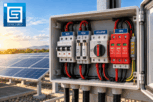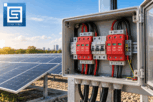
Electrical Enclosure Component For – Solar ACDB/DCDB Panel

Electrical Enclosure Component For – Solar ACDB/DCDB Panel

An electrical enclosure is a protective casing designed to house electrical and electronic components, including circuit breakers, relays, MCBs, meters, and controllers. Enclosures shield sensitive components from dust, moisture, mechanical damage, and unauthorized access, ensuring safe and long-lasting system performance.
At Synchro Electricals, our enclosures are designed with high-grade materials, precision engineering, and custom configurations to meet a wide variety of solar, industrial, and commercial applications.

Applications of
Our Enclosures

Electrical Panels

Key Benefits of Synchro Electrical Enclosures

Superior Protection

Designed to meet IP65/IP66 ratings for dust and water resistance, ideal for outdoor and industrial environments.

High-Quality Materials

Made from powder-coated CRCA steel, stainless steel, or polycarbonate, offering rust resistance and durability.

Custom Fabrication Options

We provide custom size, cutout, cable entry, and mounting options to fit any electrical system.

Robust Construction

Enclosures come with gasket-sealed doors, locking mechanisms, and reinforced frames for structural integrity.

Aesthetic and Functional Design

Compact and sleek layouts support efficient heat dissipation, cable management, and internal component layout.

Compliance with Standards

Designed as per IEC and IS electrical safety norms, suitable for CEIG/DISCOM approvals.

Technical Specifications Snapshot

FAQ's

Enclosures protect solar panel components such as fuses, breakers, and meters from environmental damage and ensure compliance with safety standards.
Yes. Synchro offers custom-built enclosures tailored to client specifications for dimension, cutouts, and mounting.
Absolutely. We offer enclosures with IP65/IP66 protection, making them perfect for outdoor solar and industrial installations.

Yes. Our designs cater to LV/MV electrical systems and meet insulation and clearance requirements for safe high-voltage operations.

We can deliver fully integrated enclosures with circuit breakers, SPD, meters, and wiring—ready for plug-and-play installation.

For outdoor solar setups, IP55–IP66 is preferred to protect internal components from dust, moisture, and high-pressure water exposure.

Solar enclosures can reach 60–70°C internal temperatures, so components must be derated to avoid insulation failure or breaker tripping.

Good bonding keeps metallic parts at equal potential, ensuring fast fault clearing and preventing shock or arc-fault risks.

Switching devices and inverters generate noise; EMI shielding prevents signal interference with metering, relays, and communication circuits.

Electrical Enclosure

Need custom enclosures for your next solar or industrial project?

Grid Connection Equipment Component For – Solar ACDB/DCDB Panel

Grid Connection Equipment Component For – Solar ACDB/DCDB Panel

Grid connection equipment is a crucial part of any solar power or electrical distribution system. It connects the solar energy system or electrical infrastructure to the utility grid safely and efficiently. This equipment includes isolators, meters, relays, disconnect switches, and protection devices that comply with grid regulations.
At Synchro Electricals, we offer robust, reliable, and compliant grid connectivity solutions designed to ensure system stability, safety, and optimal energy flow between your system and the utility grid

Applications of Grid
Connection Equipment

Electrical Panels

Key Benefits of Synchro’s Grid Connection Equipment

Seamless Grid Synchronization

Supports stable and controlled two-way energy flow between your system and the grid.

Compliance with DISCOM/CEIG Standards

Built to meet Indian regulatory requirements for solar grid connectivity.

Voltage & Frequency Monitoring

Real-time monitoring to avoid back-feed or grid fluctuation issues.

Built-In Safety & Isolation

Includes AC disconnect switches, relays, and MCBs to safely disconnect during faults or maintenance.

Easy Integration

Compatible with solar inverters, metering panels, ACDB/DCDB units, and other control systems.

Smart Meter & Relay Support

Connects with energy meters, overvoltage relays, and reverse power protection devices.

Technical Specifications Snapshot

FAQ's

It ensures your solar system can safely send energy to or receive energy from the utility grid while protecting against voltage fluctuations or faults.

Yes. Our solutions are net-metering-ready, with integrated energy meters for accurate export/import tracking.

Absolutely. We specialize in state-specific CEIG-compliant grid connection panels tailored for approval.

Yes. Our systems support remote monitoring via RS-485 or Modbus protocols.

All units include MCBs, MCCBs, contactors, relays, SPDs, and emergency manual disconnects to ensure total safety.

It must monitor voltage, frequency, phase angle and rate of change of frequency (ROCOF) to ensure safe injection into the utility grid and comply with anti-islanding protection requirements.

The device detects when power flows from the grid back into the inverter or solar system (reverse export) and trips or isolates the connection if reverse energy exceeds preset thresholds, protecting both grid and system.
SPDs protect the system from transient over-voltages (e.g., lightning strikes or switching surges) by diverting excess energy to ground, safeguarding the grid interface electronics and ACDB/DCDB components.
It provides a manual isolation point allowing the utility or maintenance staff to safely disconnect the solar system from the grid under fault or servicing conditions, ensuring safe access and operation.
The equipment integrates export/import metering, relays and communication interfaces to measure energy fed into the grid and drawn from it, enabling precise billing, compliance and two-way power management.

Grid Connection Equipment

Looking for grid-tie equipment tailored for your solar or industrial setup?

Metering Equipment – Component for Solar ACDB/DCDB Panel

Metering Equipment – Component for Solar ACDB/DCDB Panel

Metering equipment is used to accurately measure, display, and transmit key electrical parameters such as voltage, current, frequency, energy consumption, and power factor. These devices are essential in solar systems, industrial automation, and commercial power monitoring to ensure performance, billing accuracy, and energy management.
At Synchro Electricals, our range of digital and smart metering devices is built to deliver precise monitoring, easy integration, and long-term durability across all applications.This switch is usually mounted outdoors (near the meter or inverter) and is often required by local electrical codes to ensure that utility workers and technicians can safely isolate the system during maintenance or emergencies.
At Synchro Electricals, our monitoring devices are engineered for accurate real-time data, remote access, and seamless integration with solar inverters and control panels.

Applications of Our
Metering Equipment

Electrical Panels

Key Benefits of Synchro Metering Equipment

Accurate Measurement

High-precision meters ensure reliable readings of current, voltage, power, and energy

Smart Communication Protocols

Supports RS-485 Modbus, Wi-Fi, and GSM for remote energy management and data logging.

Multifunction Display

Digital LCD and LED screens offer multi-parameter visibility in real-time.

Seamless Panel Integration

DIN rail and flush-mount designs for quick installation in ACDB, DCDB, and control panels.

Energy Audit Ready

Helps in analyzing load patterns and identifying areas for energy savings

Industrial-Grade Durability

Built to withstand harsh operating conditions with IP-rated enclosures.

Technical Specifications Snapshot

FAQ's

Digital meters offer greater precision, multi-parameter displays, and support for remote monitoring, unlike analog meters which show basic readings only.

Yes, all our meters are designed to integrate with solar systems, net meters, and solar inverters.

Absolutely. Our smart meters support Modbus RTU, Wi-Fi, and GSM-based data transmission.

Yes, we provide panel-mount and DIN-rail mount options to suit a variety of applications.

Yes, our Class 1 accuracy meters meet regulatory requirements for energy billing in many commercial setups.

High accuracy ensures that energy exported or imported via the solar ACDB/DCDB system is measured precisely for billing, performance optimisation and compliance with grid-operator requirements.

kWh metering records total energy over time, while kW demand metering captures short-term peak loads (e.g., 15 min intervals). In solar ACDB systems, both help analyse power generation, load matching and tariff optimisation.

Correct current-transformer (CT) and voltage-transformer (VT) ratios ensure the metering device accurately scales high-voltage and high-current circuits to readable levels, avoiding measurement errors or saturation under high load.
Anti-tamper mechanisms prevent unauthorized alterations to meter readings. Built-in data-logging archives energy production, export/import flows and fault events, enabling audits and performance analytics.
These standards set accuracy, durability and testing requirements for metering instruments. Compliance ensures the equipment meets legal metrology and grid-compliance obligations, enhancing reliability and trust.

Metering Equipment

Looking for precision metering equipment tailored for your system?

Monitoring Devices- Component for Solar ACDB/DCDB Panel

Monitoring Devices- Component for Solar ACDB/DCDB Panel

Monitoring devices are intelligent instruments that track and display electrical parameters like voltage, current, power, energy, and frequency. In solar and industrial systems, they ensure everything operates efficiently and safely — helping detect faults early, optimize performance, and reduce downtime.
This switch is usually mounted outdoors (near the meter or inverter) and is often required by local electrical codes to ensure that utility workers and technicians can safely isolate the system during maintenance or emergencies.
At Synchro Electricals, our monitoring devices are engineered for accurate real-time data, remote access, and seamless integration with solar inverters and control panels.

Where Are Monitoring
Devices Used?

Electrical Panels

Key Benefits of AC Disconnect Switch

Real-Time Performance Tracking

View live data on voltage, current, power factor, frequency, and energy consumption.

Remote Monitoring

Many models support RS-485/Modbus or Wi-Fi/GPRS connectivity for remote access via app or software.

Fault Detection & Alerts

Instantly identify overloads, underperformance, or phase loss to prevent system failures

Energy Optimization

Make informed decisions to reduce energy bills and carbon footprint.

Easy Integration

Compatible with ACDB/DCDB boxes, inverters, and industrial switchgear.

Custom Display Options

Choose between LED, LCD, or touchscreen interfaces based on application needs.

Technical Specifications Snapshot

FAQ's

Monitoring devices provide real-time performance data, help prevent faults, and improve the efficiency of your solar installation.

Yes. Most models support Modbus RTU, Wi-Fi, or GPRS for remote access via web or mobile platforms

Absolutely. Our systems are designed to be universally compatible with major inverter brands like SMA, Growatt, ABB, and more.

No. Our user-friendly interface displays clear readings and alerts, making it accessible for both technicians and operators.

Use protocols such as Modbus RTU/TCP or IEC 61850 to ensure real-time data transfer from ACDB devices to SCADA/EMS systems, enabling effective remote monitoring and control.
Monitoring devices measure parameters like voltage harmonics, flicker, and power factor. Identifying deviations early helps prevent inverter derating or grid-compliance violations.
By continuously logging environmental conditions inside the panel enclosure, the device flags rising temperature or humidity beyond safe thresholds, indicating risk of condensation, corrosion or thermal damage.
They need to comply with MID (Measuring Instruments Directive) or ANSI C12 standards for revenue-grade metering and provide high accuracy (±0.5% or better) of kW/h readings for performance verification and grid tariffs.
Inputs monitor alarms (e.g., breaker trip, surge event) and relay outputs enable automated actions like disconnecting the inverter or sending alerts. This ensures system reliability and quick fault response.

Monitoring Devices

Ready to install advanced monitoring solutions that put you in control of your energy system?

Circuit Breakers – Component for Solar ACDB/DCDB Panel

Circuit Breakers – Component for Solar ACDB/DCDB Panel

Circuit Breakers are automatic electrical devices that interrupt current flow in a circuit when they detect overload or short-circuit conditions. These devices prevent potential fire hazards, equipment damage, and system failures.
At Synchro Electricals, we offer a range of high-quality, durable circuit breakers for solar, industrial, and residential installations. Our breakers are designed to meet IEC standards and ensure uninterrupted protection and power control.This switch is usually mounted outdoors (near the meter or inverter) and is often required by local electrical codes to ensure that utility workers and technicians can safely isolate the system during maintenance or emergencies.

Key Benefits of Synchro Circuit Breakers

Advanced Protection

Prevents fire hazards by cutting off power during overload, fault, or short circuits.

Compact & Easy to Install

Meets requirements by NEC, IEC, and local utility standards for solar installations.

Long Life & High Durability

Built using premium copper parts, silver alloy contacts, and heat-resistant casing.

IEC-Compliant & Certified

Meets global safety and performance standards (IEC 60898, IEC 60947).

Compatible With Solar Systems

Designed to operate reliably in AC and DC circuits, including solar ACDB/DCDB boxes.

Customizable Ratings & Poles

Available from 6A to 1000A, in 1P, 2P, 3P, and 4P options.

Technical Specifications (Sample)

FAQ's

MCBs are used for lower loads and residential setups, while MCCBs are ideal for high-current industrial applications due to higher breaking capacity and adjustable trip settings.

For solar applications, use DC-rated breakers in the DCDB and AC-rated breakers in the ACDB. Ensure the current rating matches your inverter and load capacity.

Circuit breakers should be housed in IP65/IP66-rated enclosures like our Solar ACDB/DCDB Boxes for outdoor use.

Yes, all our breakers comply with IEC standards and undergo rigorous quality testing

Yes, we offer custom-built solutions based on your voltage, current, and environmental conditions.

Yes, we offer custom-built solutions based on your voltage, current, and environmental conditions.

A circuit breaker with B- or C-curve trip characteristic and selective coordination (time-delay on fault clearance) is ideal. It allows normal inverter inrush currents yet trips for sustained overloads, matching the inverter output profile.

Icu is chosen based on the maximum prospective fault current at the distribution panel, typically kilo-amp range (5 kA to 25 kA). It must exceed the highest expected fault current to ensure safe interruption.

High ambient and enclosure temperatures reduce the breaker’s trip threshold and current-carrying capacity. Derating ensures the breaker remains within safe limits despite internal panel heat.
Set downstream breakers to trip faster than upstream, ensuring only the local fault circuit is isolated. Coordination prevents unwanted isolation of the entire system during minor faults.
Specialised breakers with AFD detect unintended electrical arcs from cable faults or insulation breakdown. They shut off quickly to prevent fire hazards and comply with PV installation safety standards.

Circuit Breakers

Ensure your solar system is safe, code-compliant, and efficient with a high-quality

AC Disconnect Switch Component for Solar ACDB/DCDB Panel

AC Disconnect Switch Component for Solar ACDB/DCDB Panel

An AC Disconnect Switch—also known as a solar isolator switch—is a crucial component in any grid-tied or hybrid solar PV system. It serves as a manual shutoff device that disconnects the alternating current (AC) coming from the solar inverter to the load or utility grid.
This switch is usually mounted outdoors (near the meter or inverter) and is often required by local electrical codes to ensure that utility workers and technicians can safely isolate the system during maintenance or emergencies.

Key Benefits of AC Disconnect Switch

System Isolation & Safety

Instantly disconnects AC power flow, allowing technicians to service the system without risk of electric shock.

Grid Code Compliance

Meets requirements by NEC, IEC, and local utility standards for solar installations.

Outdoor-Ready Enclosure

IP65/IP66-rated, UV-resistant, and built for tough environments. Optional locking mechanism for security.

Visible Blade Design (Optional)

Ensures clear visual confirmation of disconnection status for maximum safety.

Easy Installation & Integration

Compatible with most inverters. Available in 2-pole and 4-pole variants for single and three-phase systems.

Fire & Surge Protection

Prevents accidental arcing and works seamlessly with SPDs and breakers.

Technical Specifications Snapshot

FAQ's

It provides a manual way to isolate the inverter from the load/grid during maintenance or faults, ensuring safety and meeting compliance requirements.

Yes. Most utility companies and regulations such as the National Electrical Code (NEC 690.15) require a dedicated AC disconnect for grid-tied solar systems.

Absolutely. Our switches come with weatherproof enclosures (IP65/IP66), ideal for rooftop or wall-mounted installations.

DC disconnects isolate solar panels from the inverter, while AC disconnects isolate the inverter from the grid or load side.

Yes. For safety and regulatory compliance, it’s recommended to have it installed by a certified solar electrician.

An AC disconnect switch isolates the inverter instantly when grid voltage or frequency goes outside the safe operating window. This prevents reverse fault current from entering the inverter and shields the power electronics from thermal and electrical stress.

A load-break switch is engineered to safely interrupt current under full load, whereas a non-load-break switch must only be operated under no-load conditions. Solar ACDBs typically require load-break versions to ensure safe isolation even when the inverter is supplying active power.

During switching operations, especially under high AC currents, arcing can damage contacts and create safety hazards. Arc-suppression chambers or arc-quenching materials inside the disconnect switch control and extinguish the arc, ensuring switch longevity and safe operation.

They provide mandatory manual isolation points required by electrical codes and utility guidelines. During grid outages or anti-islanding events, the switch allows physical isolation of the solar plant from the utility grid, ensuring technician safety and preventing unintended back-feeding.

The IP rating determines its resistance to dust, moisture, and environmental exposure. Outdoor ACDB enclosures typically demand IP54 or higher to ensure the disconnect switch operates reliably in heat, humidity, and rain without internal condensation or contact corrosion.

Solar Safety Switch

Ensure your solar system is safe, code-compliant, and efficient with a high-quality AC Disconnect Switch.

Components Of Solar ACDB Box

Components Of Solar ACDB Box

Introduction Of Solar ACDB (AC Distribution Box)

A Solar AC Distribution Box (ACDB) is a vital component in grid-tied and hybrid solar power systems. Positioned between the inverter and the grid/LT panel, it ensures safe and controlled distribution of AC power. By integrating key protective devices, the ACDB guards the system against faults, surges, and electrical overloads—boosting both safety and performance.

Main Components of Solar ACDB

Benefits of Installing a Solar ACDB

Enhanced Safety

Isolates faults quickly and avoids potential fire hazards.

Overvoltage Protection

Prevents equipment damage during voltage surges.

Easy Maintenance

Terminal blocks and glands allow quick access and safe handling.

Weatherproof Design

Reliable outdoor performance with IP-rated enclosures.

System Longevity

Reduces the chances of inverter or load-side failures.

Compliance Friendly

Aligns with solar industry safety standards and DISCOM requirements.

FAQ's

Is ACDB necessary for all solar systems?
Yes, especially for grid-tied and hybrid systems. It ensures protection, proper distribution, and system compliance.
ACDB handles the alternating current (AC) output from the inverter, while DCDB manages the direct current (DC) coming from the solar panels.
Absolutely. ACDBs are customizable based on system voltage, current, enclosure type, and number of circuits.
Minimal maintenance is required. A periodic inspection ensures cable tightness and SPD condition.

Need a reliable and durable Solar ACDB for your next project?

As a trusted B2B partner, we understand the need for accuracy, durability, and compliance in power monitoring systems. Our meter panels are:

Components Of Solar DCDB Box

Components Of Solar DCDB Box

introduction of a Solar DCDB (DC Distribution Box)

A Solar DC Distribution Box (DCDB) is a vital component in a solar power system. It is designed to manage the DC side of the system by ensuring safe distribution of power from solar photovoltaic (PV) arrays to the inverter. The DCDB integrates various protective and control devices, providing overcurrent protection, isolation, and safety against electrical surges, all while maintaining an organized and safe layout for the solar system’s wiring and connections.

Main Components of a Solar DCDB

Key Benefits of Solar DCDB

Enhanced Protection

Includes surge protection devices and MCBs to prevent electrical faults and protect system components.

Safety and Isolation

Allows for manual isolation of the DC side to ensure safe operation and maintenance.

Efficient Power Distribution

Effectively handles multiple PV strings, optimizing the flow of power to the inverter.

Durability and Weather Resistance

Built with durable materials and high IP rating for reliable outdoor use in various weather conditions.

Organized Layout

Ensures clean cable management with cable glands and terminal blocks, simplifying installation and future servicing.

FAQ's

What is the primary function of a Solar DCDB?
The DCDB manages and distributes DC power from the solar PV array to the inverter while providing protection and isolation for the system.
It protects the inverter and other electrical components from voltage surges caused by external factors like lightning or grid fluctuations.
Yes, DCDBs are suitable for both residential and commercial solar power systems depending on the system size and capacity.
It provides manual disconnection of the DC side for maintenance and ensures safety during fault conditions by isolating the system before power enters the inverter.
The IP65/IP66 rating ensures that the DCDB is dustproof and water-resistant, making it suitable for outdoor use in various weather conditions.

Ensure safe and efficient solar power with our reliable DCDBs.

As a trusted B2B partner, we understand the need for accuracy, durability, and compliance in power monitoring systems. Our meter panels are:

Components Of Solar 800V LT Panel

Components Of Solar 800V LT Panel

introduction of a Solar 800V LT Panel

A Meter Panel is designed to house energy meters and associated equipment used for monitoring and recording power consumption in residential, commercial, and industrial applications. It ensures safe, organized, and accurate energy monitoring.

Main Components of a Solar 800V LT Panel

Key Benefits of Solar 800V LT Panel

High-Efficiency Power Handling

Designed for modern high-voltage solar systems.

Enhanced Safety

Integrated with SPDs, isolators, and relays for superior protection.

Grid Compatibility

Supports net metering with bidirectional metering and CTs.

Real-Time Monitoring

Multifunction meters allow immediate system insights.

Customizable Layouts

Multifunction meters allow immediate system insights.

Reliability

Built to withstand harsh solar environments with long-lasting components.

FAQ's

What is the role of an 800V LT Panel in solar systems?
It manages the AC output from the inverter and distributes it to the LT power network with monitoring and protection.
No, it’s mainly used for large commercial or utility-scale systems with higher voltage ratings.
Yes, it supports bidirectional energy meters and CTs to enable accurate energy export/import measurement.
An LT Panel handles larger loads and more advanced protections, while an ACDB is used closer to the inverter for simpler solar setups.
With protection relays, SPDs, CTs, and MCCBs/ACBs, it isolates faults and protects equipment and personnel.

Efficient Energy Begins with Intelligent Solar Power Distribution

As a trusted B2B partner, we understand the need for accuracy, durability, and compliance in power monitoring systems. Our meter panels are:

Components Of Lighting Distribution Panel

Components Of Lighting Distribution Panel

Lighting Distribution Panel (LDP) – Introduction

A Lighting Distribution Panel (LDP) is an essential part of any commercial, industrial, or residential electrical system that manages the distribution and control of lighting circuits. It receives power from the main supply and distributes it to multiple lighting loads while providing circuit protection, automation, and energy efficiency. LDPs are commonly used in offices, factories, warehouses, malls, hospitals, and public infrastructure.

Main Components of a Lighting Distribution Panel (LDP)

Key Benefits of a Lighting Distribution Panel

Safe Power Distribution

Prevents overloading and ensures reliable lighting across all zones.

Improved Maintenance

Faulty circuits can be isolated without affecting others.

Automation Ready

Supports sensor-based and timer-based control systems.

Energy Efficiency

Reduces unnecessary power usage through automation.

Customization

Tailored to suit various lighting loads and control requirements.

Compact & Organized

Neat layout for simplified wiring and service.

FAQ's

Where are LDPs commonly used?
LDPs are used in offices, commercial buildings, factories, warehouses, malls, and any place with a centralized lighting control need.
Yes, LDPs can be integrated with timers, motion sensors, and photocells for automatic lighting control.
They typically handle lighting loads but can be customized for small power outlets as well.
Yes, LDPs can be designed with suitable IP-rated enclosures for outdoor applications.
Absolutely, they can be customized to control lighting in multiple zones independently.

Smart & Reliable Lighting Panels for Any Facility

Power your space with smart, safe, and efficient Lighting Panels—ideal for commercial, industrial, and warehouse lighting control.

Welcome to Synchro Electricals

We provide trusted, high-performance electrical solutions tailored for every industry.

Apply For Job