Rajasthan has more installed solar capacity than any other Indian state, and much of India’s new utility-scale capacity is being built in its western districts. It is also one of the hardest places in the country for electrical equipment. Summer temperatures in western Rajasthan regularly cross 45°C. Dust storms coat everything. Winter nights can be cold enough to push string voltages to their highest values of the year. Pre-monsoon storms bring lightning to open sites.
Panels that perform well in a mild climate can fail early here. This guide explains how DC and AC panels for Rajasthan projects should be designed, and what EPCs should ask their supplier. It is written by the engineering team at Synchro Electricals, a manufacturer in neighbouring Gujarat that supplies solar panels for utility and rooftop projects.
Table of Contents
Rajasthan’s Site Conditions and What They Do to Panels
| Condition | Effect on electrical panels | Design response |
|---|---|---|
| Extreme summer heat | Fuses, breakers and isolators derate; enclosures heat up in direct sun | Derate components for internal temperature; light-coloured or shaded enclosures; ventilation with IP maintained |
| Cold winter nights and mornings | Module Voc rises; string voltage peaks | Size Ucpv, isolators and fuses for cold-morning Voc |
| Dust and sandstorms | Fine dust enters enclosures; tracking across insulation when combined with dew | IP65 or better; proper glands; creepage designed for high pollution |
| Large day-night temperature swings | Condensation inside enclosures | Breathers or vents that maintain IP; anti-condensation design |
| UV exposure | Plastic enclosures and glands become brittle | UV-stabilised enclosure and gland materials |
| Lightning in open terrain | Surges on long DC and AC cables | SPD Type chosen from risk assessment; SPDs at both ends of long runs |
| Remote locations | Slow access for repairs | Monitoring, replaceable SPD cartridges, standard spares |
Products for Utility-Scale Rajasthan Projects
1500V string combiner boxes and DCDBs
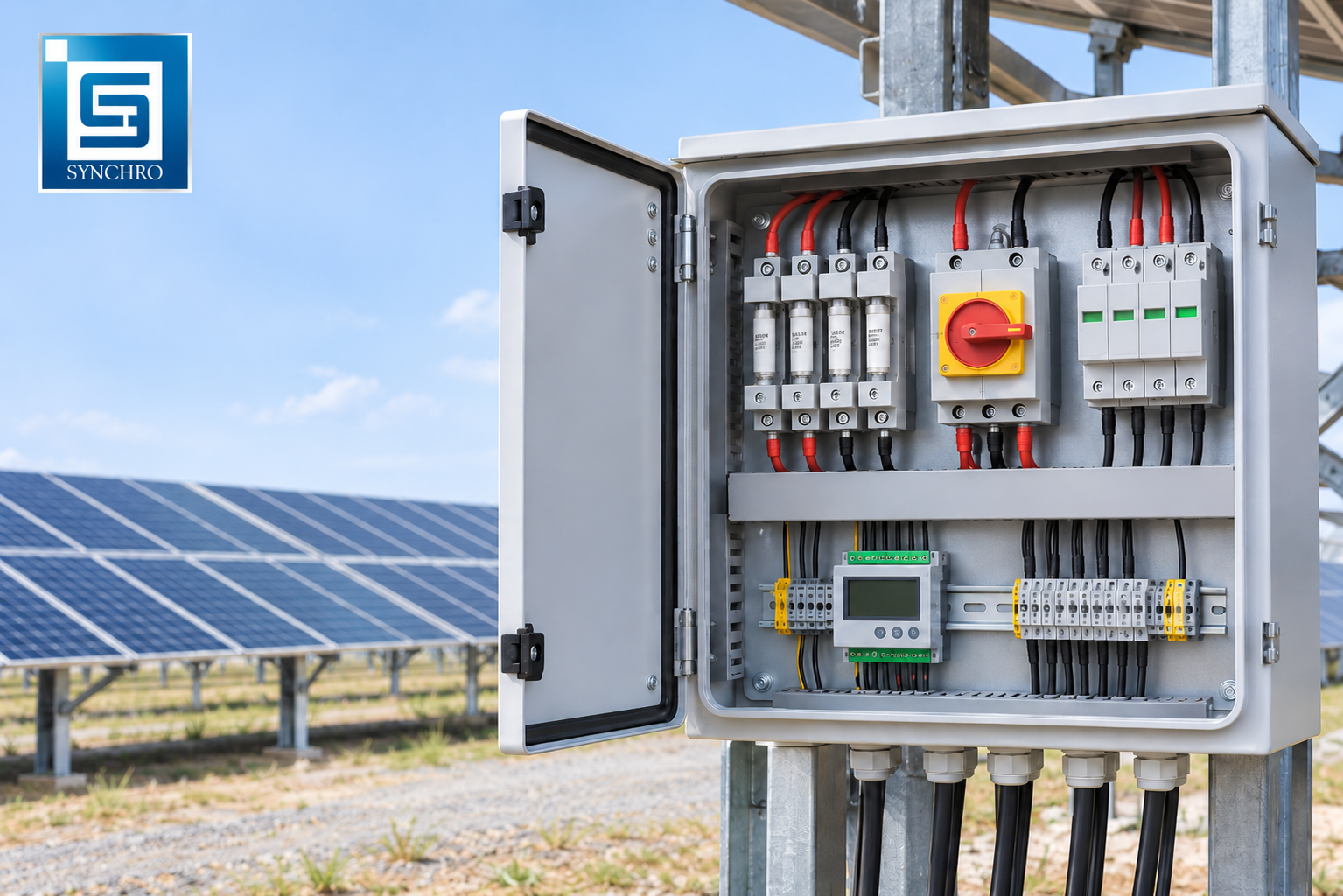
Most large Rajasthan plants are built at 1500V DC. String combiner boxes and the 1500VDC Solar DCDB Panel for these sites need every component rated for 1500V DC, fuses derated for internal temperatures, and SPDs sized for cold-morning Voc. See our guide on choosing 1500V DC fuses, isolators and SPDs.
String monitoring boxes
On a large, remote site, a blown fuse or a broken connector can go unnoticed for weeks without monitoring. String monitoring boxes measure each string’s current and send it to SCADA, so the O&M team knows which box to visit.
800Vac panels
Plants using 1500V string inverters collect AC outputs in an 800VAC Solar Type Tested Panel before the transformer. In Rajasthan, temperature-rise performance is the critical test: the panel must carry full current on a 45°C afternoon in an inverter room or outdoor kiosk. Read what an 800Vac panel is.
Products for Rooftop, C&I and Distributed Projects
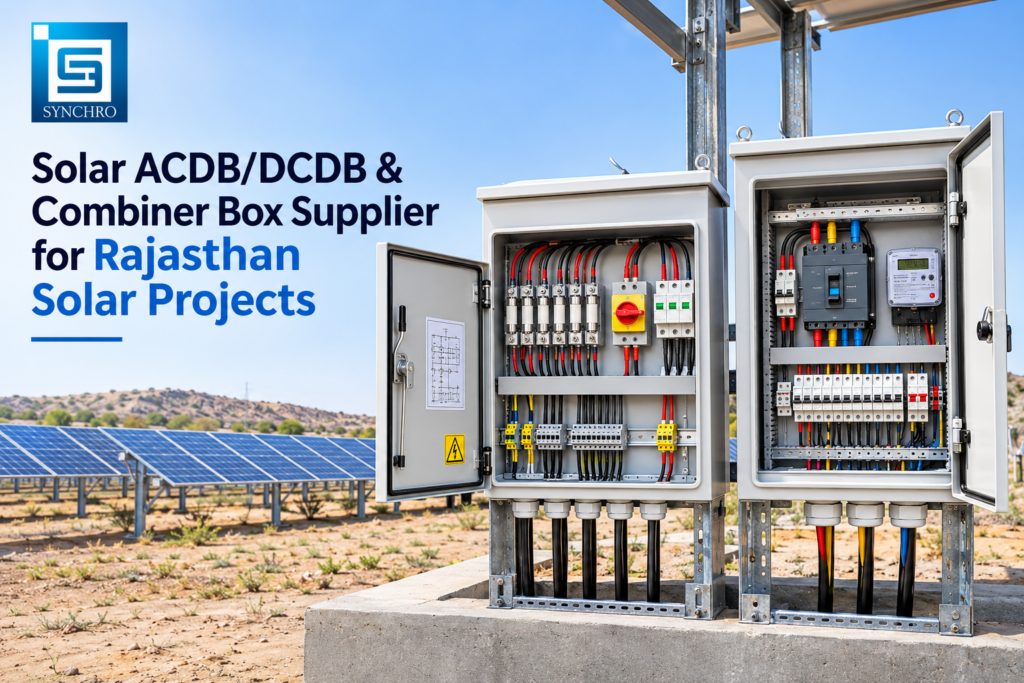
Rajasthan also has a growing number of rooftop, commercial and distributed solar projects. These need solar ACDB DCDB boxes in both single-phase and three-phase designs, often in bulk for multiple sites. For rooftop boxes in Rajasthan, enclosure heat, UV resistance and dust sealing matter as much as the electrical ratings. Our ACDB and DCDB sizing guide covers the electrical side.
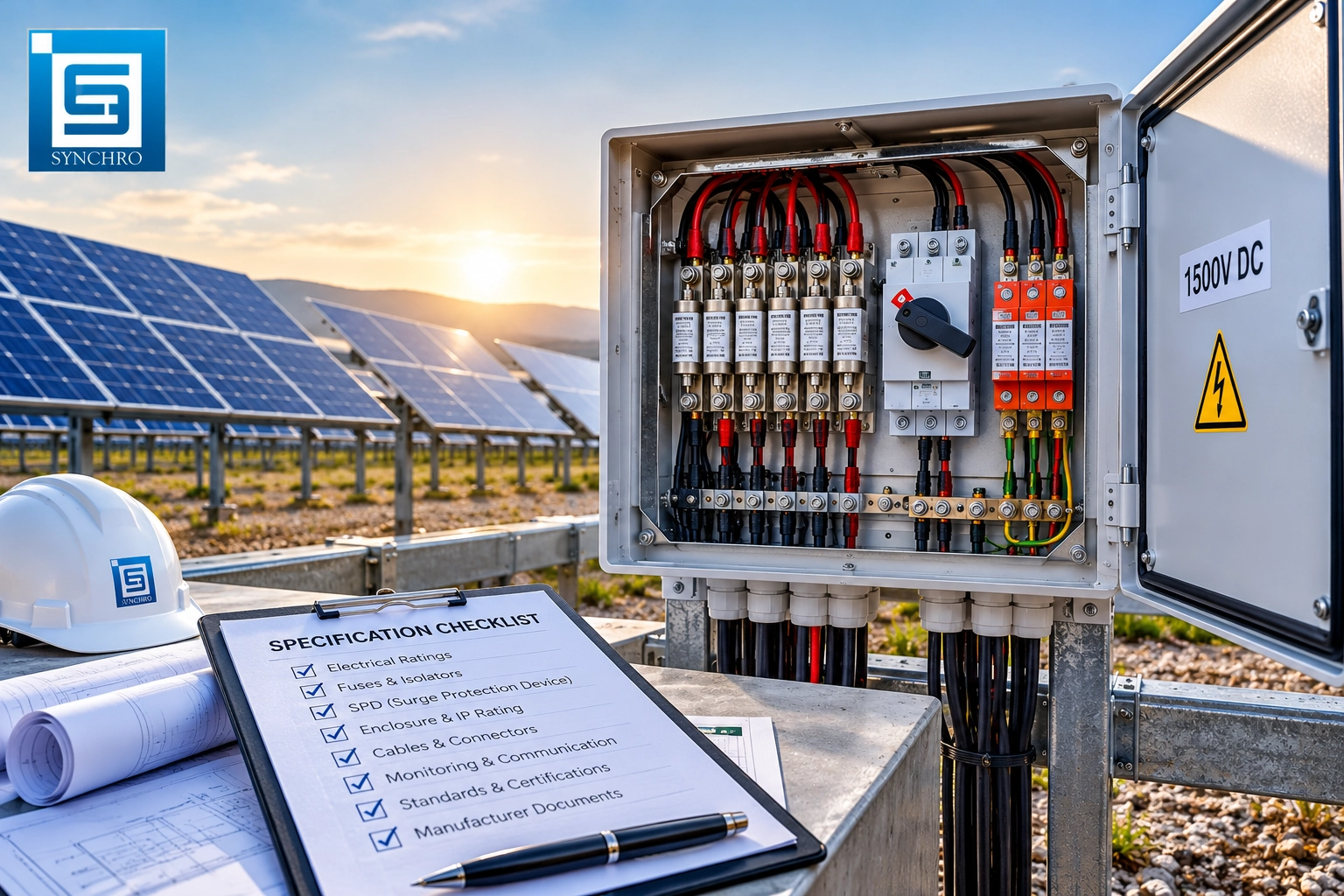
Specification Points for Rajasthan Projects
- ☐ Design ambient temperature stated (not just “40°C”)
- ☐ Lowest site temperature stated for Voc calculation
- ☐ Component derating applied for internal enclosure temperature
- ☐ Enclosure IP rating, UV resistance and colour stated
- ☐ Creepage designed for high pollution (dust)
- ☐ Condensation control with IP maintained
- ☐ SPD Type from lightning risk assessment; SPD status monitoring
- ☐ String monitoring for large plants
- ☐ Temperature-rise verification for 800Vac panels at the design ambient
- ☐ Spares list: fuses, SPD cartridges, glands
Common Failures We Hear About From Desert Sites
| Failure | Likely cause |
|---|---|
| Fuses blowing on hot afternoons | Fuses not derated for internal temperature or bifacial current |
| Melted or discoloured fuse holders | Loose connections combined with heat |
| Cracked enclosures after a few summers | Material not UV-stabilised |
| Dust inside “IP65” boxes | Wrong gland size, missing blanking plugs, damaged door gasket |
| SPDs failed after first storm season | Wrong Type or Ucpv too low for cold-morning Voc |
| 800Vac panel breakers tripping in summer | Panel not verified for temperature rise at site ambient |
Why Work With Synchro Electricals
Synchro Electricals has manufactured electrical panels in Rajkot, Gujarat since 2018, under an ISO 9001:2015 certified quality system. For Rajasthan projects we offer:
- string combiner boxes, string monitoring boxes and 1500VDC DCDB panels
- the 800VAC Solar Type Tested Panel, type-tested to IEC 61439
- single- and three-phase ACDB/DCDB boxes for rooftop and distributed projects
- design from your site data, with drawings approved before component ordering
- testing before dispatch with test reports, and technical support during installation and commissioning
- turnkey support through our SITC solar service
See our 50MW utility-scale case study.
Conclusion
Rajasthan rewards panels designed for its conditions and punishes those that are not. Heat, dust, cold mornings and lightning each change the specification of combiner boxes, DCDBs, 800Vac panels and rooftop ACDB/DCDBs. Write those conditions into your specification, and choose a manufacturer who designs from your site data rather than a standard catalogue.
Building in Rajasthan? Share your project details and our team will propose panels designed for your site.
FAQs
1. Which solar electrical panels are used in Rajasthan utility projects?
Typically 1500V string combiner boxes or DCDBs, string monitoring boxes, 800Vac AC combiner panels for string-inverter plants, and HT panels at the substation.
2. How does Rajasthan’s heat affect combiner boxes?
High internal temperatures reduce the current rating of fuses and isolators. Components must be derated for the actual internal temperature.
3. What IP rating is needed for combiner boxes in Rajasthan?
IP65 or better is common, with correctly sized glands, blanking plugs and good door gaskets to keep fine dust out.
4. Why do SPDs fail on desert solar sites?
Common causes are the wrong SPD Type for the lightning exposure, Ucpv chosen without the cold-morning Voc, and long earth leads.
5. Is string monitoring necessary for Rajasthan plants?
It is strongly recommended for large, remote plants, because it shows which strings or fuses have failed without a site walk.
6. What causes condensation inside solar enclosures?
Large day-night temperature swings. Breathers or vents that maintain the IP rating help control it.
7. Do 800Vac panels need special design for Rajasthan?
They need temperature-rise verification at the real site ambient, adequate ventilation and dust protection.
8. Which voltage is used for new solar plants in Rajasthan?
Most new utility-scale plants use 1500V DC on the array side.
9. How should enclosures be protected from UV?
Use UV-stabilised enclosure and gland materials, or metallic enclosures with durable coatings.
10. Can you supply ACDB/DCDB boxes for rooftop projects in Rajasthan?
Yes. We supply single-phase and three-phase ACDB/DCDB boxes, including bulk orders.
11. What spares should be kept for Rajasthan solar sites?
String fuses, SPD cartridges, glands and blanking plugs, and a spare isolator for larger plants.
12. How does dust affect electrical insulation?
Dust combined with dew or humidity forms conductive surface paths. Creepage distances must be designed for high pollution levels.
13. Do you provide site support in Rajasthan?
We provide technical support during installation and commissioning. Discuss site support needs with our team when you enquire.
14. What information do you need for a Rajasthan project quote?
SLD, module and inverter datasheets, string layout, site location, temperature range, quantities and specification.
15. Why choose a Gujarat-based supplier for Rajasthan projects?
Gujarat borders Rajasthan, which keeps transport and coordination practical for panels and site visits.