High-voltage power distribution networks used in industrial facilities, infrastructure developments, and large EPC projects require switching equipment that can safely handle high electrical loads and fault conditions. One of the most reliable technologies used in modern medium and high-voltage switchgear systems is the VCB panel (Vacuum Circuit Breaker panel).
In power transmission and EPC power distribution projects, VCB panels are responsible for switching operations, feeder protection, and isolating electrical faults within the network. Because these panels operate in demanding environments and handle voltage levels ranging from 3.3kV to 36kV, selecting the right high-voltage VCB panel is essential for ensuring safe and stable electrical infrastructure.
A properly designed VCB panel for high-voltage power distribution improves fault protection, reduces downtime, and supports the long-term reliability of power systems.
Why Vacuum Circuit Breaker Panels Are Preferred in High-Voltage Systems
Vacuum circuit breaker technology has become the industry standard for medium and high-voltage power distribution panels. Unlike oil or air circuit breakers, a vacuum circuit breaker (VCB) extinguishes electrical arcs inside a sealed vacuum interrupter.
When the breaker contacts separate during switching or fault interruption, an electrical arc forms due to the ionization of metal vapor from the contact surfaces. In a vacuum environment, however, the lack of gas molecules prevents the arc from sustaining itself. As the current reaches its natural zero crossing, the arc collapses rapidly and the vacuum regains its insulation strength.
This fast arc quenching capability of vacuum circuit breakers offers several advantages in high voltage power distribution projects, including faster fault interruption, minimal contact erosion, and longer operational life. These characteristics make VCB panels highly suitable for industrial power systems and utility distribution networks.
Matching the VCB Panel to System Voltage and Fault Levels
Selecting a high voltage VCB panel begins with evaluating the electrical characteristics of the power system. The panel must be compatible with the system voltage level and capable of handling the maximum fault current expected in the network.
Typical voltage ratings used in VCB panels for power distribution systems include 6.6kV, 11kV, 22kV, and 33kV. In addition to voltage compatibility, engineers must evaluate the short-circuit interrupting capacity of the vacuum circuit breaker.
Industrial facilities with large transformers or multiple power sources can produce high prospective fault currents. If the VCB panel short circuit rating is insufficient, the breaker may not be able to interrupt the fault safely. For this reason, proper coordination between system fault levels and breaker interrupting capacity is critical in high voltage switchgear design.
Operational Reliability and Switching Performance
Power distribution systems require frequent switching operations for load control, maintenance isolation, and fault management. The operational endurance of the vacuum circuit breaker therefore, plays an important role when selecting a VCB panel.
Modern high voltage VCB panels are designed to support thousands of switching operations while maintaining stable performance. Vacuum interrupter contacts experience minimal wear during normal switching, which contributes to the long service life of the breaker.
Two key parameters often evaluated during VCB panel selection for EPC power projects are mechanical endurance and electrical endurance. Mechanical endurance refers to the number of open–close operations the breaker mechanism can perform, while electrical endurance represents the breaker’s ability to interrupt load and fault currents repeatedly without degradation.
Reliable switching performance ensures that the VCB panel maintains consistent protection capability throughout its lifecycle.
Protection Systems Integrated in VCB Panels
Protection and control functions are essential elements of high voltage VCB panels used in power distribution networks. Modern switchgear panels incorporate advanced protection relays that continuously monitor electrical parameters.
These relays detect abnormal conditions such as overcurrent or earth faults and initiate breaker tripping to isolate the faulty section of the system. Protection functions typically integrated within VCB panels for industrial power distribution include:
- Overcurrent and short circuit protection
- Earth fault protection
- Feeder protection for outgoing distribution circuits
- Protection coordination with upstream and downstream switchgear
These protective mechanisms ensure that electrical faults are cleared quickly, preventing damage to equipment and maintaining stability within the high-voltage power distribution network.
Engineering Design and Panel Construction
Apart from electrical ratings, the mechanical construction of the VCB panel also plays a significant role in system reliability. High-voltage switchgear panels are typically designed with compartmentalized structures separating busbars, circuit breakers, and cable sections.
This arrangement improves operational safety and helps contain electrical faults within specific compartments. Proper insulation coordination, busbar spacing, and cable termination design are also critical factors considered during VCB panel engineering for power transmission projects.
Manufacturers specializing in industrial electrical panels and medium voltage switchgear, such as Synchro Electricals, focus on designing VCB panels that meet the reliability and safety requirements of high-voltage power distribution systems used in industrial plants and EPC infrastructure projects.
Ensuring Reliable Power Distribution with the Right VCB Panel
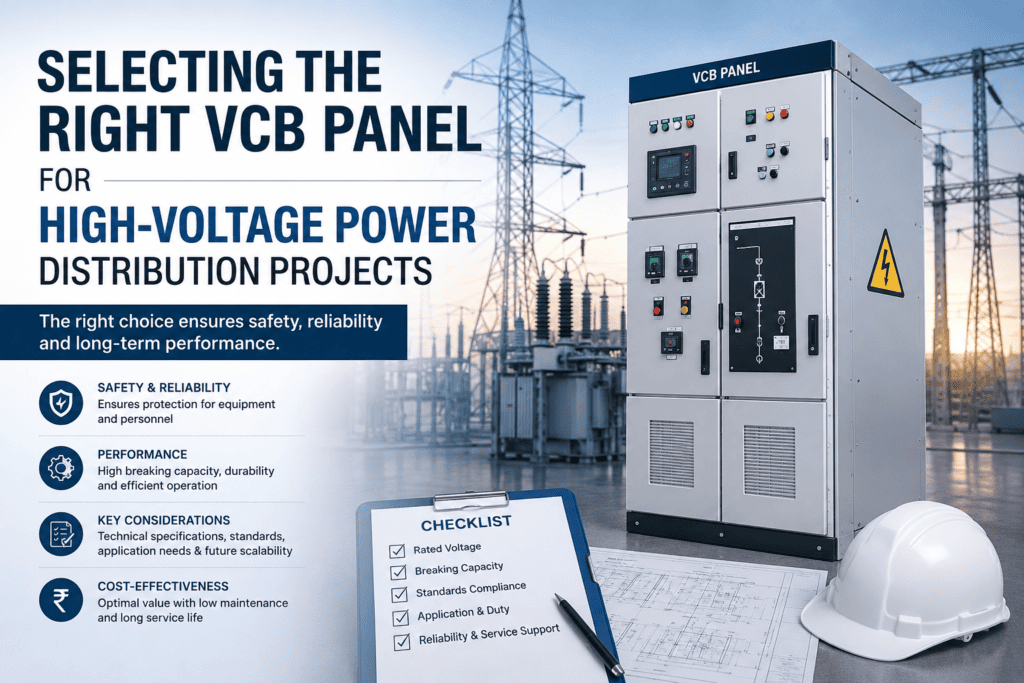
Selecting the appropriate VCB panel for high-voltage power distribution projects requires careful evaluation of system voltage, fault current levels, switching endurance, and protection coordination. Each of these factors contributes to the safe operation of the electrical network.
As industrial facilities and infrastructure projects continue to expand, high voltage VCB panels remain a fundamental component of modern power distribution systems. By choosing properly engineered vacuum circuit breaker panels, power system designers can ensure reliable switching performance, enhanced electrical protection, and long-term operational stability.