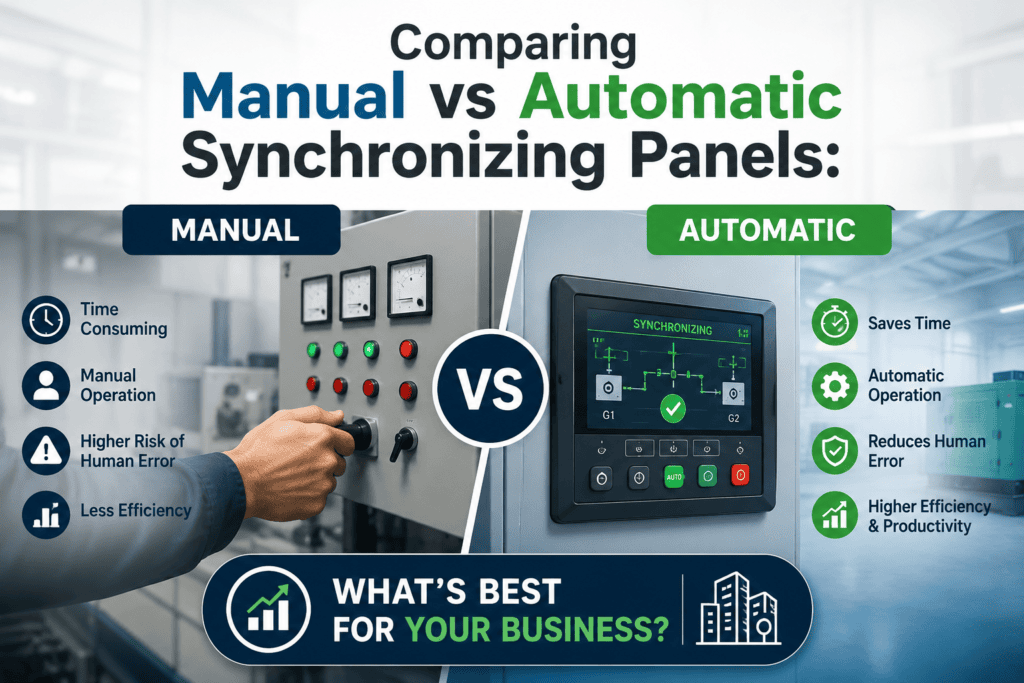
In commercial power systems where multiple generators operate together, synchronizing panels play a critical role in ensuring stable and safe power distribution. These panels synchronize generator parameters such as voltage, frequency, and phase angle before connecting them to a common busbar. For facilities that rely on generator-based backup or continuous power supply, selecting the right synchronizing panel becomes an important operational decision.
Businesses typically choose between manual synchronizing panels and automatic synchronizing panels depending on their power requirements, operational complexity, and automation needs. Understanding the differences between manual vs automatic synchronizing panels helps organizations select the most suitable solution for their electrical infrastructure.
Manual Synchronizing Panels in Power Systems
A manual synchronizing panel requires an operator to monitor generator parameters and perform synchronization manually. The operator observes instruments such as voltmeters, frequency meters, and synchroscopes to ensure that the incoming generator matches the busbar conditions before closing the breaker.
Manual systems are often used in small commercial power systems where synchronization operations occur infrequently, and skilled operators are available to manage the process.
Because synchronization depends on human intervention, the process can take longer and requires careful monitoring. However, manual panels are generally simpler in design and involve lower initial investment compared to automated systems.
Automatic Synchronizing Panels for Modern Power Infrastructure
An automatic synchronizing panel uses advanced controllers and protection systems to perform generator synchronization automatically. These panels continuously monitor generator parameters and automatically adjust voltage, frequency, and load sharing before connecting generators to the electrical network.
In commercial facilities with multiple generators or critical power loads, automatic synchronization significantly improves operational efficiency. The system responds quickly to changing load conditions and can automatically start, synchronize, and share load among multiple generators.
Automation also reduces dependency on manual intervention and minimizes the risk of synchronization errors. This makes automatic synchronizing panels particularly valuable for data centers, hospitals, manufacturing facilities, and large commercial complexes where power continuity is essential.
Key Differences Between Manual and Automatic Synchronizing Panels
| Feature | Manual Synchronizing Panel | Automatic Synchronizing Panel |
| Operation Method | Requires operator to synchronize generators manually | Synchronization is handled automatically by control systems |
| Response Time | Slower due to manual monitoring and intervention | Fast synchronization with real-time controller adjustments |
| System Complexity | Simple design with basic instruments | Advanced controllers, PLCs, and protection relays |
| Human Dependency | High dependency on trained operators | Minimal human intervention required |
| Application Size | Suitable for small commercial power systems | Ideal for large commercial or industrial power systems |
| Load Sharing | Often manual or limited | Automatic load sharing between generators |
Choosing the Right Synchronizing Panel for Your Business
Selecting between a manual synchronizing panel and an automatic synchronizing panel depends largely on the scale and operational requirements of the power system.
Businesses operating smaller generator installations may find manual panels sufficient, particularly where synchronization operations occur rarely. However, as the complexity of the electrical network increases, automation becomes increasingly beneficial.
Modern commercial facilities often prefer automatic synchronizing panels because they provide faster generator response, improved load sharing control, and better integration with monitoring systems such as SCADA.
Manufacturers involved in electrical panel engineering, including Synchro Electricals, design synchronizing panels tailored to different power system requirements. Whether for manual or automated operations, well-designed panels help ensure safe generator synchronization and reliable power distribution.