Solar photovoltaic (PV) power plants operate in open environments where electrical systems are continuously exposed to lightning strikes, switching surges, and transient overvoltages. These events can cause severe damage to inverters, monitoring systems, and sensitive electrical components if adequate protection measures are not implemented.
In solar EPC projects, ACDB DCDB panels play a crucial role in managing power distribution between PV modules, inverters, and the grid. However, the reliability of these panels heavily depends on the correct implementation of surge protection in ACDB DCDB panels and proper earthing coordination.
Selecting the right Surge Protection Devices (SPDs) and integrating them with a well-designed grounding system ensures that transient overvoltages are safely diverted away from critical equipment. For large solar installations, proper SPD selection and earthing coordination in ACDB DCDB panels is therefore essential for long-term system stability and equipment protection.
Transient Overvoltages in Solar Power Systems
Solar plants are particularly vulnerable to electrical surges due to their extensive outdoor cable networks and elevated structures. Transient overvoltages may originate from multiple sources.
Lightning strikes are the most severe cause of surges in solar installations. Even indirect lightning strikes near a solar plant can induce high voltage spikes through electromagnetic coupling.
Other sources include switching operations within the power network, grid disturbances, and rapid changes in load conditions.
These surges propagate through DC cables, inverter terminals, and AC distribution systems. Without proper surge protection in ACDB DCDB panels, these voltage spikes can damage inverters, monitoring equipment, and control electronics.
Role of ACDB and DCDB Panels in Solar Electrical Architecture
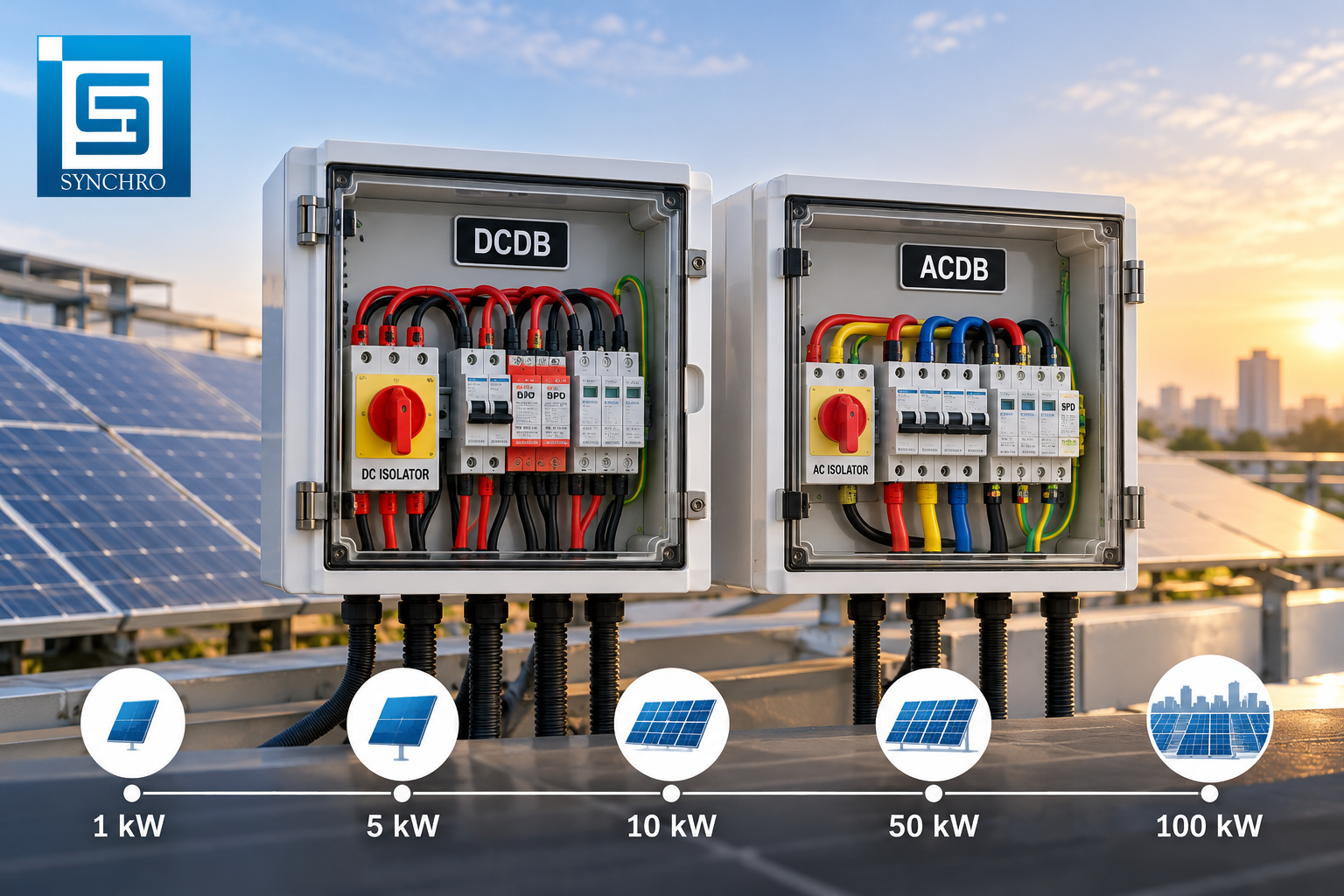
In photovoltaic power systems, DCDB panels collect the DC output from multiple solar strings and route the combined power to the inverter. The inverter converts this DC power into AC power, which is then distributed through ACDB panels before being exported to the grid or connected loads.
Because both panels are part of the primary power path, they become critical points for installing surge protection devices.
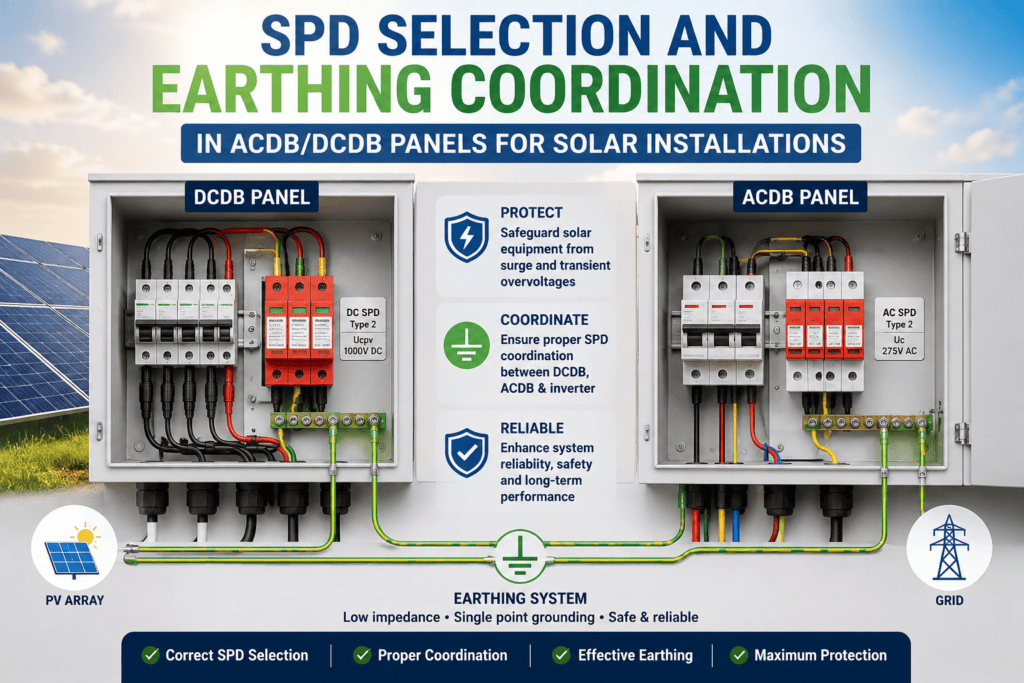
SPDs installed in DCDB panels protect the inverter from voltage spikes originating on the DC side, while SPDs installed in ACDB panels protect the inverter and downstream equipment from grid-side surges.
Properly engineered ACDB DCDB panels for solar installations therefore integrate surge protection devices along with grounding systems to manage transient energy effectively.
Surge Protection Devices Used in ACDB DCDB Panels
Selecting the correct SPD type is a key aspect of surge protection design in solar installations. SPDs are categorized based on their surge handling capability and application environment.
Common SPD types used in solar ACDB and DCDB panels
Type 1 SPD
Type 1 SPDs are designed to handle direct lightning current impulses. They are typically installed at the main electrical service entrance where the building or plant is exposed to direct lightning strikes.
Type 2 SPD
Type 2 SPDs are the most commonly used protection devices in ACDB DCDB panels. These SPDs protect equipment from induced lightning surges and switching transients.
Type 1+2 Combined SPD
In large solar plants where lightning risk is significant, combined Type 1+2 SPDs are often installed to provide both lightning current protection and surge suppression in a single device.
Correct SPD selection depends on parameters such as maximum discharge current, nominal discharge current, system voltage, and short circuit withstand capability.
Critical Parameters for SPD Selection in Solar Panels
Selecting SPDs for ACDB DCDB panels in solar installations requires careful technical evaluation. Engineers must ensure that the SPD characteristics match the electrical properties of the PV system.
Important parameters considered during SPD selection for solar power systems include:
- Maximum system voltage of the DC string or AC grid
- Maximum discharge current rating (Imax)
- Nominal discharge current (In)
- Voltage protection level (Up)
- Response time of the surge protection device
For DC circuits, SPDs must also be capable of handling continuous DC voltage without degradation. This is especially important in solar systems where DC voltage levels may exceed 1000V or even 1500V in utility-scale installations.
Earthing Coordination in ACDB DCDB Panels
While SPDs divert surge energy away from sensitive equipment, their effectiveness depends heavily on the earthing system of the solar plant. Without proper grounding, surge energy cannot be safely dissipated into the earth.
In solar installations, earthing coordination typically includes multiple grounding systems working together:
- Equipment earthing for electrical safety
- Lightning protection earthing for surge discharge
- Functional earthing for stable system operation
The SPDs installed in ACDB DCDB panels must be connected to a low-impedance grounding network so that surge currents can flow quickly into the earth.
High earthing resistance can cause surge energy to remain within the system, increasing the risk of equipment failure.
Coordination Between SPD Placement and Grounding Layout
Effective surge protection in solar plants requires strategic placement of SPDs within the electrical network. Improper SPD placement can reduce protection effectiveness even if high-quality devices are used.
Typically, DCDB panels include SPDs installed between positive and negative conductors as well as between conductors and earth. This configuration ensures that surge currents are diverted regardless of the surge path.
Similarly, ACDB panels incorporate SPDs between phase conductors and earth, protecting the inverter and AC distribution network.
Short grounding conductors and proper bonding between earthing systems are essential to minimize impedance and allow efficient surge dissipation.
Impact of Improper Surge Protection on Solar Plants
Failure to implement proper SPD selection and earthing coordination in ACDB DCDB panels can lead to multiple operational problems in solar power plants.
Sensitive components such as inverters, monitoring equipment, and data loggers can be permanently damaged by voltage surges. Replacing these components often results in significant downtime and financial losses.
Additionally, repeated surge exposure can degrade insulation systems and reduce the lifespan of electrical equipment.
For solar EPC contractors and plant operators, proper surge protection in ACDB DCDB panels is therefore a critical design consideration that directly impacts plant reliability.
Synchro Electricals: Reliable ACDB DCDB Panels for Solar Projects
Synchro Electricals manufactures high-quality ACDB DCDB panels designed specifically for solar EPC projects and photovoltaic power plants. These panels are engineered to incorporate reliable surge protection systems and optimized earthing integration.
Each ACDB DCDB panel from Synchro Electricals is designed with proper SPD accommodation, robust enclosure construction, and electrical layouts that support safe surge energy dissipation.
With expertise in industrial electrical panels and solar power distribution systems, Synchro Electricals provides dependable panel solutions for solar installations operating in demanding environments.
Conclusion
Solar power plants operate in environments where electrical surges are unavoidable. Effective protection of critical equipment therefore, depends on proper SPD selection and earthing coordination in ACDB DCDB panels.
By integrating correctly rated surge protection devices with a well-designed grounding system, solar installations can safely manage transient overvoltages caused by lightning and switching events.
For EPC contractors and plant operators, investing in well-engineered ACDB DCDB panels with advanced surge protection systems is essential to ensure long-term reliability and uninterrupted solar power generation.