

Circuit Breakers or Fuses
Provide overcurrent protection for individual lighting circuits. They interrupt the flow of electricity in case of faults or overloads.

Busbars
Conductors that distribute electrical power within the panel to feed individual lighting circuits.

Control Devices
Switches, dimmers, or other control devices to manage the operation of lighting circuits.

Metering and Monitoring Equipment
Measures parameters such as current and voltage for monitoring and control purposes.

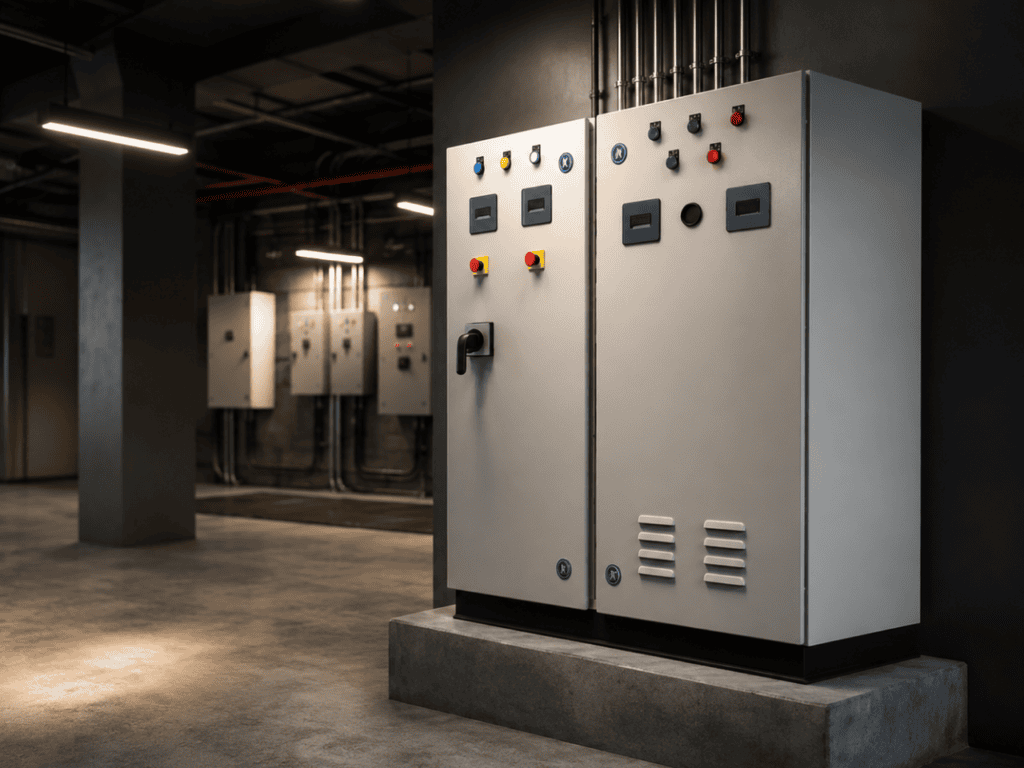
Enclosure
The entire panel is housed in a protective enclosure, which can be surface-mounted or flush-mounted depending on the application.

Commercial Buildings
Lighting distribution panels are commonly used in commercial spaces such as offices, retail stores, hotels, and restaurants to manage the distribution of power to various lighting fixtures.

Residential Buildings
In residential settings, these panels are utilized to control and distribute power to lighting circuits in different rooms and areas of the house.

Industrial Facilities
In industrial environments, lighting distribution panels play a role in managing lighting loads in areas such as warehouses, production floors, and offices.

Public Spaces
Lighting distribution panels are used in public spaces like airports, educational institutions, and hospitals to control and distribute power to lighting systems.

Organized Power Distribution
Efficient Operation

Flexible Control