Wind energy farms operate in some of the most demanding electrical environments in the renewable sector. High-capacity turbines generate power at medium voltages, exposed to continuous load variation, harsh weather, and frequent switching operations. In such conditions, electrical safety and switching reliability are not optional—they are fundamental to plant uptime and asset protection.
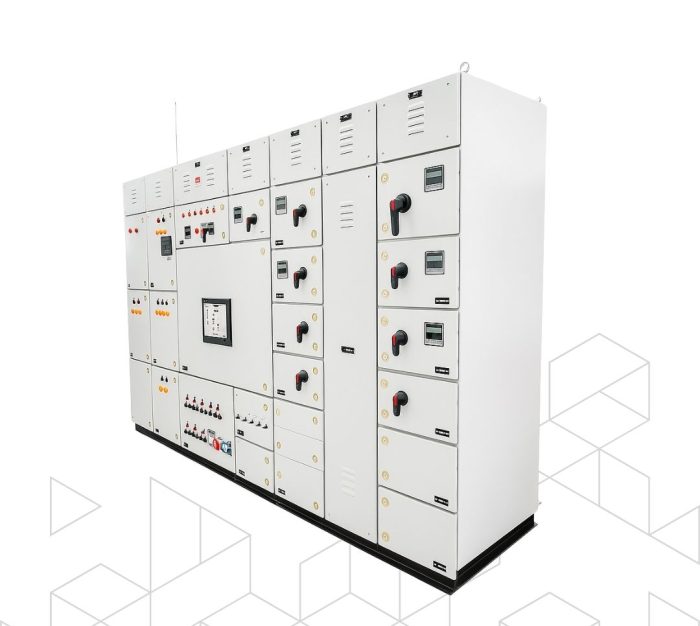
This is where VCB panels for wind power plants play a decisive role. Designed to manage high-voltage switching with precision and safety, Vacuum Circuit Breaker (VCB) panels form the backbone of medium-voltage protection systems in modern wind energy installations. They ensure that power generated by turbines is switched, isolated, and protected without compromising equipment integrity or operational continuity.
Understanding the Electrical Environment of Wind Energy Farms
Unlike conventional power plants, wind farms are decentralized by design. Dozens—or even hundreds—of turbines feed power into a collection network before it reaches the substation and grid. Each turbine experiences constant variation in output due to changing wind speeds, resulting in dynamic electrical behavior.
These conditions introduce several technical challenges:
- Frequent switching during turbine connection and disconnection
- High inrush currents and fault levels
- Long cable runs increasing fault impact
- Exposure to lightning and atmospheric disturbances
- Limited access for maintenance in remote locations
To manage these challenges safely, wind power plants rely on robust medium-voltage switchgear capable of operating reliably under stress. VCB panels are specifically engineered for this role.
Why Safe Switching Is Critical in High-Voltage Wind Applications
Switching operations in wind farms are not occasional events—they occur regularly as turbines respond to wind availability, grid conditions, and maintenance requirements. Unsafe or poorly controlled switching can lead to arc faults, insulation damage, or catastrophic equipment failure.
High-voltage systems demand:
- Fast and reliable fault interruption
- Minimal arc generation during switching
- Stable operation during repeated switching cycles
- Protection of transformers, cables, and turbines
VCB panels for wind power plants use vacuum interrupter technology, which extinguishes arcs rapidly within a sealed vacuum chamber. This makes them far safer and more durable than older air or oil-based switching technologies, especially in renewable power environments.
What Makes VCB Panels Suitable for Wind Energy Farms
A Vacuum Circuit Breaker panel is designed to interrupt current in medium-voltage systems—typically ranging from 11kV to 33kV—using vacuum as the arc-quenching medium. This technology offers distinct advantages for wind energy applications.
VCB panels provide:
- High dielectric strength after interruption
- Consistent performance over thousands of switching operations
- Compact design suitable for turbine bases and substations
- Low maintenance requirements, ideal for remote wind farms
In wind energy plants, VCB panels are commonly installed at turbine switchgear rooms, collector substations, and grid interconnection points, forming a critical protection layer across the entire electrical network.
How VCB Panels Improve Reliability in Wind Power Plants
The role of VCB panels extends beyond basic switching. They actively contribute to the reliability and stability of wind power operations.
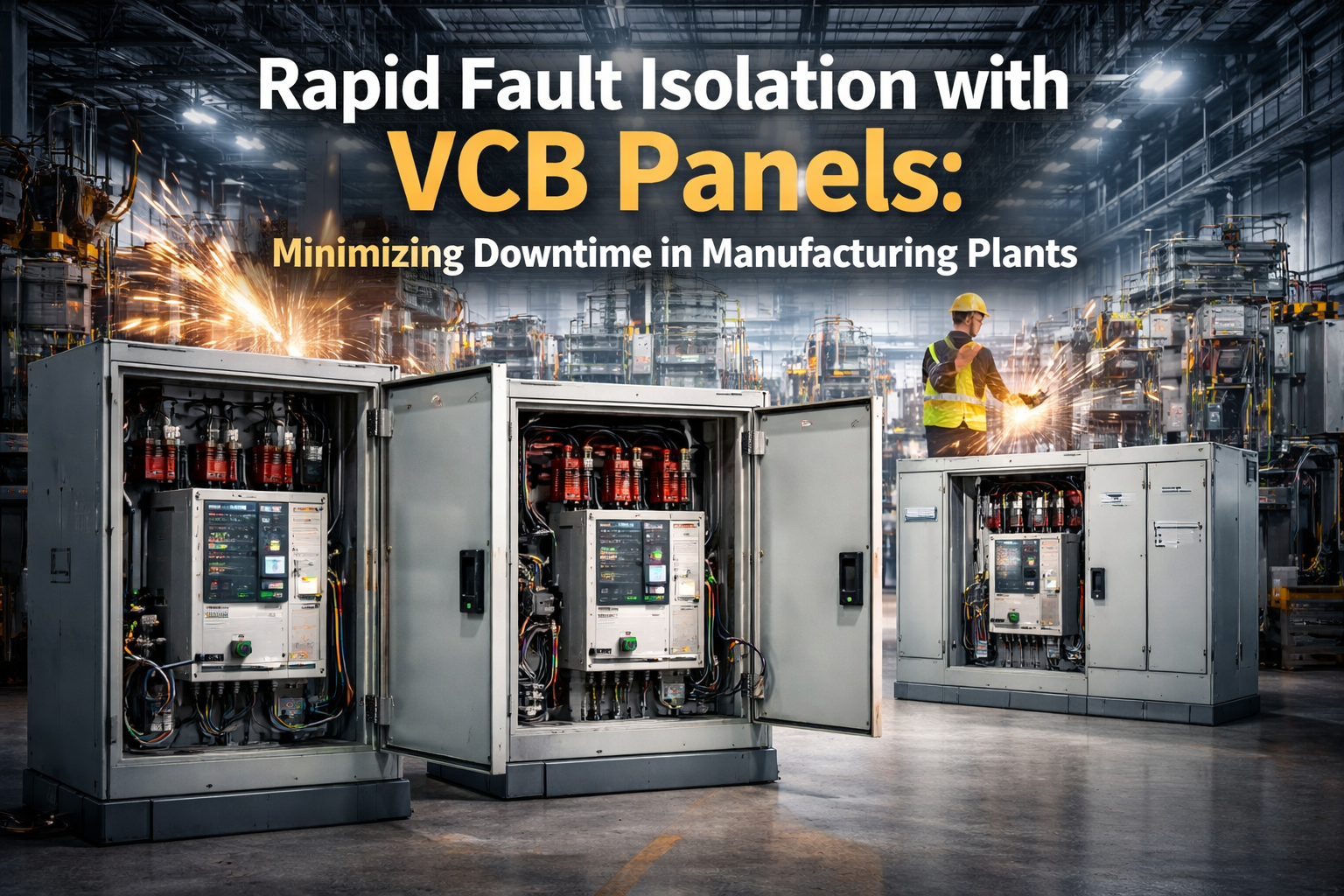
By isolating faults quickly, they prevent cascading failures across multiple turbines. During abnormal grid conditions, VCB panels protect transformers and cables from excessive fault currents. Their fast response ensures minimal downtime and rapid system recovery.
In addition, precise switching minimizes electrical stress on equipment, extending the operational life of generators, step-up transformers, and underground cable networks. For operators, this translates into higher plant availability and lower lifecycle costs.
Engineering Capabilities That Matter in Wind Applications
Not all VCB panels are equally suited for renewable energy environments. In wind power plants, certain engineering characteristics are especially important.
Reliable VCB panels incorporate:
- High short-circuit withstand capacity to manage grid-side faults
- Draw-out circuit breaker designs for safer maintenance
- Mechanical and electrical interlocks to prevent unsafe operations
- Protection relays for overcurrent, earth fault, and feeder protection
- Compatibility with SCADA systems for real-time monitoring
These capabilities ensure that switching operations remain controlled, repeatable, and safe—even under fluctuating load and environmental conditions.
Applications of VCB Panels Across Wind Energy Infrastructure
VCB panels are deployed at multiple levels within a wind power plant, each serving a specific function.
At the turbine level, they isolate individual generators during faults or maintenance. In collector substations, they manage feeder circuits carrying power from multiple turbines. At the grid interface, they protect transformers and ensure safe synchronization with the utility network.
In hybrid renewable plants combining wind with solar or energy storage, VCB panels also play a crucial role in coordinating medium-voltage power flow between different generation sources.
Operational Benefits for Wind Farm Owners and EPC Contractors
Installing high-quality VCB panels for wind power plants delivers clear operational advantages:
- Improved electrical safety during switching and fault conditions
- Reduced downtime through fast and reliable fault isolation
- Lower maintenance requirements compared to conventional breakers
- Enhanced system reliability across the wind farm
- Compliance with medium-voltage and renewable energy standards
For EPC contractors, VCB panels simplify commissioning and protection coordination. For plant owners, they provide long-term assurance of stable and safe power distribution.
Why Synchro Electricals for Wind Energy VCB Panels
Wind power projects demand switchgear that is engineered for performance, not adapted as an afterthought. Synchro Electricals designs VCB panels with a deep understanding of renewable power behavior and high-voltage system requirements.
Each panel is engineered to meet project-specific voltage levels, fault ratings, and protection schemes. Emphasis is placed on durability, safety, and seamless integration with wind farm SCADA systems. This system-level approach ensures that VCB panels perform reliably throughout the plant’s operating life.
Conclusion
Wind energy farms operate in electrically demanding environments where safe switching and rapid fault isolation are critical to reliability. VCB panels for wind power plants provide the protection, control, and durability required to manage medium-voltage power safely and efficiently.
By deploying well-engineered VCB panels, wind farm operators can protect valuable assets, reduce downtime, and ensure consistent power delivery from turbine to grid—building renewable energy systems that are not only sustainable, but also dependable.