Industrial solar power plants are built for scale, efficiency, and long-term reliability. As system capacities increase and grid integration becomes more complex, the performance of a solar PV plant is no longer determined by panels and inverters alone. The way power is collected, protected, and distributed across AC and DC stages plays a decisive role in energy yield, safety, and operational stability.
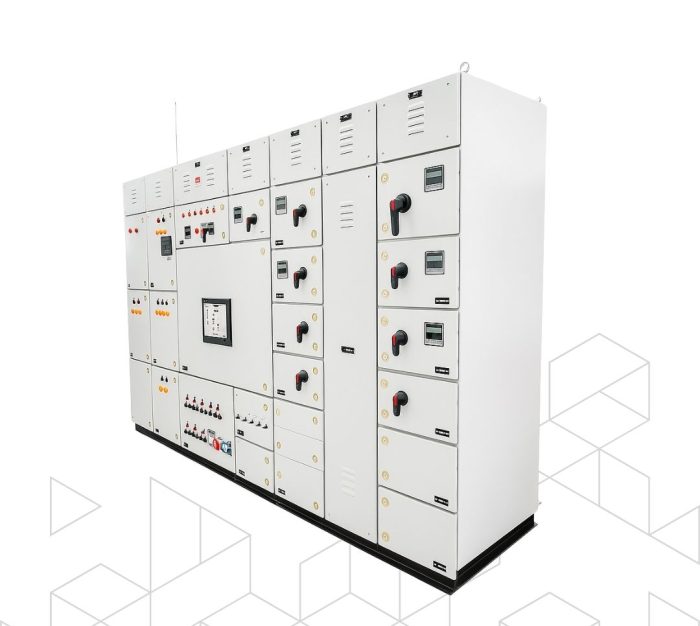
This is where ACDB DCDB panels for solar plants become critical. Advanced AC Distribution Boards (ACDB) and DC Distribution Boards (DCDB) form the electrical backbone of industrial PV systems, ensuring structured power flow, effective protection, and optimized system performance from the PV array to the grid.
Synchro Electricals designs ACDB and DCDB solutions specifically for high-capacity industrial solar plants, where electrical reliability and compliance are non-negotiable.
Understanding Power Flow in Industrial Solar PV Plants
In an industrial solar PV system, power generation and distribution occur across two distinct electrical domains. On the DC side, power flows from PV modules through string connections toward inverters. On the AC side, inverter output is collected, protected, and routed toward transformers or grid interconnection points.
As plant size increases, this power flow becomes highly distributed:
- Multiple PV strings operate in parallel
- Several inverters feed a common AC network
- Fault levels rise due to higher system capacity
- Maintenance access becomes more complex
Without a structured ACDB/DCDB layout, these conditions can lead to unorganized cabling, difficult fault isolation, higher electrical stress, and reduced system uptime.
Why Distribution Architecture Matters in Industrial Solar Plants
Industrial solar plants operate under continuous electrical stress—high DC currents, fluctuating solar output, and grid-side disturbances. Poorly designed distribution layouts often result in:
- Increased DC losses due to long cable runs
- Difficulty in isolating faulty strings or inverters
- Higher risk of DC arc faults and AC short circuits
- Delays during maintenance or fault rectification
- Reduced compliance with safety and grid standards
Advanced ACDB DCDB panels for solar plants address these challenges by introducing structure, protection coordination, and clear separation between DC and AC domains.
What Role DCDB Panels Play in Solar Optimization
DC Distribution Boards (DCDBs) operate on the DC side of the plant, typically between PV strings and inverters. Their primary role is to aggregate, protect, and manage DC power before it reaches the inverter.
In industrial-scale systems, DCDB panels:
- Combine multiple PV string outputs in a controlled manner
- Provide overcurrent protection using fuses or DC breakers
- Enable safe isolation of individual strings during faults or maintenance
- Reduce cable complexity by centralizing DC collection
- Improve system safety through surge protection devices
By minimizing DC-side losses and enabling fast fault isolation, DCDB panels directly contribute to higher energy yield and improved plant reliability.
How ACDB Panels Strengthen the AC Side of Solar Plants
Once DC power is converted to AC by inverters, ACDB panels become the primary control and protection interface. AC Distribution Boards collect output from multiple inverters and distribute it toward transformers or LT panels.
In industrial solar plants, ACDB panels ensure:
- Structured collection of inverter outputs
- Protection against overloads, short circuits, and grid faults
- Balanced power distribution across phases
- Safe isolation of individual inverters
- Compliance with utility and grid interconnection requirements
Well-designed ACDB layouts reduce electrical stress on inverters and transformers, improving overall system stability.
Advanced ACDB/DCDB Layouts: Moving Beyond Basic Distribution
Modern industrial solar projects demand more than basic aggregation panels. Advanced ACDB/DCDB layouts are engineered with system optimization in mind.
Key characteristics include:
- Optimized busbar sizing to handle high current without excessive temperature rise
- Coordinated protection to ensure selective tripping during faults
- Clear segregation between power, protection, and control sections
- SCADA-ready metering and monitoring integration
- Modular designs that support future plant expansion
These design considerations ensure that the distribution system scales efficiently with plant capacity while maintaining safety and compliance.
Engineering Features That Matter in Industrial Installations
In high-capacity solar plants, ACDB and DCDB panels must withstand demanding electrical and environmental conditions. Critical engineering aspects include:
- High fault-withstand capacity to manage inverter-side and grid-side faults
- Weatherproof enclosures suitable for outdoor inverter yards
- Surge protection devices for lightning-prone locations
- Thermal management to maintain performance under high ambient temperatures
- Standardized layouts that simplify installation and commissioning
By focusing on these parameters, ACDB/DCDB panels become long-term assets rather than maintenance liabilities.
Where ACDB/DCDB Panels Deliver Maximum Value
Advanced ACDB and DCDB panels are essential across a wide range of industrial solar applications, including:
- Large rooftop solar installations for manufacturing facilities
- Ground-mounted captive solar plants
- Solar parks supplying power to industrial clusters
- Hybrid solar plants integrated with storage or DG backup
- Export-oriented solar projects requiring strict grid compliance
In each scenario, optimized distribution layouts improve reliability, simplify operations, and enhance energy output.
Benefits for Plant Owners and EPC Contractors
Implementing well-engineered ACDB DCDB panels for solar plants delivers clear advantages:
- Improved energy yield through reduced losses
- Faster fault detection and isolation
- Safer operation and easier maintenance
- Higher compliance with electrical and grid standards
- Reduced downtime and operational risk
- Scalable infrastructure for future capacity upgrades
For EPC contractors, standardized and tested layouts reduce commissioning challenges. For plant owners, they ensure predictable, long-term performance.
Why Synchro Electricals for ACDB/DCDB Solutions
Industrial solar plants require distribution panels designed with a system-level understanding of power flow and protection coordination. Synchro Electricals approaches ACDB and DCDB design as an integral part of the plant’s electrical architecture—not as standalone components.
Each solution is tailored to inverter capacity, fault levels, site conditions, and monitoring requirements. Emphasis is placed on durability, compliance, and ease of integration with plant control systems, ensuring smooth operation throughout the plant lifecycle.
Conclusion
As industrial solar PV systems continue to scale, optimization must extend beyond generation to distribution architecture. Advanced ACDB DCDB panels for solar plants play a central role in ensuring safe, efficient, and reliable power flow across both DC and AC stages.
By adopting thoughtfully engineered ACDB/DCDB layouts, plant owners and EPCs can improve energy yield, reduce operational risk, and build solar power plants that perform consistently over decades.