Modern power infrastructure is no longer built around a single energy source. Across industrial plants, commercial campuses, telecom sites, and critical facilities, hybrid power systems combining solar, grid, and DG sets have become the new standard. While this multi-source approach improves availability and efficiency, it also introduces complexity. Reliability now depends not just on the sources themselves, but on how intelligently they are coordinated.
This is where Hybrid Synchronizing Panels become essential. They act as the control layer that allows different power sources to operate together safely, smoothly, and predictably. Without proper synchronization, even the most advanced hybrid system can become unstable.
Synchro Electricals designs hybrid synchronizing panels specifically for environments where uninterrupted power is critical and source conditions change continuously.
Inside a Hybrid Power Ecosystem
A hybrid power system typically includes solar inverters supplying variable generation, a utility grid that may be unstable or unavailable, and DG sets that provide backup during outages or peak demand. Each source behaves differently.
Solar output fluctuates with irradiance. Grid supply can experience voltage or frequency variations. DG sets require controlled loading to operate efficiently and avoid mechanical stress. In real-world conditions, these sources must start, stop, and operate in parallel—often multiple times a day.
Without a central control mechanism, transitions between these sources can cause voltage dips, frequency mismatches, or momentary outages. Over time, these disturbances affect equipment health, operational continuity, and fuel efficiency.
Where Hybrid Systems Fail Without Synchronization
Many hybrid installations struggle not because of poor generation capacity, but due to inadequate coordination between sources. Common failure scenarios include:
- Power interruptions during grid-to-DG or solar-to-DG transitions
- DG sets running inefficiently due to poor load sharing
- Solar inverters tripping during sudden grid or DG changes
- Manual changeovers introducing human error and delays
- Electrical stress on sensitive equipment during unsynchronized switching
These issues may not always cause immediate shutdowns, but they gradually reduce system reliability and increase operating costs. In mission-critical environments, even brief instability can have serious consequences.
Hybrid Synchronizing Panels as the Control Layer
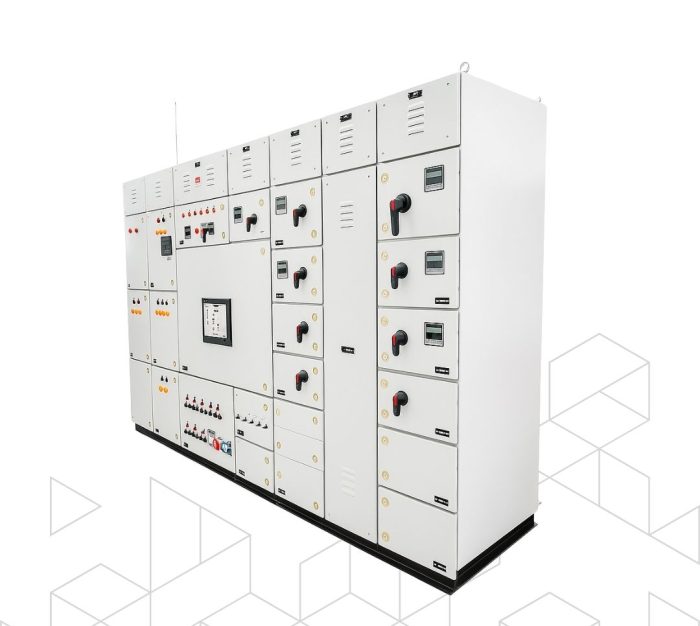
A Hybrid Synchronizing Panel functions as the intelligence layer between power sources and loads. Instead of allowing each source to operate independently, the panel continuously monitors voltage, frequency, phase angle, and load demand to make real-time decisions.
Before connecting any source in parallel, the panel ensures electrical parameters are aligned. This prevents transient disturbances and allows smooth load transfer. During normal operation, the panel manages how much load each source carries, ensuring stable performance and efficient energy use.
In essence, the synchronizing panel transforms multiple independent power sources into a single, coordinated power system.
Making Hybrid Power Predictable and Stable
One of the biggest advantages of hybrid synchronization is predictability. When synchronization is handled correctly, system behavior becomes consistent and controllable.
Power transitions occur without interruption. DG sets start only when required and operate within optimal load ranges. Solar generation is utilized effectively without destabilizing the system. Grid interaction remains smooth even during frequent changes.
For operators and engineers, this predictability simplifies planning, reduces troubleshooting, and improves confidence in the power infrastructure. Hybrid Synchronizing Panels turn a complex energy mix into a reliable, manageable system.
Engineering Highlights That Matter
Rather than focusing on exhaustive feature lists, effective hybrid synchronizing panels emphasize a few critical engineering capabilities.
Microprocessor-based synchronizing controllers ensure precise matching of voltage, frequency, and phase before connection. Integrated load-sharing logic distributes power proportionally across available sources. Protection functions guard against reverse power, overloads, and abnormal electrical conditions.
Compatibility with PLC and SCADA systems allows real-time monitoring, data logging, and remote control—essential for modern facilities managing multiple sites or operating with limited on-site personnel. Robust enclosure design ensures reliable operation even in harsh industrial or outdoor environments.
Where Hybrid Synchronization Has the Greatest Impact
Hybrid synchronizing panels deliver the most value in environments where power continuity and efficiency are non-negotiable.
Industrial facilities rely on them to prevent production losses during grid outages. Hospitals and healthcare centers depend on seamless transitions to protect life-critical equipment. Telecom and data infrastructure require stable power to avoid service disruptions. Commercial campuses use synchronization to reduce fuel consumption while maximizing solar utilization.
In each case, the panel’s role is the same: ensuring power remains stable regardless of how sources change.
Why Synchro Electricals Fits Hybrid Power Projects
Hybrid power systems demand more than standard control panels. They require engineering expertise that understands both electrical behavior and real-world operating conditions.
Synchro Electricals approaches hybrid synchronizing panels as system solutions rather than isolated components. Each panel is designed based on load profiles, source characteristics, and operational priorities. This system-level thinking ensures reliable performance, simplified commissioning, and long-term operational stability.
With experience across industrial, renewable, and infrastructure projects, Synchro Electricals delivers solutions that integrate seamlessly into complex hybrid environments.
Conclusion
Hybrid power systems achieve their full potential only when intelligence sits between their energy sources. Solar, grid, and DG sets alone cannot guarantee reliability without precise coordination.
Hybrid Synchronizing Panels provide that coordination—ensuring smooth transitions, stable operation, and predictable performance. By deploying well-engineered synchronizing panels, operators can reduce downtime, optimize energy usage, and build power systems that remain reliable under all conditions.