The rapid growth of renewable energy systems has fundamentally changed the electrical behavior of power distribution networks. Unlike conventional rotating machines, inverter-based sources such as solar PV inverters, battery energy storage systems, and hybrid power converters introduce non-linear current characteristics into the AC network. These characteristics significantly affect the design and performance of AC Distribution Boards (ACDBs).
In modern renewable installations, understanding Harmonics in ACDB Panels is no longer optional. Harmonic distortion directly influences thermal performance, protection reliability, metering accuracy, and long-term equipment life. For engineers, harmonic impact analysis has become a critical design step rather than a post-commissioning concern.
Nature of Harmonics in Inverter-Dominated Systems
Inverter-based loads generate current waveforms that deviate from pure sinusoidal form due to high-frequency switching. While modern PWM techniques improve waveform quality, residual harmonic components remain unavoidable. These harmonics are typically of odd order and increase in magnitude as inverter penetration rises.
In renewable energy plants, multiple inverters operate in parallel and feed common AC buses through ACDB panels. The harmonic currents from individual inverters do not simply cancel out; instead, they often accumulate, leading to elevated Total Harmonic Distortion (THD) levels at the distribution point.
At the ACDB level, this harmonic accumulation becomes electrically significant.
Why ACDB Panels Are Sensitive to Harmonic Stress
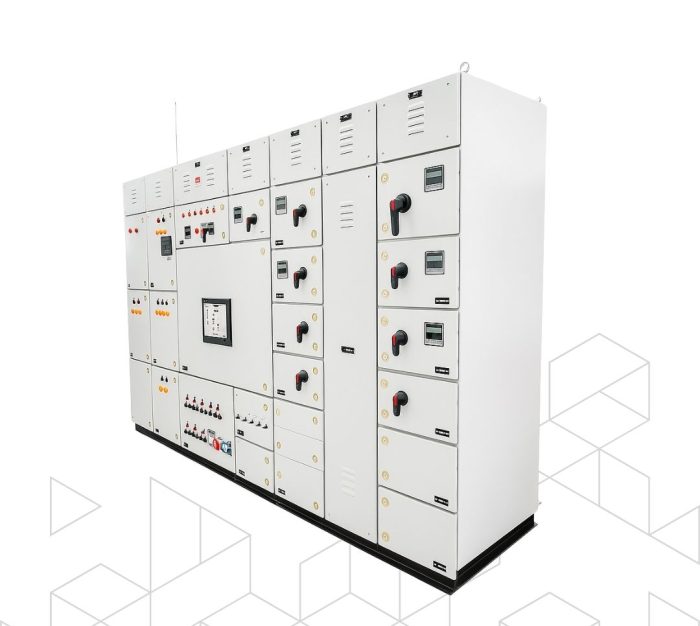
ACDB panels act as the aggregation point for inverter outputs. As such, they are exposed to the combined harmonic spectrum of the system. Harmonic currents increase RMS current levels without increasing useful power transfer, leading to additional thermal stress in busbars, cables, and switching devices.
Unlike upstream transformers, which may be designed with harmonic derating in mind, ACDB panels are often constrained by space, compact layouts, and standardized ratings. If harmonic effects are not considered during design, overheating and insulation degradation may occur even when apparent load current remains within nominal limits.
This makes harmonic impact analysis essential for reliable ACDB operation.
Thermal and Electrical Implications of Harmonics
Harmonic currents cause non-uniform heating due to skin effect and proximity effect, particularly at higher frequencies. Busbars experience increased resistive losses, while circuit breakers and contactors may operate closer to their thermal limits. In extreme cases, nuisance tripping occurs due to elevated internal temperatures rather than true overload conditions.
Additionally, harmonics distort voltage waveforms across the ACDB, affecting downstream equipment performance. Protection relays calibrated for sinusoidal conditions may misinterpret distorted signals, reducing selectivity and accuracy. Metering devices may also report incorrect power and energy values if harmonic distortion exceeds their measurement capability.
These effects accumulate over time, accelerating aging of panel components.
Impact of Harmonics on Protection and Coordination
Protection systems within ACDB panels are typically designed around fundamental frequency assumptions. Harmonics alter current wave shapes, potentially affecting the response of thermal and magnetic trip elements. Electronic protection units offer better tolerance but still require correct configuration based on harmonic levels.
In renewable energy systems with high inverter penetration, coordination between protective devices must consider harmonic heating rather than just short-circuit current. Failure to do so can result in either delayed tripping under fault conditions or unnecessary tripping during normal operation.
Thus, harmonic behavior directly influences protection philosophy at the ACDB level.
Design Considerations for Harmonic-Resilient ACDB Panels
Effective ACDB design begins with quantifying expected harmonic levels through system studies. Inverter specifications, operating modes, and diversity factors must be evaluated to estimate worst-case harmonic current flow.
Once harmonic levels are understood, busbar sizing is adjusted not just for nominal current but for increased RMS current under harmonic loading. Thermal margins become more important than absolute current ratings. Selection of circuit breakers and isolators must also account for continuous operation under distorted waveforms.
In many cases, integration of harmonic mitigation devices such as passive filters or line reactors upstream of the ACDB reduces stress on the panel itself. However, even with mitigation, panel design must assume residual harmonics.
System-Level Perspective on Harmonics
Harmonics do not originate or terminate at the ACDB; they are a system-wide phenomenon. Poor grounding practices, inadequate cable segregation, and improper layout can amplify harmonic effects through resonance and circulating currents.
From a system perspective, ACDB panels must be designed as part of a coordinated harmonic management strategy rather than isolated distribution components. This includes coordination with inverter manufacturers, transformer design, and grid interconnection requirements.
Ignoring this system context often leads to localized overheating and unexplained operational issues.
Engineering Approach of Synchro Electricals
Synchro Electricals approaches ACDB panel design with harmonic behavior as a fundamental input parameter. Harmonic impact analysis, thermal derating considerations, and protection compatibility are integrated into the design process from the early engineering stage.
Rather than relying on standard panel configurations, Synchro Electricals evaluates inverter characteristics, system topology, and operating conditions to ensure that ACDB panels remain electrically and thermally stable throughout their service life in renewable energy environments.
Conclusion
As renewable energy systems become increasingly inverter-dominated, harmonic distortion has emerged as a defining factor in power distribution reliability. ACDB panels, positioned at the convergence point of inverter outputs, are particularly vulnerable to harmonic stress if not designed accordingly.
A thorough understanding of Harmonics in ACDB Panels enables engineers to design distribution systems that remain thermally stable, electrically reliable, and protection-coordinated under real operating conditions. Harmonic impact analysis is no longer a refinement—it is a core requirement for modern renewable energy infrastructure.